Researchers from Phoenixlab, The Scripps Research Institute and affiliated organizations presented the discovery of a novel bivalent protease-activated receptor PAR1- and PAR3-derived peptide, named biparetide, being developed for the treatment of inflammatory bowel disease (IBD).
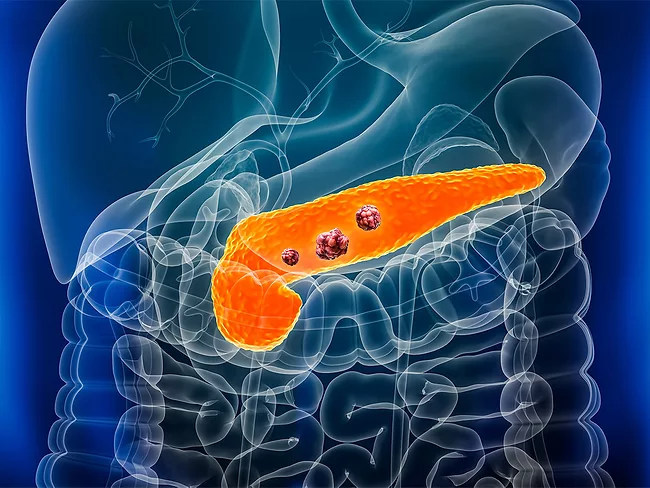
Repeated RNA elements have a virus-like behavior in the cells that express them. Furthermore, they could confer a novel mode of tumor expansion based on changes in cellular states. “About 10 years ago, we had identified that these repetitive elements were highly expressed in pancreas cancer,” co-senior author David Ting, associate professor of medicine and assistant physician at the Mass General Cancer Center at Harvard Medical School, told BioWorld.
Paragon Therapeutics Inc. and Spyre Therapeutics Inc. jointly presented preclinical data for the novel extended half-life humanized anti-IL-23 monoclonal antibody (MAb), SPY-003, being developed for the treatment of inflammatory bowel disease (IBD).
Researchers from Xencor Inc. presented the discovery and preclinical characterization of XmAb-942, a novel high-affinity anti-TL1A monoclonal antibody (MAb) being developed for the treatment of inflammatory bowel disease (IBD).
Molecure SA has signed an exclusive licensing agreement with Ocean Biomedical Inc. for the development and commercialization of a selective YKL-40 inhibitor program, including the lead molecule OAT-3912.
Innocare Pharma Ltd.’s tyrosine kinase 2 (TYK2) inhibitor, ICP-488, met the primary endpoint in a phase II trial in Chinese patients with moderate to severe plaque psoriasis, and the results clear the way to accelerate clinical development in psoriasis and other autoimmune diseases.
Innocare Pharma Ltd.’s tyrosine kinase 2 (TYK2) inhibitor, ICP-488, met the primary endpoint in a phase II trial in Chinese patients with moderate to severe plaque psoriasis, and the results clear the way to accelerate clinical development in psoriasis and other autoimmune diseases.
Mestag Therapeutics Ltd. has sealed a potential $1.9 billion agreement with Merck & Co. Inc., in which it will apply its expertise in activated fibroblasts to identify novel targets for inflammatory diseases. The pharma company has the option to license one or more targets, up to a prespecified number, and will take on all subsequent discovery, development and commercialization work.
South San Francisco-based Septerna Inc. filed an S-1 with the U.S. SEC to conduct an IPO on Nasdaq about two years and eight months after launching operations with a $100 million series A led by Third Rock Ventures. The company is focused on G protein-coupled receptor oral small molecules derived from its Native Complex Platform, aimed at treating diseases within the endocrinology, immunology and inflammation, and metabolic diseases realms.
Artelo Biosciences Inc. has presented data on its fatty acid-binding protein 5 (FABP5) inhibitor ART-26.12 from testing of its efficacy in preclinical models of psoriasis.
 RSS
RSS