Gene editing technologies are moving forward in preclinical development with innovative strategies designed to treat diseases at their root and even reverse them. However, many approaches still struggle to reach target cells or tissues – either they fail to arrive, or their efficacy is low. In vivo therapies face numerous challenges, but despite these hurdles, 2025 has marked a year of remarkable progress.
Gene editing technologies are moving forward in preclinical development with innovative strategies designed to treat diseases at their root and even reverse them. However, many approaches still struggle to reach target cells or tissues – either they fail to arrive, or their efficacy is low. In vivo therapies face numerous challenges, but despite these hurdles, 2025 has marked a year of remarkable progress.
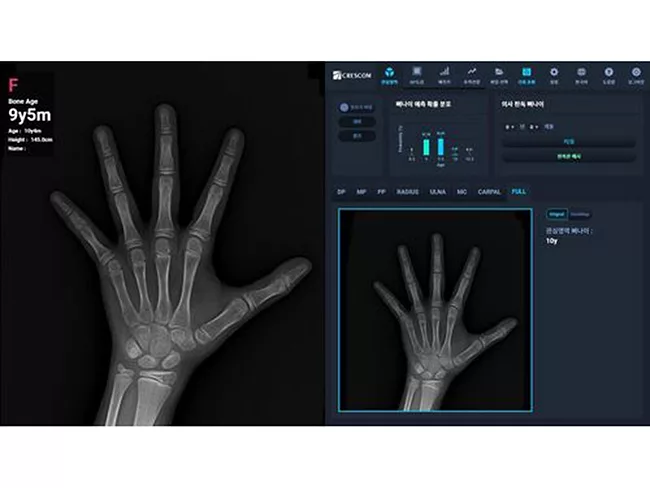
Crescom Co. Ltd., an AI musculoskeletal imaging company, gained U.S. FDA 510(k) clearance Dec. 24 for MediAI-BA, its AI-powered pediatric and adolescent bone age analysis software.
Classified as a class II medical device, MediAI-BA evaluates bone age and suggests predicted adult height based on growth plate status assessed by hand and wrist X-ray imaging. Prior clinical trial results demonstrated MediAI-BA had specialist-level accuracy, recording a mean absolute deviation (MAD) of 0.39 years.
After being unanimously passed by the U.S. House Dec. 1, the bipartisan Mikaela Naylon Give Kids a Chance Act seemed to be headed for sure passage in the Senate before it adjourned late last week.
Bronchopulmonary dysplasia (BPD) remains a significant challenge in neonatal care, particularly affecting preterm infants with low birth weight who often require oxygen therapy or mechanical ventilation to survive.
Medline Inc. filed a public S1 with the SEC Oct. 28, moving the IPO first signaled in December 2024 closer to reality. The Northfield, Ill.-based medical supply distributor did not disclose the number of shares to be offered or their price, but Renaissance Capital expects the IPO to raise about $5 billion, which would make it the largest in any industry this year and one of the largest ever in med tech. Billiontoone Inc. also advanced its IPO, as it began the road show for its public debut in early November.
Genedx LLC partnered with Illumina Inc. to test whether Illumina's constellation map read technology could shed light on hard-to-detect variants that appear in rare diseases. Constellation met or exceeded the ability of other sequencing methods to detect variants implicated in multiple disorders and worked across a range of sample types, a study presented at the American Society for Human Genetics (ASHG) Annual Meeting in Boston on Oct. 15 found.
Up to 71% of people carry at least one pathogenic variant that could contribute to development of a heritable disorder in offspring, but until now, prospective parents often had to undergo multiple tests to understand their risks. Pacific Biosciences of California Inc. (Pacbio)’s expanded Puretarget portfolio provides a quicker and more streamlined solution as it covers all challenging tier 3 genes identified in the American College of Medical Genetics technical standard.
Researchers from the University of California, Davis (UC-Davis) continue to assemble intellectual property in support of their development of methods and techniques which improve the accuracy of wearable sensor technologies.
For more than 30 years, the U.S. CDC’s Advisory Committee for Immunization Practices (ACIP) and the American Academy of Pediatrics (AAP) worked together to harmonize their evidence-based vaccine schedules. Not anymore.
 RSS
RSS