Shares in Idorsia Ltd. plummeted by around 14% Feb. 6 as the company announced that its phase III REACT trial investigating the use of Pivlaz (clazosentan) failed to reach the primary endpoint in patients who had experienced a type of stroke called aneurysmal subarachnoid haemorrhage, leaving the drug’s future in the U.S. and Europe uncertain.
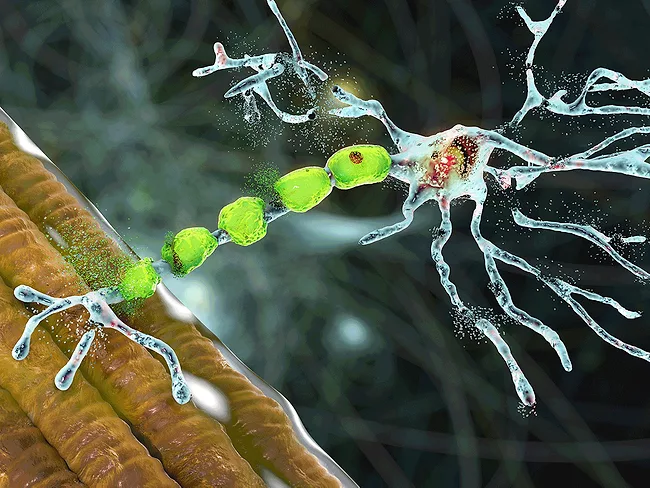
Spinal muscular atrophy (SMA) has been surfacing more regularly in scientific journals lately, as drug developers – such names as Biohaven Inc., Roche Holding AG and Scholar Rock Inc. – continue to search for improved therapies directed at the condition, one that takes in a group of hereditary, motor neuron-destroying diseases.
Taysha Gene Therapies Inc.’s stock (NASDAQ:TSHA) struggled Feb. 1 following the U.S. FDA’s recommendation that the company dose more patients in a double-blind, placebo-controlled study of TSHA-120 for the ultra-rare indication giant axonal neuropathy.
Equilibre Biopharmaceuticals Corp. has positive top-line data from the phase II study of its lead asset, EQU-001, an anti-inflammatory adjunctive therapy for treating focal seizures for adults with epilepsy.
The burgeoning psychedelic therapeutics market experienced a boost Jan. 25 as Small Pharma Inc. announced its synthetic, intravenous formulation of N,N-dimethyltryptamine (DMT), SPL-026, led to a statistically significantly, rapid reduction in depression symptoms in patients with major depressive disorder in a phase IIa trial, thus meeting its primary endpoint. DMT is a powerful hallucinogenic tryptamine substance which works as a 5-HT receptor agonist. It is found naturally in various plants, and is a schedule I controlled substance in the U.S. Although lesser known than other psychedelics such as magic mushrooms and LSD, it produces short-lived but intense auditory and visual hallucinogenic effects.
ABVC Biopharma Inc is headquartered in San Francisco but it has its roots in Taiwan where it is digging into traditional medicine and validating it for the modern world. “There are a number of drugs that can’t be synthesized in the lab,” ABVC CEO Howard Doong told BioWorld, so he is going back to the original source of traditional Chinese medicines to validate them using traditional drug development models.
Eli Lilly and Co.’s complete response letter (CRL) from the U.S. FDA relating to accelerated approval of Alzheimer’s disease (AD) candidate donanemab set off a round of speculation regarding not only what the move might mean for the pharma giant but also for others in the embattled therapeutic space and beyond. The answer, if you believe analysts: not much.
Upcoming catalysts from Annexon Biosciences Inc. put some joy into shares as the firm talked up its prospects during the recent J.P. Morgan Healthcare Conference, where attendees heard Jan. 8 about the news ahead with C1q protein complex inhibitor ANX-005 in Huntington’s disease (HD) as well as progress in Guillain-Barre syndrome (GBS), and more. The stock (NASDAQ:ANNX) enjoyed a 43% stock boost in the days after JPM, rising from $4.79 on Jan 8 to $6.84 on Jan. 13.
Looking ahead to potential commercialization of its late-stage tau PET imaging agent, Aprinoia Therapeutics Inc. has chosen to go public via a merger with special purpose acquisition company (SPAC) Ross Acquisition Corp. II in a deal that has an equity value of $280 million. The funding is aimed at getting candidate 18F-APN-1607 to the market in China.
Irlab Therapeutics AB’s phase IIb exploration of the dopamine D3-receptor with the Ipsen SA-partnered oral antagonist mesdopetam in Parkinson’s disease (PD) levodopa-induced dyskinesia (LID) fell short in terms of the primary endpoint, but the company is holding out hope. Mesdopetam missed the primary endpoint of change in daily hours of “on” time – periods of adequate PD control – without troublesome dyskinesia as shown in patient diaries, the company said.

 RSS
RSS