Fundamental Pharma GmbH has raised €10 million (US$10.3 million) in a seed round to develop a new class of glutamate inhibitors, after uncovering a route to maintaining the protective effects of the neurotransmitter in the synapses while preventing neurotoxicity when it is released elsewhere.
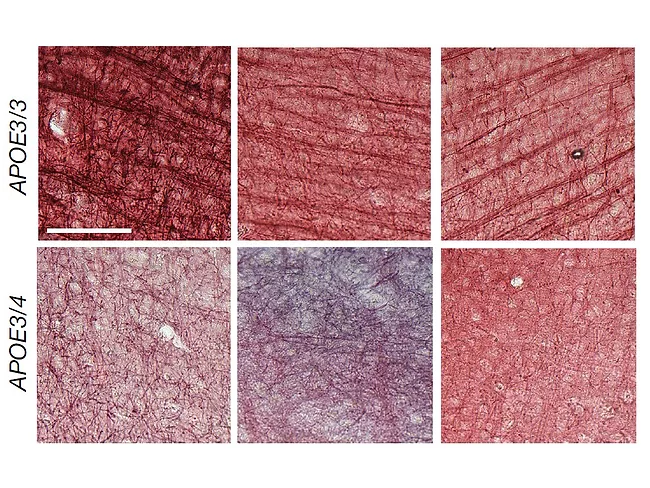
Carrying the apolipoprotein E4 allele (APOE4), and not the APOE3 variant, is the strongest risk factor for developing Alzheimer’s disease (AD). But the underlying mechanism has remained elusive. Now, researchers at MIT and Mount Sinai have found that in brains carrying the APOE4 allele, lipid and cholesterol processes were dysregulated in oligodendrocytes and that this effect reduced myelination.
Momentum is building at Jnana Therapeutics Inc. The firm has raised $107 million in a series C round and banked another $50 million up front from a new drug discovery and development pact with Roche Holding AG, which could potentially deliver significant near-term milestones and more than $2 billion in future milestone payments. It also commenced recruitment onto a first-in-human study of its lead drug candidate, JNT-517, an inhibitor of the phenylalanine transporter SLC6A19, which is in development for phenylketonuria.
Neurons are specialized cells with a high metabolic demand to fulfill their function, survive or keep a healthy half-life. In this sense, the anabolism and catabolism of proteins and lipids could be associated to different neurodegenerative diseases. At the 2022 annual meeting of the Society for Neuroscience, scientists reported the latest discoveries on neuron metabolic needs at a session on 'Powering Thoughts: The Regulation of Neuronal Energy Metabolism and Mitochondria.'
Two phase III failures with Roche Holding AG subsidiary Genentech Inc.’s gantenerumab in staving off mild cognitive impairment tied to Alzheimer’s disease (AD) revealed the level of amyloid-beta removal was lower than the company expected. The protein amyloid beta accumulates in the brains of AD patients and its removal is suspected to be an eventual boon to AD patients. But there are still plenty of doubts. Top-line results from Genentech’s phase III Graduate I and II studies show gantenerumab, a fully human monoclonal IgG1 antibody, missed the primary endpoints of slowing clinical decline in those with mild cognitive impairment due to AD and mild AD dementia.
Minoryx Therapeutics SL is banking what it described as “a significant double-digit up-front payment” and could earn up to €258 million (US$262.1 million) more in milestone payments and development funding from a license agreement with Neuraxpharm GmbH, which covers European rights to its lead drug candidate, leriglitazone, in central nervous system indications. It will also receive tiered double-digit royalties on product sales.
NRG Therapeutics Ltd. has closed a £16 million (US$18.3 million) series A round to take forward programs in Parkinson’s disease and amyotrophic lateral sclerosis, after pinning down the target of its brain penetrant small molecules.
Luye Pharma Group has received marketing approval from China’s NMPA for the triple monoamine reuptake inhibitor Ruoxinlin (toludesvenlafaxine hydrochloride) to treat patients with major depressive disorder, a condition that “has become one of the most prevalent mental disorders in China, causing a heavy burden on patients, their families and the entire society,” said Luye President Yang Rongbing.
Sensorium Therapeutics Inc. closed a $30 million series A round to fund the discovery and development of new psychiatric drugs, inspired by human ethnobotanical practices that date back hundreds or even thousands of years.
Once pharma’s great hope to replace opioid painkillers, it looks like the end for nerve growth factor (NGF) inhibitors after Regeneron Pharmaceuticals Inc. quietly axed fasinumab, the late-stage painkilling injection it was developing in partnership with Teva Pharmaceuticals Ltd. and Mitsubishi Tanabe Pharma Corp.
 RSS
RSS