Cureosity GmbH has raised €3.8 million (US$4.1 million) in growth financing to expand the use of its virtual reality therapy which promotes the sensorimotor and cognitive rehabilitation in patients who have suffered a stroke or with neurodegenerative diseases. The funding came from existing and new investors including Techvision Fonds and Nomainvest, a Belgian family office.
Scientists spread across Europe and the U.S. filed for protection of an implantable electrode array including a plurality of microneedles, which may be implanted into the auditory nerve bundle and stimulate the auditory nerve in response to receiving electrical signals representative of observed sounds.
The recent licensing agreement that Alzpath Inc. signed with Roche AG for use of its pTau217 antibody to develop and commercialize an Alzheimer's disease diagnostic blood test will not only transform the company but also allow patients access to a more cost-effective test, Venkat Shastri, CEO of Alzpath told BioWorld.
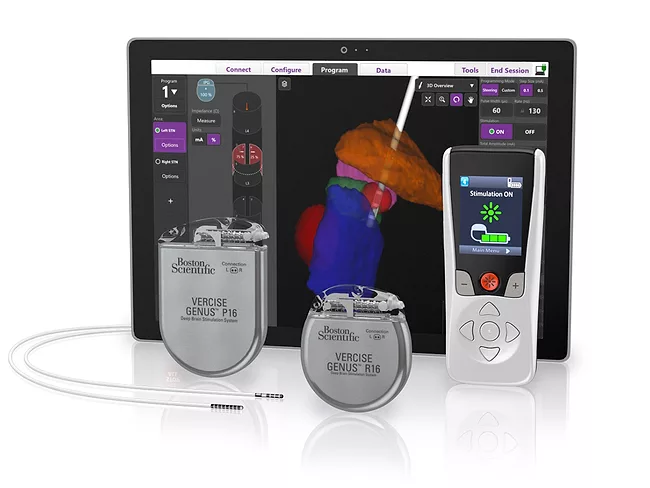
As new treatment options are being continually investigated and trialed against Parkinson’s disease, the possibilities offered by deep brain stimulation (DBS) risk being overlooked. Though not a cure, the therapy could vastly improve the quality of life for patients with the disease.
Boston Scientific Corp. continued its journey down the acquisition highway with its announced plan to acquire stroke products maker Silk Road Medical Inc. for $27.50 a share, or approximately $1.16 billion.
Siemens Healthineers AG has received CE mark for a neurofilament light chain assay to help with the early diagnosis of multiple sclerosis and aid in predicting the risk of relapse in patients suffering from the disease. The test developed in collaboration with Novartis Pharma AG will be launched in Europe later this year.
Just as it is for terminally ill cancer patients, time is of the essence for people in the early stages of Alzheimer’s disease. Thus, the clinical meaningfulness of Eli Lilly and Co.’s donanemab is the time it gives patients before the disease progresses, Reisa Sperling, a neurology professor at Harvard Medical School and director of the Center for Alzheimer’s Research and Treatment at Brigham and Women’s Hospital, told the U.S. FDA’s Peripheral and Central Nervous System Drugs Advisory Committee June 10.
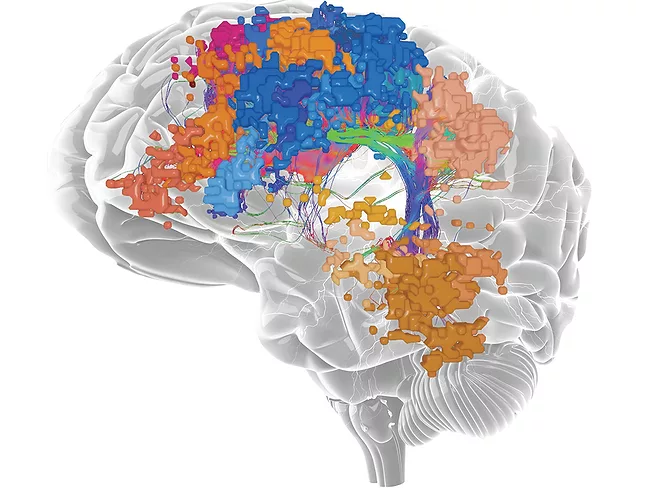
Omniscient Neurotechnology Ltd. closed a $60 million series C fundraising round to expand its reach in the U.S. market for its Quicktome platform that leverages AI to convert a standard MRI scan into a detailed map of an individual’s brain networks.
In what represents its first patenting Demon Curonix BV is seeking protection for a system for providing microvesicles to be used in combination with focused ultrasound for drug delivery to the brain.
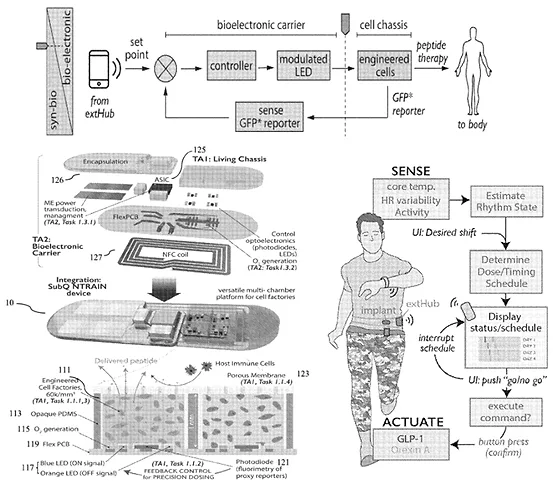
A collaborating team of researchers from Northwestern University and Rice University continue to build intellectual property for an implanted biohybrid (bioelectronic/engineered cell) device that has been likened to an implantable pharmacy on a chip that never runs out.
 RSS
RSS