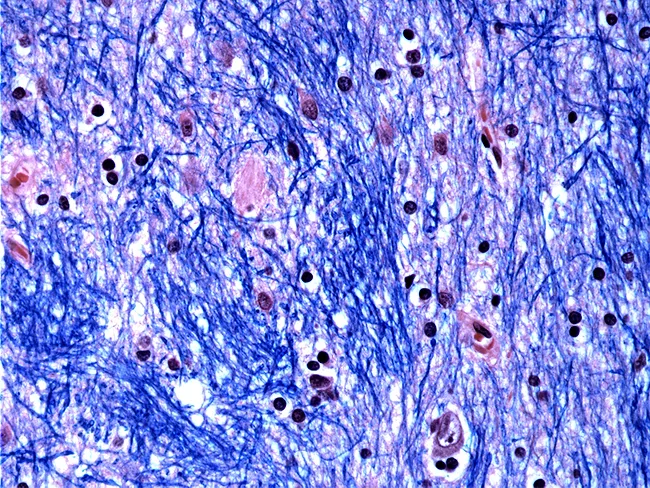
Spinal cord injury (SCI) is characterized by the temporary or permanent loss of motion or sensation function caused by damage to the spinal cord. Among the mechanisms behind SCI, neuroinflammation is crucial as it modulates the sequelae of SCI, where microglia play a critical role, with M1 macrophages being the pro-inflammatory ones and M2 the anti-inflammatory phenotype.
Parkinson’s disease, characterized by progressive dopamine neuron loss, leads to motor deficits such as bradykinesia and rigidity, as well as nonmotor symptoms like cognitive decline and depression. While L-DOPA alleviates motor symptoms, long-term use often results in side effects, including motor fluctuations and dyskinesias, as well as nonmotor (psychotic-like) side effects.
Nanjing Reju Therapeutics Inc. has described tumor necrosis factor receptor type 1-associated DEATH domain protein (TRADD) inhibitors reported to be useful for the treatment of inflammatory-related disorders and cell necrosis-related apoptosis diseases.
Universitat de Barcelona has identified histone-lysine N-methyltransferase EHMT2 (H3-K9-HMTase 3; G9a) inhibitors reported to be useful for the treatment of Alzheimer’s disease among others.
A recent study by researchers at the University of Florence and collaborators has demonstrated the efficacy of MRS-3997, a dual adenosine A2A/A2B receptor agonist, in reducing brain damage and inflammation in a rat model of ischemic stroke.
The largest analysis to date of patients taking GLP-1 receptor agonists (GLP-1RAs) has investigated their effects on nearly 175 diseases, and found that compared to three other classes of diabetes medications, individuals with a prescription for GLP-1RAs had a reduced risk of 42 diseases, and an increased risk of 19. The findings, which were published Jan. 20, 2025, in Nature Medicine, provide a comprehensive overview of GLP-1RAs’ effects.
Researchers from Cornell University are seeking protection for their invention of a low-cost artificial intelligence (AI)-based platform that analyses low resolution electrocardiogram data and/or photoplethysmography data to accurately and objectively assess pain.
Jiangsu Nhwa Pharmaceutical Co. Ltd. has patented substituted imidazole derivatives acting as α2-adrenoceptor agonists with sedative and/or analgesic and/or anesthetic and/or anxiolytic activity. As such, they are reported to be potentially useful for the treatment of pain, insomnia and psychiatric disorders.
Having 35 copies of the CAG triplet in the gene that causes Huntington’s disease is not a problem. Inheriting 40 could be a sign that goes unnoticed for decades, until reaching 80. From there, the process accelerates and neural death occurs when reaching 150 repeats. Huntington’s disease neurodegeneration is not determined by what, but by how much, according to a study conducted at the Broad Institute.
A Vanderbilt University patent discloses new muscarinic M4 receptor positive allosteric modulators and agonists reported to be useful for the treatment of Alzheimer’s disease, pain, schizophrenia, sleep disorders and cognitive disorder.