The increasing knowledge on how protein tau is organized in live cells has shown that the protein forms nanometer-sized hotspots which are different from tau microtubules. These hotspots, essential for aggregation, include (306)VQIVYK(311) and (275)VQIINK(280) aggregation-promoting hotspots, the first found in all tau isoforms and the latter included mainly in 4R isoforms.
Researchers in the U.K. have succeeded in reverse engineering the defective cryptic splicing that drives amyotrophic lateral sclerosis (ALS) and frontotemporal dementia (FTD) to enable precisely targeted delivery of transgenes and therapeutic protein expression in diseased neurons. The technique is compatible with conventional adeno-associated viral vectors that are approved for gene therapy, and can readily be adapted for different transgenes. ALS, FTD and other neurogenerative diseases are underpinned by loss of function of the RNA-binding protein TDP-43 (transactive response DNA-binding protein 43), that normally functions as a key regulator of splicing, protecting the transcriptome from toxic cryptic exons.
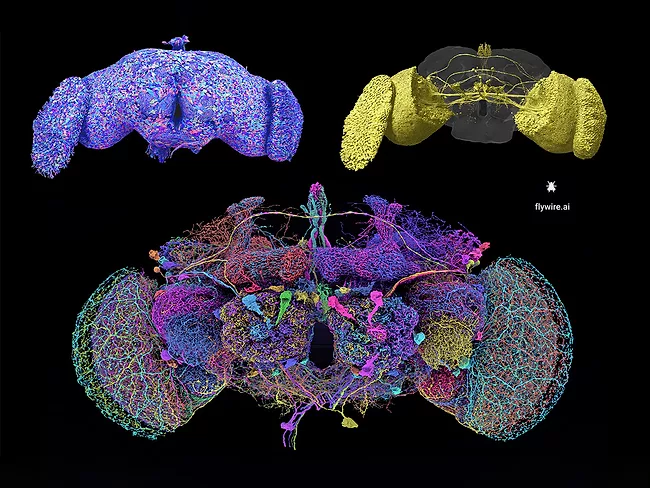
A collaboration led by the Flywire Consortium and comprising hundreds of scientists has completed a whole map of the adult fruit fly brain after several decades of collaborative work.
Loqus23 Therapeutics Ltd. has raised £35 million (US$46.6 million) in a series A to take forward small molecules it has discovered for the treatment of Huntington’s disease and other conditions that are driven by DNA mismatch repair (MMR). MMR fixes DNA insertions, deletions and misincorporation errors that occur during transcription and/or cellular replication. Smaller repairs are directed by MutSalpha, a protein that binds single base mismatches, while MutSbeta handles larger insertion/deletion loops. Huntington’s and other triplet repeat diseases are caused when trinucleotide repeats accumulate in somatic DNA to the extent that they interfere with protein expression.
Setpoint Medical Inc. received U.S. FDA investigational device exemption approval to initiate a study of its neuroimmune modulation platform in people living with relapsing-remitting multiple sclerosis. Setpoint plans to launch the 60-person trial in 2025 to evaluate the use of its implantable neurostimulation device to slow or reverse the nerve damage characteristic of multiple sclerosis.
A collaboration led by the Flywire Consortium and comprising hundreds of scientists has completed a whole map of the adult fruit fly brain after several decades of collaborative work. By using electron microscopy and three-dimensional reconstruction supported by AI tools, the researchers have revealed the neural wiring of the Drosophila melanogaster brain, a connectome of 140,000 neurons with 50 million synaptic connections. In the future, researchers could possibly use this map as an artificial in silico model to study the brain as a simulator through its connections, though a lot of work remains to be done for this.
Researchers at QPS Clinical Services GmbH and Universitat de Barcelona have divulged dual bifunctional epoxide hydrolase 2 (EPHX2; sEH) and glutaminyl-peptide cyclotransferase-like protein (QPCTL; IsoQC) inhibitors reported to be useful for the treatment of Alzheimer’s disease.
Vesper Bio ApS has disclosed sortilin (NT3; Gp95) antagonists reported to be useful for the treatment of neurodegeneration, cancer, pain, diabetes, diabetic retinopathy, glaucoma, hearing loss and cardiovascular disorders, among others.
Loqus23 Therapeutics Ltd. has closed a £35 million (US$43 million) series A financing, with the aim of supporting its work developing small-molecule somatic expansion inhibitors for the treatment of Huntington’s disease and other triplet repeat disorders.
 RSS
RSS