Route 92 Medical Inc. sped past its series F goal, raising an additional $50 million in an extension to the oversubscribed round. The extension brings the total for the series F to $82 million, which the company plans to use to accelerate commercialization of its neurovascular reperfusion and access systems.
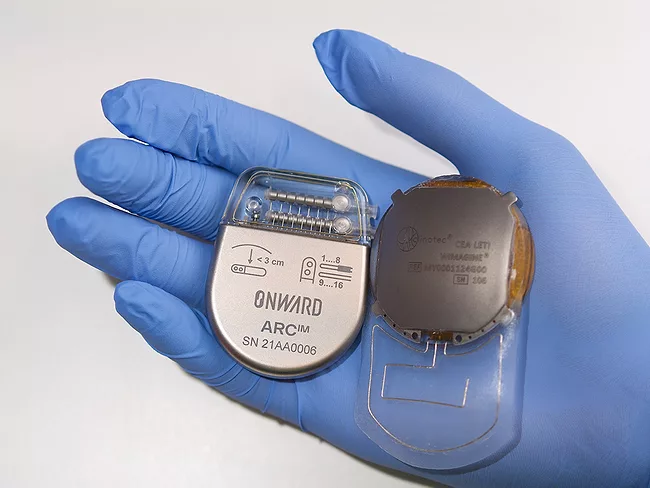
Onward Medical NV successfully implanted its Arc-BCI system, which restores direct communication from the brain to the spinal cord enabling lower limb mobility, into a third patient.
A patent from Nagasaki University discloses new protein aggregate degradation inducers reported to be useful for the treatment of neurodegenerative diseases.
Ono Pharmaceutical Co. Ltd. and Wuxi Apptec Co. Ltd. have jointly developed new ceramide glucosyltransferase (glucosylceramide synthase; GLCT-1) and lysosomal acid glucosylceramidase (GBA; β-glucocerebrosidase; β-glucosidase) dual inhibitors reported to be useful for the treatment of mild cognitive impairment, among others.
Investigators from Abzyme Therapeutics LLC have hypothesized that inhibiting this pathway in the CNS may prevent tissue damage and cease the progression of multiple sclerosis (MS).
Argenx SE’s ARGX-119 is a monoclonal antibody (MAb) targeting the muscle-specific kinase (MuSK) Frizzled (Fz)-like domain, and has entered early clinical development for the treatment of neuromuscular diseases.
In what represents its first patenting, Roseville, Minn.-based Iveacare Inc. provides insights as to what its first therapeutic target will likely be since the developer of neuromodulation therapy devices emerged from stealth mode in April 2024 with the closing of $27.5 million series A financing.
Vanderbilt University has identified leucine-rich repeat kinase 2 (LRRK2; dardarin) and LRRK2 (G2019S mutant) inhibitors reported to be useful for the treatment of tauopathies, cancer, Crohn’s disease, type 1 diabetes, leprosy, rheumatoid arthritis, traumatic brain injury and Alzheimer’s disease, among others.
Researchers from the Chinese Academy of Medical Sciences reported the discovery of the 1,2,4-oxadiazole derivative FO-4-15 for the treatment of Alzheimer’s disease (AD).
Avicenna.ai SAS received U.S. FDA clearance for its Cina-Cspine algorithm, which uses machine learning technology to detect and triage cervical spine fractures from computed tomography images. The tool automatically flags imaging findings that are compatible with acute cervical spine fractures, which can cause serious neurological damage or paralysis.
 RSS
RSS