Toleranzia AB has completed a pivotal toxicology study designed to determine the potential toxicity of TOL-2, a tolerance-inducing recombinant protein being developed for the treatment of myasthenia gravis, when given intravenously for 10 days.
Medtronic plc received the greenlight from the U.S. FDA for its latest deep brain stimulation system, the Percept RC. The rechargeable neurostimulator includes the company’s sensing technology which captures data from brain signals and allows for more personalized therapy.
Acadia Pharmaceuticals Inc. has described G protein-coupled receptor GPR88 agonists reported to be useful for the treatment of attention deficit hyperactivity disorder (ADHD), substance abuse and dependence, schizophrenia, Tourette syndrome, bipolar disorder, Huntington's disease, Alzheimer's disease and Parkinson's disease.
Factor Bioscience Inc. has been awarded a grant by the U.S. Department of Defense to develop next-generation cell therapy candidates using Factor's patented mRNA, cell-reprogramming, and gene-editing technologies.
Xenon Pharmaceuticals Inc. took to the stage this week at the J.P. Morgan Healthcare Conference to talk up its pipeline, including the phase III program testing XEN-1101 in focal-onset seizures (FOS), due to complete enrollment in the second half of this year. It’s an indication where such other players as Biohaven Ltd. are busy, too. Several million adults are afflicted with FOS in the U.S., with close to a half-million pediatric patients.
The first patenting from Mhealthcare Inc. describes a patient examination table or bed equipped with a variety of sensors, data from which may be analyzed with trained machine learning models to facilitate risk assessment and diagnosis of non-neurotypical developmental conditions such as autism in infants and young children by predicting cognitive, behavioral, social and developmental outcomes as early as the first three months of life. It is also claimed that the table may be used to diagnose epilepsy and Alzheimer’s disease.
Neuron23 Inc. has identified non-receptor tyrosine-protein kinase TYK2 (JH2 domain) inhibitors reported to be useful for the treatment of neurological disorders.
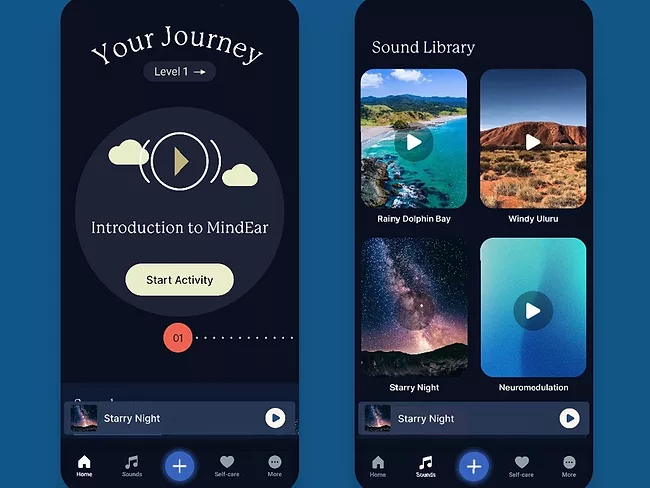
Researchers from the University of Auckland have developed a smartphone app called Mindear that reduced the impact of tinnitus in two-thirds of users over eight weeks.Tinnitus, often referred to as ringing in the ears, is the perception of sound without an external source and affects 10% to 15% of the global adult population. Previous studies to treat tinnitus have focused on neuromodulation devices, but a smartphone app could make treatment more accessible to a wider population.

 RSS
RSS