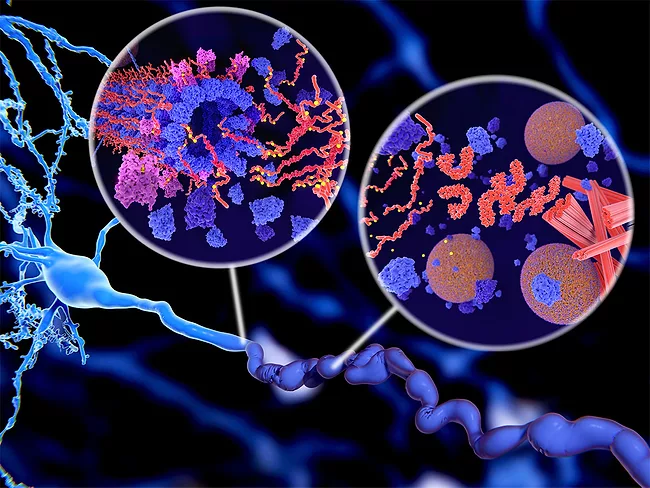
Researchers from Harvard Medical School, Yale University and University of Leiden have uncovered two new potential biomarkers of dysregulated glucose metabolism in Alzheimer’s disease (AD). Glucose hypometabolism is consistently observed in AD but the molecular changes behind this are unclear. Findings from recent research have indicated dysregulation of glycolysis markers in AD cerebrospinal fluid (CSF) and tissue.
Researchers from Washington University in St. Louis reported data validating microtubule-binding region (MTBR) of tau containing the residue 243 (MTBR-tau243) as a new cerebrospinal fluid (CSF) biomarker specific for insoluble tau aggregates in Alzheimer’s disease (AD).
Kissei Pharmaceutical Co. Ltd. has withdrawn its NDA in Japan for rovatirelin (KPS-0373) for the treatment of spinocerebellar degeneration. Kissei, of Osaka, Japan, said it temporarily withdrew the application for marketing approval and would discuss the possibility of conducting additional clinical trials with Japan’s Pharmaceuticals and Medical Devices Agency (PMDA), because the PMDA expressed concern about the approval based on the current clinical trial data.
With the spotlight at this week’s Alzheimer’s Association International conference firmly fixed on the first approved therapies, advances in diagnosing the neurodegenerative disease - on which effective use of new drugs will hang - attracted less attention. However, hand-in-hand with the development of anti-amyloid drugs, development of blood-based biomarkers has made significant progress and they now have the potential to form the basis of easy to access and low cost tests.
Plasmalogens are a type of phospholipid that play significant roles in membrane fluidity and cellular processes such as vesicular fusion and signal transduction. Previous studies with natural plasmalogens have shown their role in neuroinflammation and memory function improvement.
Researchers based at Northwestern University Feinberg School of Medicine have discovered that a lack of contact between mitochondria and lysosomes in the cells of patients with a genetic form of Parkinson’s disease likely contributed to their symptoms.
Sosei Heptares is fulfilling its ambition for growth in the Asia-Pacific region by buying the Japanese and South Korea businesses of Swiss biotech Idorsia Ltd. for ¥65 billion (US$463 million), potentially freeing Idorsia from its struggle to prove its stroke drug, Pivlaz (clazosentan), is effective enough to warrant approval in key Western markets.
Saniona AB has established a new research collaboration with Astronautx Ltd. in Alzheimer’s disease. The aim of the collaboration is to identify new treatments for Alzheimer’s disease and other neurodegenerative conditions by modulating a novel, undisclosed ion channel target. The research collaboration will use Saniona’s proprietary platform, Ionbase, for the modulation of ion channels.
 RSS
RSS