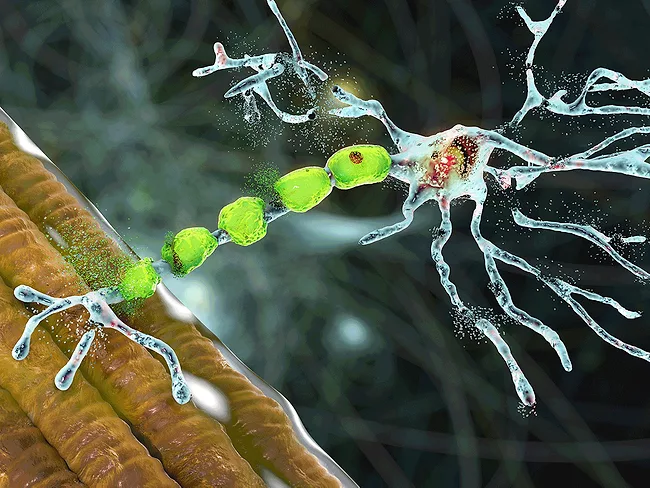
The identification of new targets in diseases of the central nervous system (CNS) such as Alzheimer’s and Parkinson’s – conditions which continue to have significant unmet needs – has taken a small step forward as one company, Violet Therapeutics Inc., plans to put $10.6 million in seed funding toward building out a pipeline based on technologies that elucidate the way cells interact amongst one another.
Atai Life Sciences AG has described 5-HT2A receptor agonists reported to be useful for the treatment of substance abuse and dependence, treatment resistant depression, major depression, anxiety, eating, obsessive-compulsive and stress disorder.
Juvenile neuronal ceroid lipofuscinosis (JNCL) is an inherited neurodegenerative disease caused by mutations in the gene encoding CLN3 lysosomal protein. Contrary to late-infantile neuronal ceroid lipofuscinosis (LINCL), caused by mutations in the lysosomal protein tripeptidyl peptidase 1 (TPP1), no animal models or effective treatment exist for JNCL. Previous research characterized mouse models with either mutated Tpp1 or Cln3, but the phenotype of a double Cln3/Tpp1 mutant, as well as the function of CLN3 protein, remain unclear.
Insilicotrials Technologies SpA has entered into a collaborative partnership with Axoltis Pharma SA in the field of central nervous system (CNS) diseases, with the aim of optimizing the clinical development plan for Axoltis’ drug candidate, NX-210c.
The identification of new targets in diseases of the central nervous system (CNS) such as Alzheimer’s and Parkinson’s – conditions which continue to have significant unmet needs – has taken a small step forward as one company, Violet Therapeutics Inc., plans to put $10.6 million in seed funding toward building out a pipeline based on technologies that elucidate the way cells interact amongst one another.
Astellas Pharma Inc. has divulged substituted quinolone derivates acting as acetylcholine receptor cluster inducers reported to be useful for the treatment of neuromuscular disorders.
Researchers from Arizona State University presented preclinical data for the novel dual specificity tyrosine phosphorylation kinase 1a (DYRK1a) inhibitor DYR-533, being developed for the treatment of tauopathies, including Alzheimer’s disease (AD).
When a group of British scientists studied which proteins might be in the wrong place of the cell in amyotrophic lateral sclerosis (ALS) patients, they found hundreds of them mislocalized. Other studies had shown that TDP-43 protein was mislocalized. But it was not known that the phenomenon was widespread, and affected mRNA as well as proteins. “Our study revealed that these mislocalized proteins were heavily involved in RNA binding functions and exhibited high binding affinities to RNAs,” Rickie Patani told BioWorld.
Researchers in London have cut through the complexity of the genetics underlying bipolar spectrum disorder (BSD) to discover single nucleotide polymorphisms they say are specific enough to form the basis of the first ever biomarker-based diagnostic test in psychiatry.
 RSS
RSS