Mitochondria In Motion Inc. has identified new N-(trans-4-hydroxycyclohexyl)-6-phenylhexanamide derivatives acting as mitofusin activators and reported to be useful for the treatment of Alzheimer’s, Parkinson’s and Huntington’s disease, cancer, amyotrophic lateral sclerosis, stroke, mitochondrial myopathy and Charcot-Marie-Tooth disease, among others.
Regeneron Pharmaceuticals Inc. has patented rapamycin analogues acting as peptidyl-prolyl cis-trans isomerase FKBP1A (FKBP12; Rotamase) ligands reported to be useful for the treatment of Alzheimer’s disease, graft-vs.-host disease, cancer, sarcopenia and more.
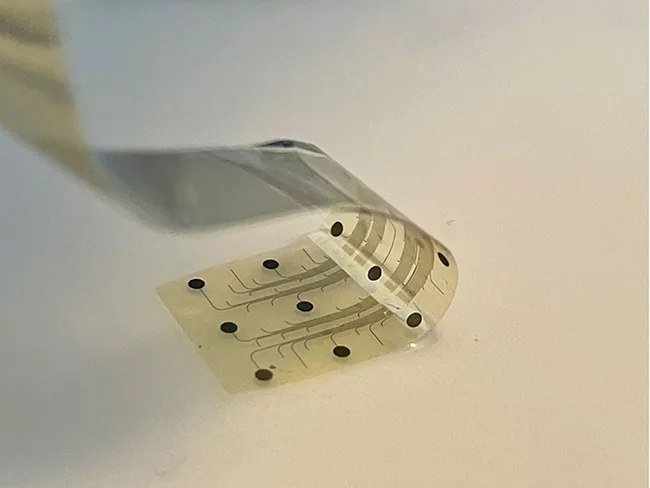
Inbrain Neuroelectronics SL closed a $50 million series B financing round to advance clinical trials for its graphene-based brain-computer interface therapeutics platform. The company also secured additional funding from Merck KGaA GmbH which will go towards developing the technology for application across both central and peripheral nervous systems.
Two days after Monte Rosa Therapeutics Inc. signed a molecular glue degrader deal with Novartis AG, two other companies, Biogen Inc. and Neomorph Inc., are moving forward in the same space in a partnership worth up to $1.45 billion. Cambridge, Mass.-based Biogen and San Diego-based Neomorph will develop molecular glue degraders (MGDs) for priority targets in Alzheimer’s, rare neurological and immunological diseases, using Neomorph’s MGD platform to identify and validate novel small-molecule protein degraders.
Sensorium Therapeutics Inc. has synthesized mesembrine derivatives acting as serotonin transporter (SERT) inhibitors reported to be useful for the treatment of anxiety, depression and stress disorders.
NRG Therapeutics Ltd., has nominated NRG-5051 as its first development candidate, and secured a $5 million grant from the Michael J. Fox Foundation for Parkinson’s Research (MJFF) to support its preclinical development of as a disease-modifying treatment for Parkinson’s disease.
The FDA has granted orphan drug designation to Capsida Biotherapeutics Inc.’s CAP-002, an investigational gene therapy for the treatment of developmental and epileptic encephalopathy due to syntaxin-binding protein 1 (STXBP1) mutations.
The prospect of a gene therapy for Alzheimer’s disease has kept Wall Street steadily interested in Lexeo Therapeutics Inc., and another increment of intrigue was added when the New York-based firm offered positive interim results from the 52-week, 15-subject phase I/II study of LX-1001 for the treatment of the condition when APOE4-associated.
Two days after Monte Rosa Therapeutics Inc. signed a molecular glue degrader deal with Novartis AG, two other companies, Biogen Inc. and Neomorph Inc., are moving forward in the same space in a partnership worth up to $1.45 billion. Cambridge, Mass.-based Biogen and San Diego-based Neomorph will develop molecular glue degraders (MGDs) for priority targets in Alzheimer’s, rare neurological and immunological diseases, using Neomorph’s MGD platform to identify and validate novel small-molecule protein degraders.
Jiangsu Alicorn Pharmaceutical Co. Ltd. has described AP2-associated protein kinase 1 (AAK1) inhibitors reported to be useful for the treatment of Alzheimer’s disease, bipolar disorder, Parkinson’s disease, schizophrenia, diabetic peripheral neuropathy and postherpetic neuralgia.

 RSS
RSS