On the heels of positive phase II results of its extended-release ketamine (R-107) in treatment-resistant depression, Douglas Pharmaceuticals Ltd. is gearing up to begin phase III trials of its ketamine treatment that is safe enough to take at home without clinical supervision.
Beijing DP Technology Co. Ltd. has nominated DPT-0415, a novel small molecule targeting lipoprotein‐associated phospholipase A2 (Lp-PLA2), as a preclinical candidate for the treatment of diabetic retinopathy (DR) and diabetic macular edema (DME).
Celgene Corp. has patented sphingosine 1-phosphate S1P5 receptor (EDG8) modulators reported to be useful for the treatment of Alzheimer’s disease and multiple sclerosis.
Several Grünenthal GmbH patents describe sodium channel protein type 10 subunit α (SCN10A; Nav1.8) blockers potentially useful for the treatment of pain.
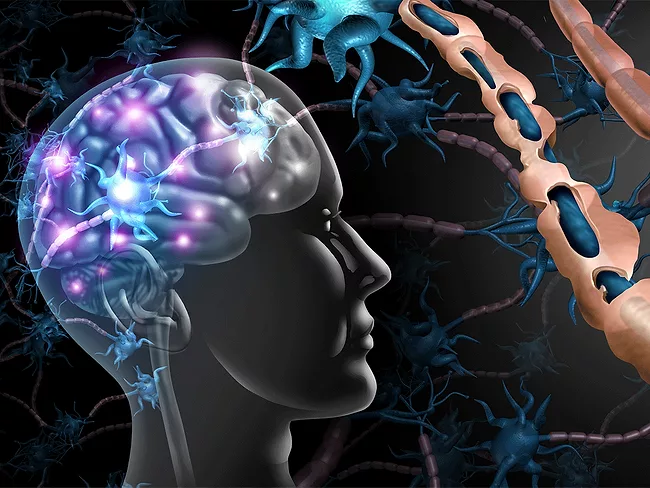
Multiple sclerosis (MS) is a chronic autoimmune demyelinating disorder in need of new treatment options. Inhibition of the phosphoinositide 3-kinase δ (PI3Kδ) pathway has shown efficacy in animals with experimental encephalomyelitis (EAE), a model of MS.
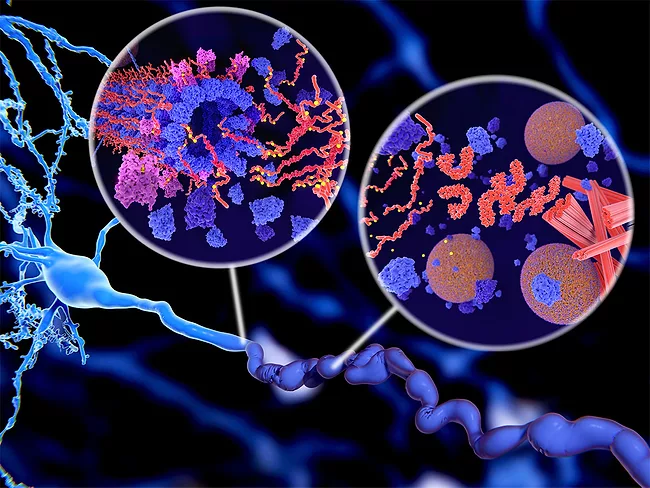
Promoting α-synuclein (α-Syn) aggregate disassembly is one of the strategies to combat Parkinson’s disease (PD), the second most prevalent neurodegenerative disease after Alzheimer’s disease.
Anew Medical Inc. has announced plans to advance its Klotho gene therapy program for neurodegenerative disorders. Initial data suggest that maintaining elevated levels of Klotho in the body significantly contributes to longer, healthier life spans, while individuals with depleted or lower than normal levels of Klotho are more susceptible to neurodegenerative disorders.
On the heels of positive phase II results of its extended-release ketamine (R-107) in treatment-resistant depression, Douglas Pharmaceuticals Ltd. is gearing up to begin phase III trials of its ketamine treatment that is safe enough to take at home without clinical supervision.
South Korean researchers from Gwangju Institute of Science and Technology invented SPINDLE — a virtual reality-based robotic rehabilitation system — as a potential breakthrough therapy for tremor patients.
Researchers from the University of Texas Medical Branch have developed a novel tau immunotherapy delivered via intranasal route, able to enter the brain, and recognize and successfully clear tau aggregates in mouse models of tauopathy. Aberrant tau aggregates cause neurodegenerative symptoms in Alzheimer’s disease (AD), progressive supranuclear palsy (PSP) and dementia with Lewy bodies (DLB). Although these conditions present phenotypic differences, the fact of sharing tau deposits as a major hallmark tags them as tauopathies.
 RSS
RSS