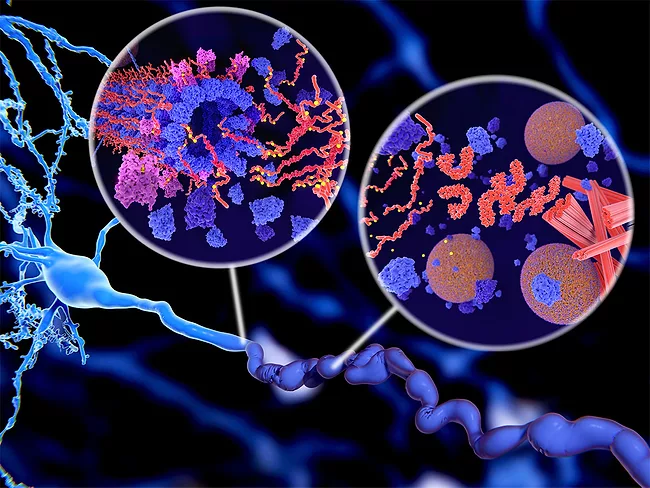
Anew Medical Inc. has announced plans to advance its Klotho gene therapy program for neurodegenerative disorders. Initial data suggest that maintaining elevated levels of Klotho in the body significantly contributes to longer, healthier life spans, while individuals with depleted or lower than normal levels of Klotho are more susceptible to neurodegenerative disorders.
On the heels of positive phase II results of its extended-release ketamine (R-107) in treatment-resistant depression, Douglas Pharmaceuticals Ltd. is gearing up to begin phase III trials of its ketamine treatment that is safe enough to take at home without clinical supervision.
South Korean researchers from Gwangju Institute of Science and Technology invented SPINDLE — a virtual reality-based robotic rehabilitation system — as a potential breakthrough therapy for tremor patients.
Researchers from the University of Texas Medical Branch have developed a novel tau immunotherapy delivered via intranasal route, able to enter the brain, and recognize and successfully clear tau aggregates in mouse models of tauopathy. Aberrant tau aggregates cause neurodegenerative symptoms in Alzheimer’s disease (AD), progressive supranuclear palsy (PSP) and dementia with Lewy bodies (DLB). Although these conditions present phenotypic differences, the fact of sharing tau deposits as a major hallmark tags them as tauopathies.
Denali Therapeutics Inc. has divulged NAD(+) hydrolase SARM1 (SAMD2; MyD88-5) inhibitors reported to be useful for the treatment of glaucoma, spinal cord Injury, multiple sclerosis, Niemann-Pick disease, stroke, Alzheimer’s disease, amyotrophic lateral sclerosis and diabetic neuropathy, among others.
Targeting human glutaminyl-peptide cyclotransferase (QPCT) has emerged as a potential strategy in Alzheimer’s disease (AD). As the main substrates of this enzyme are involved in biological processes associated with neurodegenerative diseases, Parkinson’s disease (PD) and others may be other options to explore as well.
Beijing DP Technology Co. Ltd. has nominated DPT-0415, a novel small molecule targeting lipoprotein‐associated phospholipase A2 (Lp-PLA2), as a preclinical candidate for the treatment of diabetic retinopathy (DR) and diabetic macular edema (DME).
Therapeutics for peripheral neuropathies, such as Charcot-Marie-Tooth (CMT) disease, are still quite limited and focus on managing symptoms. Augustine Therapeutics NV has presented an orally available histone deacetylase 6 (HDAC6) inhibitor, AGT-100216, for the treatment of CMT. AGT-100216 was designed to work through improving axonal regeneration and nerve functional restoration.
Cannabidiol (CBD) is a nonpsychoactive cannabinoid with potential therapeutic use in several diseases such as epilepsy or anxiety, but shows poor solubility, erratic absorption and structural polymorphisms that limit its bioavailability. Researchers from Artelo Biosciences Inc. presented the pharmacokinetic profile of ART12.11, a proprietary co-crystallization of CBD and co-former tetramethylpyrazine (TMP), formulated to achieve improved bioavailability and stability and to overcome polymorphism of CBD.
Scientists at the University of Copenhagen have demonstrated that the trigeminal nerve, a cranial nerve whose activation underlies migraine pain, has direct access to cerebrospinal fluid (CSF) transported by the glymph system. Furthermore, in the run-up to a migraine, levels of multiple proteins in the CSF changed. One of them was calcitonin gene-related peptide (CGRP), a driver of migraine pain and target of several approved drugs for both treatment and prevention of migraine.

 RSS
RSS