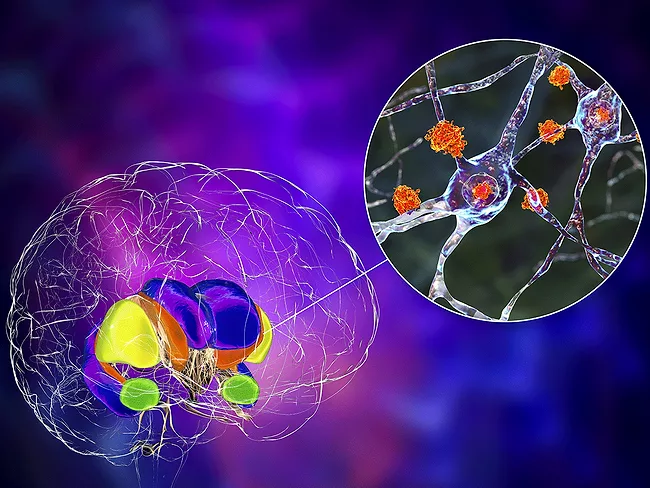
Rgenta Therapeutics Inc. has announced preclinical data on RGT-0474060, an oral PMS1 inhibitor for Huntington’s disease. RGT-0474060 is an orally bioavailable small molecule designed to inhibit PMS1 RNA and protein expression, to modulate splicing of CAG repeat expansion known to cause Huntington’s disease.
The effects of aging pose an additional challenge for people with HIV due to the neurological and psychological consequences that persist despite antiretroviral therapy. At the Conference on Retroviruses and Opportunistic Infections (CROI) held Feb. 22-25, 2026, in Denver, the scientific community examined how the virus affects the brain, how the reservoir is established in the CNS, and which genetic, immunological or treatment-related factors influence cognitive health.
Slate Medicines Inc. has launched with $130 million in series A financing and a focus on advancing next-generation therapeutics for migraine and other headache disorders.
Porosome Therapeutics Inc. has announced the development of novel first-in-class porosome-targeting small molecules and blood-brain barrier-traversing peptide drugs developed using the company’s Porosome.AI platform to treat various secretory disorders, such as Alzheimer’s disease and type 2 diabetes.
Japan is backing conditional approvals of Amchepry (raguneprocel, Sumitomo Pharma Co. Ltd./Racthera Co. Ltd.) and Reheart (Cuorips Inc.), positioning them to become the world’s first induced pluripotent stem cell-derived (iPSC) therapies to receive regulatory clearance.
The U.S. FDA accepted, with priority review, Takeda Pharmaceutical Co. Ltd.’s NDA submission for oveporexton (TAK-681), bringing the oral orexin receptor 2 agonist closer to clearance in narcolepsy type 1.
Newco Vesalic Ltd. has formed to take forward research indicating extracellular vesicles secreted by skeletal muscle cells carry toxic payloads that are key drivers of motor neuron diseases, including amyotrophic lateral sclerosis. The discovery of this process, which is largely external to the brain and the central nervous system, has opened up new targeting possibilities, and Vesalic is now working on in vivo studies to demonstrate preclinical proof of concept.
Angelini Pharma SpA and Quiver Bioscience Inc. have entered into a collaboration and licensing agreement to advance novel therapeutics for genetic epilepsies. Under the multiyear collaboration, Angelini Pharma will leverage Quiver’s technology platform to gain deeper understanding of a broad set of developmental and epileptic encephalopathies.
Neurosoft Bioelectronics SA has signed an agreement with Science Corp. to gain access to its full stack of clinical-grade neural recording tools as it looks to advance its brain-computer interface (BCI) system.
Vanda Pharmaceuticals Inc. gained U.S. FDA approval for Bysanti (milsaperidone), cleared for use in acute bipolar I disorder and schizophrenia and ensuring continuation of the firm’s atypical antipsychotic franchise, with Fanapt (iloperidone) set to start losing patent protection in 2027. It also offered a rare straightforward regulatory win for Vanda, which has tussled with the FDA in recent years.
 RSS
RSS