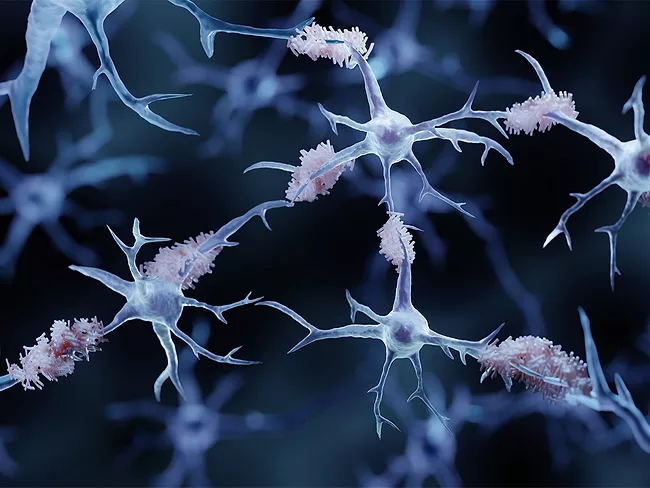
Neuroinflammation is a hallmark of Alzheimer’s disease (AD), driven in part by chronic microglial activation and elevated pro-inflammatory cytokines, which contribute to neuronal damage and cognitive decline. Targeting microglial activity has emerged as a promising therapeutic approach.
Deep learning tools for protein design can also be used to create molecules that bind to them. Certain peptides, such as intrinsically disordered proteins (IDPs), are challenging to target due to their variable nature. However, scientists from the lab of Nobel laureate David Baker have developed a method to generate binders for IDPs by searching the world’s largest protein database with their AI-powered tool RFdiffusion.
In the search for effective and safe Kv7 activators, a collaboration spanning Belgium, Germany and Italy has identified JNJ-37822681 as a promising lead.
GSK plc scientists have presented findings from studies on the therapeutic potential of GSK-5862611, an anti-Sortilin antibody, in addressing neurodegenerative disease mechanisms linked to the TDP43 G298S mutation.
Alterity Therapeutics Ltd. helped develop a new neuroimaging biomarker called the multiple system atrophy index (MSA-AI), which looks to be a more reliable biomarker for tracking disease progression of MSA. Developed using deep learning methods, the MSA-AI offers a superior, objective and quantifiable measure of brain atrophy in MSA patients.
A month away from the PDUFA decision date for a Leqembi (lecanemab) subcutaneous autoinjector to be used for maintenance dosing for those with early Alzheimer’s disease, Eisai Co. Ltd. and Biogen Inc. presented clinical data at the Alzheimer's Association International Conference (AAIC) 2025 in Toronto, showing comparable efficacy and safety to the FDA-approved intravenous formulation.
Investigators at Yonsei University have reported findings from studies conducted to identify small molecules capable of disaggregating amyloid-β42 (Aβ42) aggregates, a hallmark of Alzheimer’s disease.
The U.S. FDA has cleared Actio Biosciences Inc.’s IND application and granted fast track designation to ABS-1230, an expected first-in-class, orally administered small-molecule KCNT1 inhibitor, for the treatment of KCNT1-related epilepsy.
Dysregulation of cholinergic neurotransmission through muscarinic receptors, particularly the M1 and M4 subtypes, has been implicated in the pathophysiology of schizophrenia. Muscarinic M4 receptor agonists and positive allosteric modulators (PAMs) have demonstrated the ability to modulate the disrupted neural circuits associated with this disorder.
 RSS
RSS