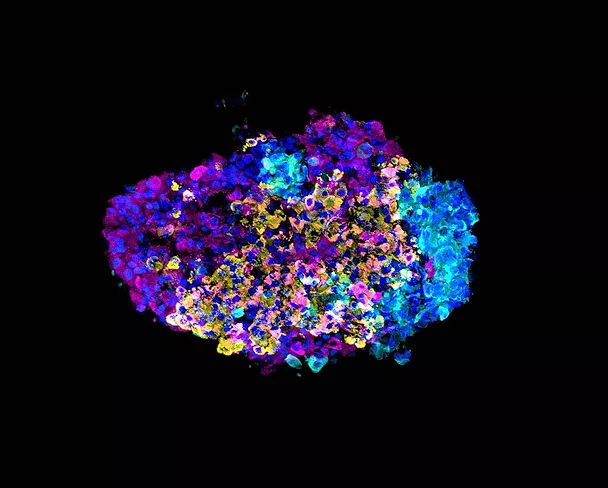
Gene therapies rely on vectors to reach the target tissue where they act, such as adeno-associated viruses (AAVs) or lipid nanoparticles (LNPs), among other delivery strategies. Each combination is optimized for a specific cell type and indication, aiming to overcome challenges such as efficacy, specificity and toxicity. On May 13, 2026, two sessions included in the scientific symposia of the 29th Annual Meeting of the American Society of Gene and Cell Therapy (ASGCT), being held in Boston this week, addressed AAV-related toxicities, which have led to fatal cases in clinical trials and remain an area for improvement in approved therapies.
Circular RNA (circRNA) is not a new concept, but it is a novel strategy in the field of gene and cell therapy. While mRNA vaccines have revolutionized medicine, this RNA fragment without free ends surpasses their performance in both efficacy and durability, bringing it to the attention of several pioneering companies. The latest advances in circRNA presented at the 29th Annual Meeting of the American Society of Gene and Cell Therapy (ASGCT) clearly surpass the performance achieved with linear mRNA.
Researchers from Beacon Therapeutics Holdings Ltd. reported the development of BTX-001, an intravitreal gene therapy designed to target the complement pathway through delivery of a C5 inhibitor.
The U.K. Medicines and Healthcare products Regulatory Agency (MHRA) has opened a consultation on changes it is proposing to the legal definition of gene therapies, to reflect the advances in technology and manufacturing over the two decades since the current legislation was drawn up. The aim is to correct the mismatch between regulatory terminology and modern science, which MHRA says “can lead to uncertainty” over how a product is classified and to “inconsistent oversight and potential barriers for developers."
Fractyl Health Inc. has received clinical trial application authorization in the Netherlands to initiate a first-in-human phase I/II study of RJVA-001, the first clinical candidate from the company’s Rejuva Smart GLP-1 gene therapy platform.
Researchers at Daping Hospital in China have reported that liver-targeted delivery of the APOE3-Christchurch (APOE3Ch) variant, a rare protective form of apolipoprotein E, can indirectly reduce brain pathology, highlighting the therapeutic potential of peripheral approaches to Alzheimer’s disease.
A lower-than-expected increase in dystrophin over baseline in the first and lowest-dose cohort of a phase I/II study of ENTR-601-44 in Duchenne muscular dystrophy (DMD) caused shares of Entrada Therapeutics Inc. to plunge more than 57%, despite the cohort meeting the safety and tolerability primary objective.
Apertura Gene Therapy LLC and the TSC Alliance have established a collaboration to advance gene therapy programs designed to treat tuberous sclerosis complex (TSC).
Elaaj Bio, a wholly owned subsidiary of the nonprofit Loulou Foundation, has entered into a partnership with Viralgen Vector Core SL to advance a gene therapy program for CDKL5 deficiency disorder.
Dravet syndrome is a rare, severe, lifelong developmental and epileptic encephalopathy that begins in infancy and is marked by prolonged, often fever-triggered seizures that are difficult to control. It is usually caused by mutations in the SCN1A gene and is associated with developmental delay, cognitive and behavioral impairment, and reduced life expectancy.

 RSS
RSS