The field of gene therapy is experiencing major advances driven by precise editing technologies, such as base and prime editing, and by the design of increasingly sophisticated vectors to deliver payloads that could reverse the effects of diseases. However, in the transition to in vivo applications many approaches still fail in their attempt to effectively reach target tissues or cells.
Coave Therapeutics SA has nominated a lead gene therapy program, CoTx-101, for the treatment of retinal vascular diseases, such as wet age-related macular degeneration and diabetic macular edema.
Korro Bio Inc.’s latest update on RNA editing prospect KRRO-110 may mean one less competitor in alpha-1 antitrypsin deficiency (AATD), and shares of the firm (NASDAQ:KRRO) closed Nov. 13 at $6.50, down $24.92, or 79%. As part of the third-quarter earnings report, Korro said KRRO-110 produced functional protein in AATD patients but fell short of projected levels of functional protein after a single administration.
Engene Holdings Inc.’s protocol amendment to its phase II trial with detalimogene voraplasmid in bladder cancer worked out in a big way, and shares of the firm closed Nov. 11 at $8.82, up $2.81, or 47%. Engene rolled out additional preliminary data from the pivotal cohort of the ongoing Legend study testing the nonviral gene therapy in high-risk, Bacillus Calmette-Guérin-unresponsive non-muscle invasive bladder cancer with carcinoma in situ, with or without concomitant papillary disease.
In a new publication in Molecular Therapy, researchers from Paracelsus Medical University, Salzburg, Austria, and collaborators present a promising prime editing strategy for junctional epidermolysis bullosa (JEB) treatment.
The U.K. Medicines and Healthcare products Agency (MHRA) has committed to major reforms of how it regulates drugs for rare diseases, making it easier to run clinical trials and get approvals. The new rules will be published in full early in 2026 and come into effect later in the year, but following consultation with industry, academics and patients’ groups, the agency has released a position paper setting out its plans.
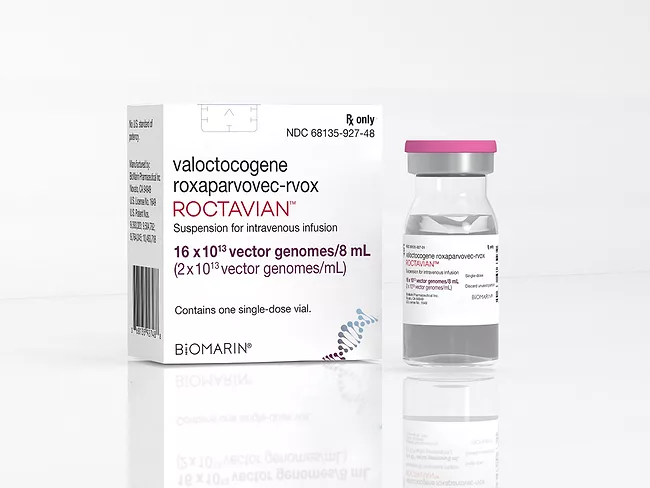
Biomarin Pharmaceutical Inc. plans to divest its pioneering gene therapy for hemophilia, Roctavian (valoctocogene roxaparvovec), and remove what had been considered a potential blockbuster from the portfolio in order to grow the company.
Diabetic kidney disease (DKD) is the most prevalent long-term complication of diabetes, affecting up to 30% of individuals with type 1 diabetes within the first 10 years of diagnosis.
Alpha-1 antitrypsin deficiency (AATD) is a monogenic disease caused by mutations in the SERPINA1 gene, which encodes alpha-1 antitrypsin (AAT), a serine protease inhibitor mainly produced by hepatocytes.
Judo Bio Inc. has announced preclinical data demonstrating that its megalin-STRIKER oligonucleotide therapeutics achieved robust and sustained, kidney cell-selective gene silencing in rodents and nonhuman primates (NHPs).
 RSS
RSS