Takeda Pharmaceutical Co. Ltd. agreed to codevelop and commercialize up to three of Innovent Biologics Co. Ltd.’s immuno-oncology (I-O) and antibody-drug conjugate (ADC) candidates with the signing of a $11.4 billion deal, including $1.2 billion paid up front.
The transition from complex and costly ex vivo strategies to platforms that enable direct cellular intervention within the body, known as in vivo therapies, is marking a paradigm change in the field of gene and cell therapies by simplifying manufacturing, improving tissue targeting and expanding clinical access to treatments.
As the many challenges facing cell therapies are being addressed, the CAR T field continues to evolve beyond its original design of T cells engineered to target hematological malignancies. During the 32nd Annual Congress of the European Society of Gene and Cell Therapy (ESGCT), held in Seville Oct. 7-10, several studies showed how this technology is being redefined as programmable and adaptable immune cells with expanded functional versatility.
A team of U.S. and South Korean researchers have developed an AI model called MSI-SEER that can not only predict microsatellite instability-high (MSI-H) tumors based on tissue slides, but also flag “what it does not know.” “Have you ever asked ChatGPT anything, and the response was, ‘I don’t know?’” Cheong Jae-ho asked during an interview with BioWorld. “Probably not, and that is the problem with AI now.”
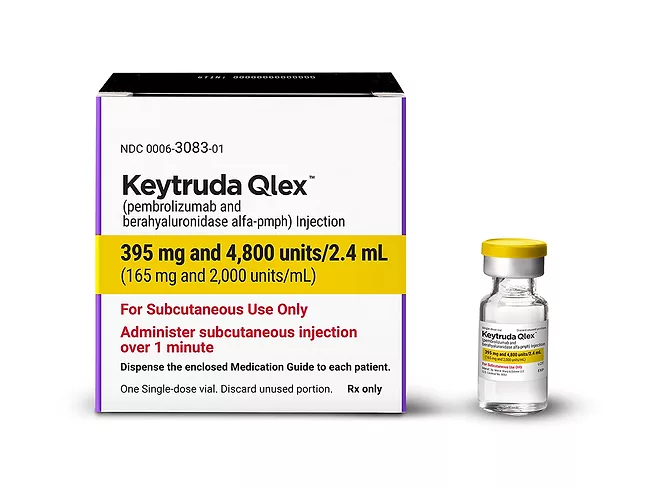
The U.S. FDA approved Merck & Co. Inc.’s Keytruda Qlex (pembrolizumab and berahyaluronidase alfa-pmph) injection on Sept. 19, making it the first and only subcutaneously (SC)-administered immune checkpoint inhibitor that can be administered in about a minute.
When Robert Kennedy Jr. announced the cancellation of 22 projects related to mRNA vaccines and the end of new investments in that technology, the U.S. Secretary of Health only mentioned their use against respiratory viruses, without referring to other applications. The vaccines whose safety and effectiveness Kennedy is questioning are based on the same molecular principles as cancer vaccines under development. “Continued investment in mRNA technology is essential to fully realize its potential in oncology and ensure that promising strategies like neoantigen-based vaccines reach clinical application.” Kazuhiro Kakimi, professor at the Department of Immunology at Kindai University Faculty of Medicine, told BioWorld.
In August, a press release from HHS announced the cancellation of 22 vaccine research projects based on mRNA, the latest available technology aimed at developing therapies for viral infections, cancer, and genetic conditions. What happens to mRNA innovation when funding dries up? This series explores how reductions in funding could impact mRNA technology, affecting innovation, research and future therapies.
Researchers at the Fred Hutchinson Cancer Research Center found that autoantibodies targeting the exoproteome reshaped checkpoint inhibitor responses and opened new avenues to enhance immunotherapy. In the study published in the July 23, 2025, issue of Nature, the authors set out to address a long-standing question in cancer immunotherapy: why patients with the same type of cancer, treated with the same immunotherapy, can experience such drastically different outcomes.
There are a raft of problems the U.S. FDA wants resolved before Replimune Group Inc.’s BLA for RP-1 (vusolimogene oderparepvec) with nivolumab to treat advanced melanoma goes any further, all of which the company said are a surprise.
SML Biopharm Co. Ltd. is harnessing mRNA technology to develop novel immunotherapy-based cancer vaccines, including two candidates for cervical and head and neck cancers caused by human papillomavirus (HPV) infection.
 RSS
RSS