Katy Rezvani received this year’s E. Donnall Thomas Prize for her work on natural killer (NK) cells at the annual meeting of the American Society of Hematology (ASH). It was not love at first sight, though.
KRAS-mutated tumors were once untreatable. In fact, KRAS was something of a poster child for so-called undruggability. Several laboratories are investigating strategies to address other mutations and uses beyond non-small cell lung cancer (NSCLC) and colorectal cancer. If you can't bind KRAS to block it, use a glue or combine multiple weapons. This is the idea behind two new approaches that target cancers caused by this proto-oncogene.
Most drug developers working in the immunotherapy space focus on existing therapeutic targets when developing cancer drugs, optimizing ways of drugging them via engineering modalities such as CAR T-cell approaches, CRISPR editing or antibody-drug conjugates that deliver toxic payloads. The angle of one company – Cartography Biosciences – is the opposite to this. Its modus operandi is to pinpoint the immunological targets first, leveraging tools that already exist, before building therapies around them.
Back-to-back papers in the June 22, 2023, issue of Nature have identified separate molecular mechanisms underlying sex-specific cancer outcomes. Researchers from The University of Texas MD Anderson Cancer Center showed that increased expression of the epigenetic enzyme KDM5D, which is located on the Y chromosome, contributed to cancer progression in KRAS-mutated tumors. In the same issue of Nature, a team from Cedars-Sinai reported new insights into the consequences of losing the entire Y chromosome.
Antitumor immunotherapy has notched big wins, but in a small proportion of patients. And one possible explanation for why is that approved immunotherapies are not yet planting their flag on most of the battlefields where tumors and the immune system engage in combat. At the opening AACR 2023 plenary session, Ralph DeNardo celebrated the successes of the current, mostly T-cell-based approaches, but also encouraged his colleagues to think more broadly about the antitumor immunity.
Heterogeneity, in both tumors and their microenvironment, limits the success of current cancer treatments. But it also provides opportunities. Heterogeneities “are not barriers to therapy, they are vulnerabilities to be exploited,” was how David DeNardo described his take at the 2023 annual meeting of the American Association for Cancer Research (AACR) on Sunday.
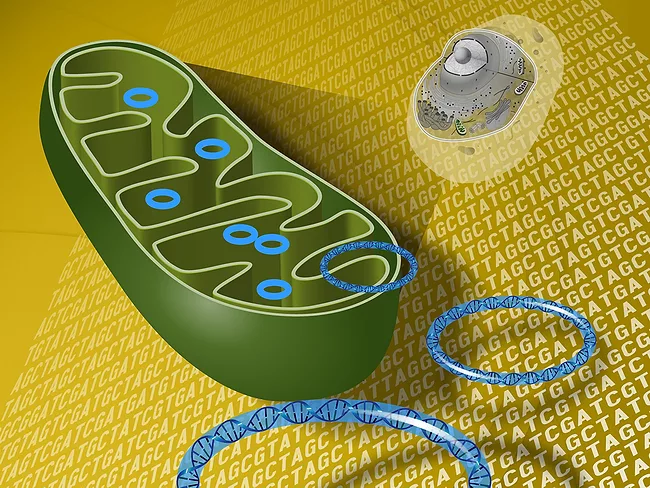
A deficiency in fumarate metabolism could be behind a new mechanism of inflammation mediated by mitochondrial DNA and RNA. Two independent and simultaneous studies described how the accumulation of fumarate in the mitochondria released the genetic material of this organelle through vesicles, activating an inflammatory signaling pathway.
Whether as primary tumors or metastases, brain tumors remain stubbornly intractable to the progress that has occurred in many other tumor types. As Igor Vivanco, who is a senior lecturer in the Institute of Pharmaceutical Science at King’s College London, noted in his talk at the European Society for Medical Oncology Targeted Anticancer Therapies (ESMO TAT) meeting in Paris this week, the last win in glioblastoma was the addition of temozolomide to the radiotherapy standard of care in 2005. And temozolomide’s benefit is measured in months, not years.
A combination of radiation therapy and CD47 blockade induced an abscopal effect in animal studies even in animals that lacked T cells, researchers reported in the Nov. 21, 2022, online issue of Nature Cancer. The findings are “the first demonstration of T-cell-independent abscopal response,” co-corresponding author Edward Graves told BioWorld. “We’re not trying to say that all abscopal responses are macrophage-mediated. There are plenty that require T cells,” Graves clarified. But “there is another avenue of abscopal responses that has not been reported. ... All the abscopal literature is about stimulating an adaptive response.”
The 2022 Nobel Prize in chemistry was awarded to Carolyn Bertozzi of Stanford University, to Morten Meldal of the University of Copenhagen, and – for the second time – to Barry Sharpless of The Scripps Research Institute “for the development of click chemistry and bioorthogonal
chemistry.”
Click chemistry, the Nobel Committee’s Olof Ramström told reporters while announcing the prize, “is almost like it sounds – it’s all about linking different molecules.”
He likened click chemistry to a seatbelt buckle, whose interlocking parts can be attached to many different materials, linking them by snapping the two parts of the buckle together.
“The problem was to find good chemical buckles,” Ramström said – chemicals that “will easily snap together, and importantly, they won’t snap with anything else.”
 RSS
RSS