Another day, another insider trading settlement involving a biopharma company employee. This time the U.S. SEC settlement is with Mohit Verma, who was a researcher and associate director of immunology at the San Diego-based Infinitybio Inc. at the time of the alleged violative trading activity.
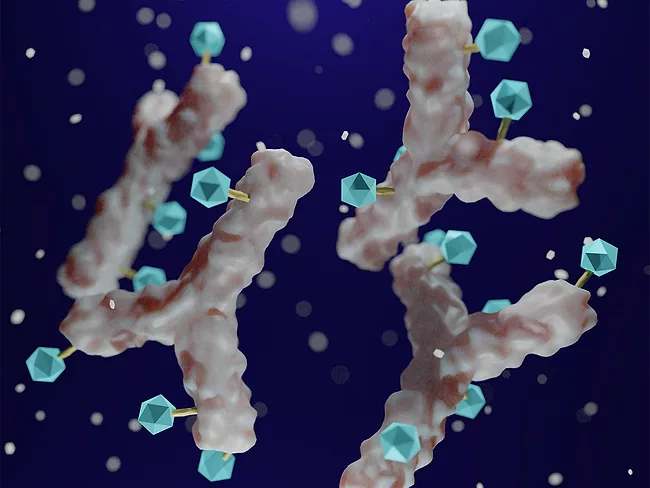
Over the course of the year, and continuing into the latest scientific meetings, an extraordinary breadth of new antibody-drug conjugate (ADC) designs was reported, with innovations spanning targets, linkers, payloads, conjugation chemistries and overall architectures. Once defined by a simple “one target, one payload” model, the field is lately expanding into a more versatile and diverse therapeutic space.
Hanx Biopharmaceuticals (Wuhan) Co., Ltd. raised HK$586 million (US$75.37 million) in its IPO on the Hong Kong Securities Exchange (HKEX:3378) on Dec. 23 to advance its clinical stage immuno-oncology pipeline.
BioWorld’s 2022 end-of-year highlights included a toast to the future – of universal vaccines. Even before SARS-CoV-2 vaccines were developed in record time and saved countless lives during the COVID-19 pandemic, vaccines were a rare bright spot in the fight against infectious diseases. Bacteria are becoming multidrug resistant far faster than new classes of antibiotics are being developed, viral spillover events and vector ranges are increasing, and climate change is helping bacteria and fungi alike breach human thermal protections against infections.
Immutep Ltd.’s stock surged 31% on Tuesday morning following the news that it out-licensed rights to Dr. Reddy’s Laboratories Ltd. to develop and commercialize eftilagimod (IMP-321, efti) in selected territories in a deal worth AU$528.4 million (US$349.5 million).
2025 has been the most challenging year in the efforts to fight HIV since at least the advent of antiretroviral therapy. In a report on “Overcoming disruption, transforming the AIDS response,” released last week ahead of World AIDS Day on Dec. 1, the Joint United Nations Program on HIV/AIDS (UNAIDS) described “a global system in shock” by sharply reduced funding from the U.S. and other wealthy nations. Scientifically, for now, progress is ongoing. To mark World AIDS Day, Nature published three independent studies on HIV.
Two South Korean conglomerates – Samyang Holdings Corp. and Samsung Biologics Co. Ltd. – listed their newly spun-off biopharmaceutical units on Korea Exchange’s (KRX) main trading board Nov. 24.
In a deal worth up to $840 million, Third Arc Bio Inc. is licensing Adagene Inc.’s Safebody technology platform to generate two masked CD3 T-cell engagers against unique tumor associated antigens.
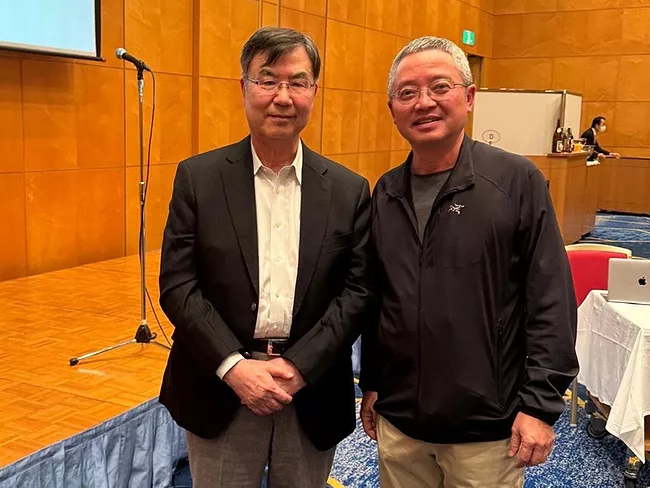
South Korean researchers led by Lee In-suk of Yonsei University have reported the most complete oral microbiome catalog to date, with more than 72,000 genomes. Detailed in Cell Host & Microbe on Nov. 12, 2025, the database is expected to serve as a universal platform for academia and enable “precision microbiome medicine” for the industry, Lee told BioWorld.
Enara Bio Ltd. is staking a claim to having validated the first in a new class of tumor antigens derived from unannotated regions of the dark genome, describing its findings in talks and posters being presented at the Society of Immunotherapy in Cancer (SITC) meeting in National Harbor, Md., Nov. 5-9, 2025.

 RSS
RSS