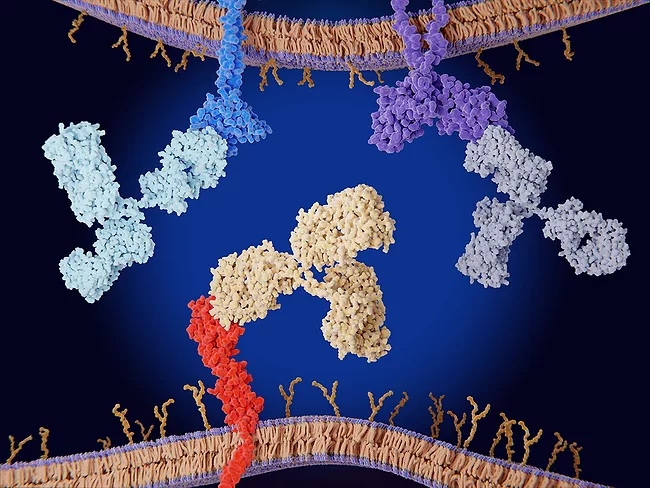
Among the most profound results presented at the 2024 European Society for Medical Oncology Congress were the 10-year data from the Checkmate-067 and Keynote-006 trials of Opdivo and Keytruda as first-line agents in advanced or metastatic melanoma in which 10-year overall survival topped 40%. The success of checkpoint blockade, however, has not extended to all tumor types, but in 2024, molecular studies have led to advances in gene therapies and a multitude of approaches that have opened the door to hope.
Gene editing strategies, from epigenetic engineering to cell reprogramming and genetic vaccines, are accelerating the development of new therapies that awaken the immune system to treat cancer, as presented last month in Rome at the 31st Annual Congress of the European Society of Gene and Cell Therapy (ESGCT). Some of these advances are taking advantage of the conditions of the tumor microenvironment, where cancer cells coexist with immune cells, microorganisms and blood vessels.
Cellbion Co. Ltd. debuted on the tech-heavy Kosdaq board of the Korea Exchange Oct. 16, with share prices closing upward at ₩20,650 (US$14.94) – outdoing its initial price of ₩15,000 per share for 1.9 million shares.
Mestag Therapeutics Ltd. has sealed a potential $1.9 billion agreement with Merck & Co. Inc., in which it will apply its expertise in activated fibroblasts to identify novel targets for inflammatory diseases. The pharma company has the option to license one or more targets, up to a prespecified number, and will take on all subsequent discovery, development and commercialization work.
Research into the regulation of gene expression experienced a significant breakthrough with the discovery of microRNA, small RNA molecules that do not code for proteins but control their translation. This finding has earned its authors Victor Ambros and Gary Ruvkun the 2024 Nobel Prize in Physiology or Medicine.
Akeso Pharmaceuticals Inc. scored two approvals from China’s National Medical Products Administration on Sept. 30 before the long Labor Day holiday – one for its PCSK9 inhibitor, ebronucimab, and the second to expand use of PD-1/CTLA4 bispecific antibody cadonilimab in unresectable or metastatic gastric or gastroesophageal junction adenocarcinoma, marking the second indication for cadonilimab in China.
The FDA’s Oncologic Drugs Advisory Committee (ODAC) met for what chairperson Christopher Lieu called, at the end, “an incredibly long day” to decide whether approval of immune checkpoint inhibitors should be restricted in accordance with expression levels of PD-L1.
The U.S. FDA’s Oncologic Drugs Advisory Committee (ODAC) on Sept. 26 will take up a controversy that’s hardly new: whether approval of immune checkpoint inhibitor drugs should be restricted in accordance with PD-L1 expression.
Metastatic solid tumors may be curable now. Among the most profound results presented over the weekend at the European Society for Medical Oncology (ESMO) 2024 Congress were the 10-year data from the Checkmate-067 and Keynote-006 trials, the phase III trials that tested Opdivo (nivolumab, Bristol Myers Squibb Co.) and Keytruda (pembrolizumab, Merck & Co. Inc.) as first-line agents in advanced or metastatic melanoma.
Cellular immunotherapy is the Lamine Yamal of cancer therapy. It is easy to forget how young the field is – and that as stunning as it is to watch in action already, it is still reaching its full potential. One aspect of doing so is working in a broader range of tumor types. The field made a giant step toward that goal with last week’s approval of Tecelra (afamitresgene autoleucel, Adaptimmune Therapeutics plc), the first CAR T cell to be approved for treatment of a solid tumor.
 RSS
RSS