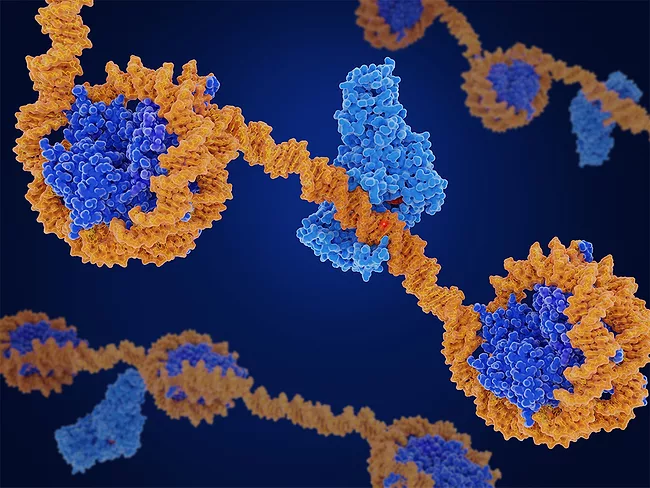
It looks like Biogen Inc.’s Nrf2 activator, Skyclarys (omaveloxolone), will maintain its status as the sole therapy approved for treating patients with Friedreich’s ataxia (FA), at least for now. The U.S. FDA asked for another “adequate and well-controlled study” in the complete response letter (CRL) issued to PTC Therapeutics Inc. for 15-lipoxygenase inhibitor vatiquinone. The agency said “substantial evidence of efficacy was not demonstrated.”
A U.S. appeals court schooled the FDA as it handed Vanda Pharmaceuticals Inc. a “technical knockout” of sorts in yet another regulatory bout with the agency – this one over the FDA’s refusal to grant the company’s request for a hearing after it had received a complete response letter (CRL) for a jet lag supplemental indication for Hetlioz (tasimelteon).
Adding another name to an impressive roster of partners assembled over the past few years, Skyhawk Therapeutics Inc. inked a neurology-focused deal with Merck KGaA aimed at discovering small-molecule RNA-targeted drugs that could be worth more than $2 billion.
Superluminal Medicines Inc. and Eli Lilly and Co. are collaborating in a deal to develop cardiometabolic disease and obesity therapies by aiming at undisclosed G protein-coupled receptor targets. The deal could bring Superluminal as much as $1.3 billion, including up-front and near-term investments, an equity investment, development and commercial milestones, plus tiered royalties on net sales.
Taking weight off with a glucagon-like peptide-1 (GLP-1) receptor agonist and keeping it off once the drug has been discontinued has been a tall order but Response Pharmaceuticals Inc. is seeing progress. Top-line results from its randomized, double-blind, placebo-controlled, parallel-group phase II study of RDX-002, in those who had already wrapped up a GLP-1 receptor agonist course for reducing obesity, were positive.
Insmed Inc. CEO William Lewis said that offering two doses of Brinsupri (brensocatib) will complicate payer coverage “not at all, just the opposite. It’s going to give the flexibility to physicians to choose how they want to engage with their patients, wrestle with whatever issues may be in their minds related to safety [and] what have you.” The U.S. FDA approved Insmed’s first-in-class dipeptidyl peptidase 1 inhibitor, Brinsupri, given in 10-mg and 25-mg tablets as a once-daily treatment for noncystic fibrosis bronchiectasis in adults and children 12 and older.
Fosun Pharmaceutical Co. Ltd. subsidiary Fosun Pharma Industrial is out-licensing its phase II dipeptidyl peptidase 1 inhibitor, XH-S004, to newco Expedition Therapeutics Inc. in a deal worth up to $645 million. Under terms of the deal, Expedition gains global rights to rights to develop, manufacture and commercialize XH-S004, except in mainland China, Hong Kong and Macau.
With a packed pipeline of drug candidates targeting multiple markers of cancer, Bayer AG signed on for a new project, this time going after the KRAS pathway with a global deal that could bring Kumquat Biosciences Inc. up to $1.3 billion in payments.
Experimental drugs that directly inhibit the NSD2 enzyme have shown potential as an effective strategy against hard-to-treat cancers, such as lung and pancreatic tumors driven by KRAS mutations. The therapeutic mechanism involves reversing a histone H3 methylation that promotes open chromatin and the expression of oncogenes.
Boehringer Ingelheim GmbH’s zongertinib enters the market as the first oral HER2-targeted therapy for patients with non-small-cell lung cancer, following an accelerated approval by the U.S. FDA. Branded Hernexeos, the drug is cleared for use in adults with unresectable disease or whose tumors have HER2 tyrosine kinase domain activating mutations and who have received prior systemic therapy.

 RSS
RSS