The commercial success of COVID-19 mRNA vaccines has other companies in the space “looking in the attic, so to speak,” to see if they have any patents they can assert against components of the vaccines so they can get a percentage of the sales, Aziz Burgy, a patent attorney, told BioWorld. Given the global spread of the pandemic and how quickly it came on, the vaccines have generated billions of dollars in sales in a short period of time, and other companies want a share, he said. He compared today’s patent infringement cases against the vaccine producers to the litigation seen in the early days of the smartphone revolution when other high-tech companies scrambled for a piece of Apple’s and Samsung’s profits.
In an effort to increase global access to COVID-19 technologies, the World Health Organization’s COVID-19 Technology Access Pool and the Medicines Patent Pool finalized a licensing agreement May 12 with the U.S. NIH for research tools, early stage vaccines and diagnostics.
Beijing Zhifei Lvzhu Biopharmaceutical Co. Ltd. has picked up rights to a whooping cough vaccine candidate from Intravacc B.V. on undisclosed terms. Zhifei Lvzhu gained exclusive rights to develop and commercialize the vaccine in China, as well as nonexclusive rights in Africa, South America, and selected Asian countries. In turn, Intravacc is eligible to receive milestone and up-front payments plus royalties on net sales of the vaccine, should it reach market.
With its focus on transformative high-risk, high-reward research to drive biomedical breakthroughs, the new Advanced Research Projects Agency for Health (ARPA-H) may be a good concept, but it shouldn’t come at the expense of increased investment in basic research at the NIH, according to the bipartisan leadership of U.S. House appropriators.
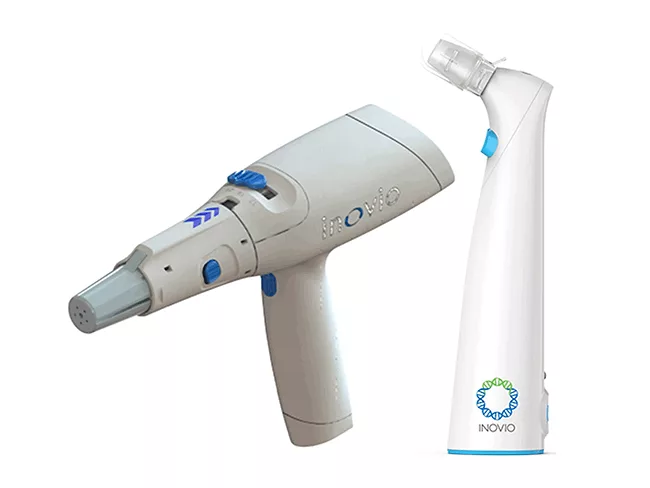
Newly appointed President and CEO Jackie Shea looks to have her work cut out for her, as Inovio Pharmaceuticals Inc. decided to ditch its phase II/III COVID-19 vaccination trial in favor of pursuing a booster strategy with INO-4800. That update, disclosed during Inovio’s first-quarter earnings late May 10 alongside a likely delay in filing for approval of HPV immunotherapy candidate VGX-3100, sent the stock (NASDAQ:INO) falling 27% May 11. Over the past year, shares have fallen more than 70%.
A congressional investigation into COVID-19 vaccine manufacturing failures at Emergent Biosolutions Inc. unveiled more troubling issues at the company’s Bayview facility in Baltimore, which had been awarded a lucrative U.S. government contract to produce vaccines for Johnson & Johnson.
First results from the U.K. Cov-Boost trial, looking at responses to a fourth dose of an mRNA COVID-19 vaccine, show that antibody levels increase more than after the third dose, confirming the precautionary move to give the most vulnerable a second COVID-19 booster in advance of immune response data being available.
The U.S. FDA’s efficacy bar for COVID-19 vaccines for the youngest children may be lower than the 50% required for the adult vaccines, according to Peter Marks, director of the agency’s Center for Biologics Evaluation and Research.<
Shares in Bavarian Nordic A/S fell sharply after its development partner Johnson & Johnson terminated collaboration and license agreements in hepatitis B virus (HBV) and human papillomavirus (HPV). Shares in the Danish company (OMX:BAVA) fell nearly 13% to DKK 115.75 (US$16.39) following the announcement. The partnerships, with J&J’s Janssen pharma unit, began with a $187 million tie-up in 2014, to develop an Ebola vaccine that is now approved in the EU. That led to an $171 million HPV vaccine research agreement in December 2015 and an $879 million deal covering HIV-1 and HBV research in 2017.
A risk of rare but potentially life-threatening blood clots in combination with low platelet levels after a jab of Johnson & Johnson's Janssen COVID-19 vaccine has convinced the U.S. FDA to limit its use. The vaccine is now authorized in the U.S. only for adults who wouldn't otherwise be vaccinated and those who can't or shouldn't, for medical reasons, get another approved vaccine. Through March 18, 2022, the FDA and CDC have identified 60 confirmed cases, including nine fatal cases of the condition, called thrombosis with thrombocytopenia syndrome – a rate of 3.23 cases per million doses of vaccine administered.

 RSS
RSS