Immuno Cure Biotech Ltd. is collaborating with Pharmajet Inc. to evaluate the safety and immunogenicity of its HIV therapeutic DNA vaccine, Icvax, delivered via Pharmajet's innovative Tropis needle-free injection system.
Barely a day before the eight new members of the U.S. CDC’s Advisory Committee for Immunization Practices (ACIP) are supposed to hold their first meeting, Sen. Bill Cassidy, R-La., called for the June 25 meeting to be postponed.
Post pandemic, Moderna Inc. is broadening the applications of mRNA technology to cancer, rare diseases, latent viruses and respiratory viruses, “taking advantage” of the revenue generated by Spikevax (elasomeran), its mRNA-based vaccine for COVID-19.
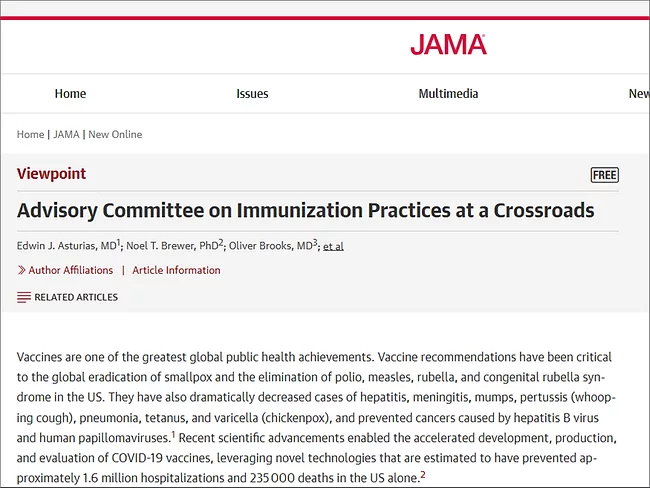
The June 25-26 meeting of the U.S. CDC’s Advisory Committee for Immunization Practices (ACIP) will be anything but business as usual. In wiping the slate clean just two weeks before the panel was to meet, Health and Human Services Secretary Robert Kennedy made sure of that.
A global consortium led by Adaptvac ApS aims to design and test a new vaccine that could offer broad protection against several filoviruses, including Zaire ebolavirus, Sudan ebolavirus and Marburg virus.
On the same day that FDA Commissioner Martin Makary spoke in a fireside chat during the 2025 Biotechnology Innovation Organization’s International Convention, the agency unveiled a pilot commissioner’s national priority voucher program that will enable companies to receive a shortened FDA review time of one to two months.
Immuno Cure Biotech Ltd. is collaborating with Pharmajet Inc. to evaluate the safety and immunogenicity of its HIV therapeutic DNA vaccine, Icvax, delivered via Pharmajet's innovative Tropis needle-free injection system.
Researchers from Purdue University and the U.S. Centers for Disease Control and Prevention have recently developed a novel influenza vaccine candidate that uses a bovine adenoviral (BAd) vector to deliver nucleoprotein (NP) antigens from both influenza A and B viruses, along with an autophagy-inducing peptide (C5) to enhance cellular immune responses, particularly T-cell responses.
The 17 members abruptly terminated June 9 from the U.S. CDC’s Advisory Committee for Immunization Practices are not going gently into the night. Instead, they’re raging against what could be the dying of the light.
On the same day that FDA Commissioner Martin Makary spoke in a fireside chat during the 2025 Biotechnology Innovation Organization’s International Convention, the agency unveiled a pilot commissioner’s national priority voucher program that will enable companies to receive a shortened FDA review time of one to two months.
 RSS
RSS