Azitra Inc. made its debut on the public market June 16, in the hopes of raising a relatively modest $7.5 million to enable it to fund clinical trials, manufacturing and R&D, as well as working capital and other general corporate purposes.
Cutia Therapeutics Ltd. raised HK$465 million (US$65 million) in a Hong Kong IPO on June 12, with almost half of the proceeds going toward furthering its lead product to treat adipose accumulation. Cutia’s shares moved a little higher on the first day of trading, opening at HK$21.80, rising 0.46% and closing at HK$21.95.
After a steep drop in biopharmaceutical IPOs in the first half of 2023, investors have come to expect that the slowdown in new listings of Chinese companies will continue for some time. Without the key influx of cash that equity financing can generate, biopharma companies are ramping up other activities to generate cash, particularly by out-licensing drugs with the potential for global expansion.
Beijing Luzhu Biotechnology Co. Ltd. raised a net HK$242 million (US$31 million) from an IPO in Hong Kong but shares in the developer of vaccines and therapeutics for infectious diseases, cancer and autoimmune diseases plummeted on the first day of trading. Luzhu’s shares (HK:2480) started trading on May 8 at HK$31.50 and fell about 30% throughout the day to close at HK$22. Founded in 2001, Luzhu has yet to turn a profit. It recorded net losses of ¥725.2 million (US$92 million) in 2022 and ¥539.4 million in 2021.
In what has been described as one of the slowest, closed-window public markets in recent years, Acelyrin Inc. priced an upsized IPO, raising $540 million, the fifth highest amount for a U.S. IPO by a traditional biopharma company to date. Despite industry IPOs raising only $628 million throughout the first four months of 2023 – the lowest amount in 10 years, Acelyrin’s IPO suggests that there is still a strong investor appetite ready and waiting for innovative technologies with solid data.
Swiss biotech firms raised CHF1.3 billion (US$1.5 billion) in equity and debt financing in 2022, a fall of 60% from the previous year’s total of over CHF3.3 billion. But it’s still ahead of historic pre-pandemic levels of funding.
During what has become one of the slowest IPO years in recent memory, cancer immunotherapy company Cytomed Therapeutics Ltd. debuted on Nasdaq, raising $9.65 million, while inflammatory disease firm Acelyrin Inc. filed to list its stock for a potential $100 million. Up to this point, there were only six biopharma IPOs completed this year – the fewest since 2013. Cytomed, which priced 2.4 million shares at $4 apiece, is now the seventh for 2023, and the fifth on Nasdaq. Two other IPOs have closed on Chinese markets.
Raising $15.6 billion through 276 transactions, the biopharma industry has experienced a respectable first quarter (Q1) in terms of financings, with a 14% jump over last year and higher amounts than the first quarters of many pre-pandemic years. The financings compare with $13.7 billion raised through 253 transactions in 2022’s Q1. Private money remains the strongest source of capital in 2023, with venture capital bringing nearly 45% to the table and private investors in public companies bringing another 20%.
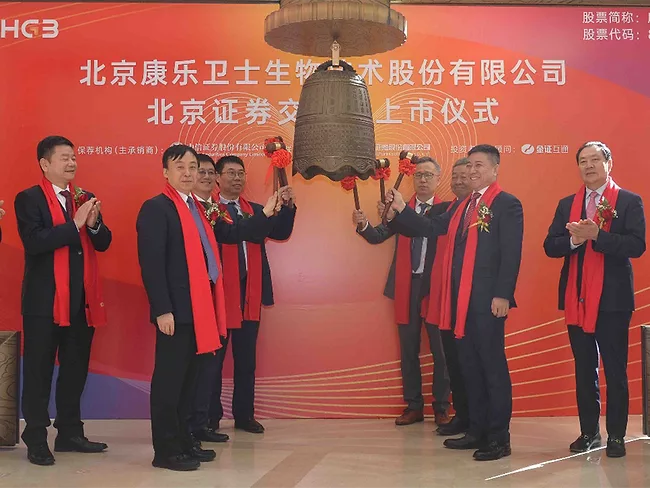
Health Guard Biotechnology Inc. raised ¥294 million (US$43 million) in an IPO on the SME-focused Beijing Stock Exchange, with the funds going to push the development of its HPV vaccines.
While the U.S. is in an IPO drought, going public remains the only lifeline for many small life sciences companies facing a decade of development, R&D costs of $1 billion or more, and a hefty risk of failure, Susan Washer, former CEO of Applied Genetic Technologies Corp., testified in a March 9 hearing before the House Subcommittee on Capital Markets.

 RSS
RSS