Med-tech financing activity in the first four months of 2026 reached $10.05 billion, similar to 2025’s $10.31 billion and 2022’s $10.62 billion. While below the peak years of 2019-2021, when financings were above $15 billion in the time period, total value is still above the levels seen in 2023-2024. April saw $1.51 billion raised, compared to $2.44 billion in March, $4.55 billion in February and $1.52 billion in January.
Mobia Medical Inc. began trading on Nasdaq under the ticker MOBI on May 8. The company priced its IPO at the midpoint of its proposed $14 to $16 range, selling 10 million shares at $15 each and raising approximately $150 million. The stock closed at $11.75 its first day of trading, down 21.7%.
Raising $279 million in an IPO and another $25 million in a concurrent private placement, Odyssey Therapeutics Inc. is advancing its lead phase II asset, OD-001, in ulcerative colitis, with plans to bring its SLC15A4 program into the clinic for lupus.
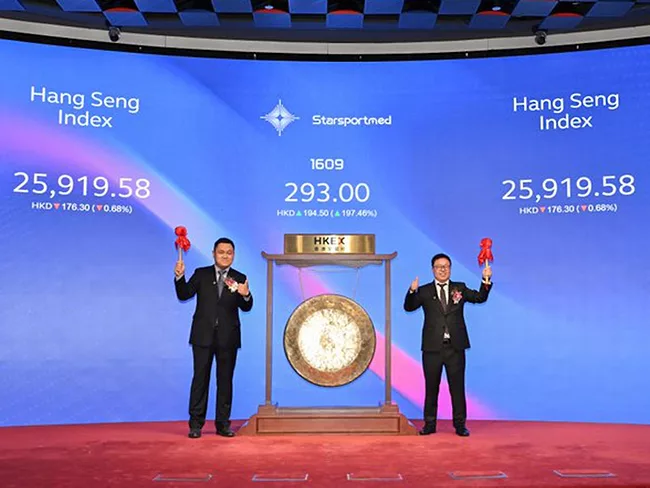
Star Sports Medicine Co. Ltd. debuted on the Hong Kong Stock Exchange with an HK$829.55 million (US$105.86 million) IPO May 5, with shares closing about 118% higher on the first day.
Biopharma financing activity is continuing its rebound in early 2026 compared to the past several years. Total funding reached $38.66 billion in the first four months of 2026, more than doubling 2025’s $15.85 billion in the same period and also exceeding 2022 and 2023. While still below the peak years of 2021 and 2024, when financings topped $50 billion in the period, the 2026 total shows a strong recovery.
Privately-funded biotechs in Switzerland raised a record CHF1.15 billion (US$1.47 billion) in 2025, an increase of 38% over 2024, and 45% of the total capital raised by the sector. This was a significant advance on previous years, when private companies typically attracted about 30% of overall investment.
Continuing biopharma’s IPO resurgence in 2026, Hemab Therapeutics Holdings Inc. priced an upsized offering of 16.75 million shares at $18 per share, the high end of its proposed price range, for gross proceeds of $301.5 million. Another $45 million could come if underwriters exercise their full overallotment.
Seaport Therapeutics Inc. joined Nasdaq May 1, raising gross proceeds of $254.9 million, as its parent, Boston-based Puretech Health plc moved to exit the market, opting for a sole listing on the London Stock Exchange (LSE) in order to reduce its cost base and cut bureaucracy.
The memory of Merck & Co. Inc.’s $10 billion takeover last year of inhaled respiratory drug specialist Verona Pharma plc may not have been far from the minds of Wall Street speculators as Avalyn Pharma Inc. priced its IPO, selling about 16.6 million shares at the high end of the targeted range, or $18 each, to reap about $300 million. The stock (NASDAQ:AVLN) came out of the gate strong on the first day of trading and closed April 30 at $29.49, up $11.49, or 64%.
Ribo Life Science Co. Ltd.’s HK$1.8 billion (US$230 million) raise on Jan. 9 was the sole Chinese biotech IPO on the Hong Kong Stock Exchange in the first quarter (Q1) of 2026, despite a growing backlog of more than 70 filings from China life science firms in 2025. Among med-tech companies, Hangzhou Diagens Biotechnology Co. Ltd. debuted with a $101 million Hong Kong IPO March 30, 2026.

 RSS
RSS