Creatv Microtech Inc. has developed a simple blood test that can predict response to chemoradiation and consolidated immunotherapy in patients with non-small-cell lung cancer (NSCLC).
Policymakers in the U.S. are grappling with a disastrous pandemic as well as long-standing political tensions, but one aspect of the COVID-19 pandemic that might unify them is the need to ensure that patients in the U.S. are not at the mercy of other nations for needed diagnostics and therapies.
The U.S. FDA granted San Diego-based Illumina Inc. an emergency use authorization (EUA) for the first COVID-19 diagnostic test that uses next-generation sequencing (NGS). In addition to diagnosing infection with SARS-CoV-2, the COVIDSeq test can help researchers track mutations in the coronavirus.
Keeping you up to date on recent developments in diagnostics, including: Sickle cell still greatly undiagnosed; Cardiac imaging for heart strain in infants with lung infections; C12orf49 is new lipid metabolism gene.
Whole genome sequencing is not part of treating patients in practice – or even involved in most clinical trials of drug candidates. But C2i Genomics Inc. is working to make that a reality. It applies pattern recognition to whole genome sequencing to create an individualized fingerprint for a given patient’s tumor. The New York-based startup has raised a $12 million series A round to back the development of its technology, which came out of Cornell and the New York Genome Center.
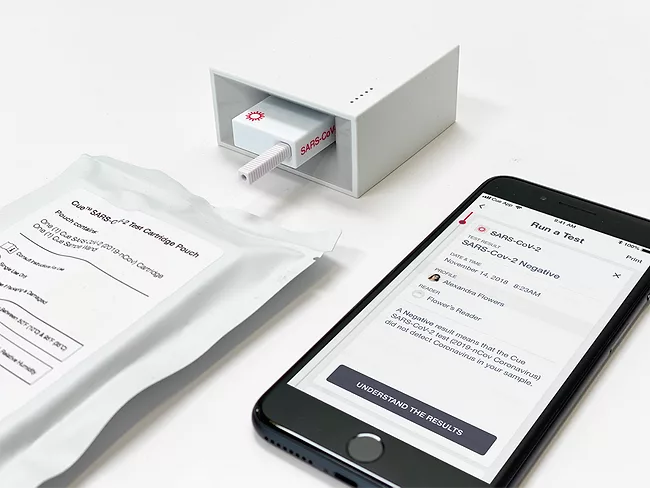
Cue Health Inc. scooped up $100 million in a series C round to support the launch of its rapid molecular testing platform. The funds will be used to finalize the development and validation of the Cue Health Monitoring System and Cue Test Cartridges, as well as to scale up manufacturing operations.
Before the lessons of COVID-19 fade into yesterday’s news, Congress should start preparing for the next pandemic, Sen. Lamar Alexander (R-Tenn.) is advising. As the chair of the Senate Health, Education, Labor and Pensions Committee, the senator issued a white paper Tuesday identifying areas that must be addressed.
TORONTO – Vancouver, B.C.-based Sonic Incytes Medical Corp. is giving MRI a run for its money assessing chronic liver disease following a successful, CA$3.5 (US$2.6 million) seed round. That brings total funding to CA$8 million (US$5.92 million) for a hand-held ultrasound device that quantifies liver disease using 3D tissue sampling and analysis in approximately five minutes in a doctor’s office.
LONDON – Base Genomics Ltd. has raised $11 million in an oversubscribed seed round to commercialize a new liquid biopsy technology for detecting DNA methylation, invented in the U.K. at the Ludwig Institute for Cancer Research at Oxford University.
Keeping you up to date on recent developments in diagnostics, including: Improving diagnosis of prostate cancer; Assay system identifies mitochondria-targeting drugs for PD; Ovarian organoids implicate oviducts.

 RSS
RSS