Keeping you up to date on recent developments in diagnostics, including: Double-contrast probe detects tiny tumors on MRI, Identifying risk of ischemic stroke, T cell aging induces broader senescence, ALK is a candidate thinness gene.
Fidget spinners are hand-held toys based on a roller bearing and three weighted lobes, which can spin freely, creating centrifugal force when activated manually. Generating centrifugal force with a fidget spinner takes neither electricity nor trained staff. And that has suggested to several researchers that such spinners, under the right circumstances, could be used for centrifugation under circumstances where reliably operating a centrifuge, for whatever reason, is a challenge.
Widespread testing is going to be key to safely reopening businesses and global economies in the current pandemic. To that end, Kahala Biosciences LLC, an Irvine, Calif.-based testing and tracking startup, and its technology partner, Rymedi Inc., of Greenville, S.C., have launched the Adiona COVID-19 antibody testing platform, combining antibody testing with a blockchain-enabled smartphone app to increase predictability and traceability of potential outbreaks.
The number of tests of various types for the SARS-CoV-2 virus are still growing, but the emergency use authorization (EUA) program is not the only option for developers. Timothy Stenzel, director of the Office of In Vitro Diagnostics and Radiology, said on the agency’s May 27 town hall that the agency would like to see test developers file for a 510(k) for their tests when the data are sufficient to support an application, adding that any such clearances will not affect the U.S. FDA’s interest in keeping plenty of similar tests on the market via the EUA mechanism.
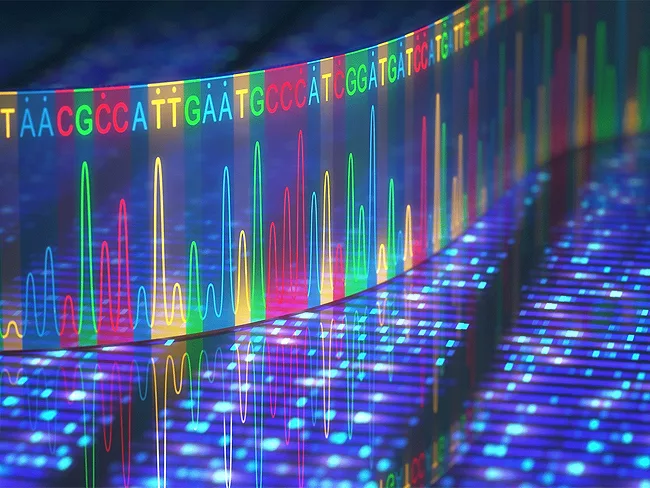
Pharma and diagnostics giant Roche Holding AG, of Basel, Switzerland, has acquired Seattle-based Stratos Genomics Inc., an early-stage sequencing technology company, in a move aimed at advancing development of Roche’s nanopore sequencer. Financial terms of the deal, which was first reported on Friday, were not disclosed.
The U.S. Department of Health and Human Services (HHS) has posted a national COVID-19 testing strategy in response to legislation passed in April, and the plan suggests that 300,000 tests per day should suffice to corral the pandemic. That calculation drew immediate fire from House and Senate Democrats, who characterized the plan as an attempt “to paint a rosy picture about testing,” but they also pushed the Senate to pass House legislation that would provide another $75 billion in funding for testing and contact tracing.
The U.S. FDA reported that 28 serology tests for antibodies for the SARS-CoV-2 virus either have been withdrawn from the market by the sponsor or delisted by the agency for failure to comply with its notification process for emergency use authorization (EUA). The agency said the list of unavailable tests will be updated over time. For his part, Commissioner Stephen Hahn said the move was undertaken “to ensure that Americans have access to trustworthy tests.”
Navidea Biopharmaceuticals Inc. CEO Jed Latkin said positive findings from the second interim analysis of the phase IIb study called NAV3-31 “were certainly better than what we were looking for” and will “make our partnering discussions a lot more interesting.”
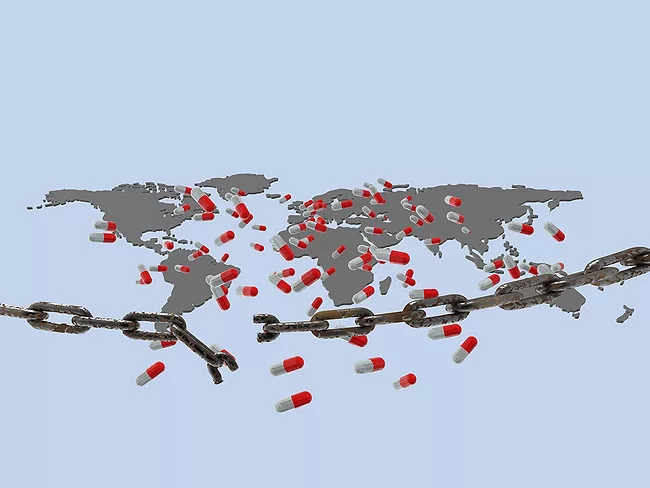
Scaling up to manufacture a massive volume of a COVID-19 vaccine, drug or innovative device that’s still in early stage development is easier said than done, especially in a global pandemic that has the supply chain stretched beyond capacity.
Mammoth Biosciences Inc., of South San Francisco, and London-based Glaxosmithkline plc (GSK) have joined forces to develop a point-of-care test to detect active COVID-19 infections using Mammoth’s CRISPR-based DETECTR platform. The two companies hope to submit an application to the U.S. FDA for emergency use of the test before the end of the year.

 RSS
RSS