The administration of President Joseph Biden announced March 17 a $10 billion allocation of funds for testing to reopen schools in the final months of the current school year, a source of revenues that was provided by the recently passed $1.9 trillion American Rescue Plan. The news follows by one day a new FDA policy on screening tests that allows test developers to distribute tests designed to screen those who are asymptomatic without first validating the test for this use, although there are still questions as to whether this new push will yet again crimp vital testing supplies.
Inflammatix Inc. raised $102 million in series D financing to advance development and commercialization of its novel immune response diagnostics portfolio. D1 Capital Partners led the round, with additional funds provided by existing investors Northpond Ventures LLC, Khosla Ventures, Think.Health GmbH, and OSF Healthcare Ventures, among others.
Roche Holding AG will acquire Genmark Diagnostics Inc. for $24.05 per share in cash for a total of $1.8 billion on a fully diluted basis. The transaction will give Basel, Switzerland-based Roche access to Genmark’s molecular diagnostics portfolio. The deal is expected to close in the second quarter of 2021. The price represents a 43% premium on the Carlsbad, Calif.-headquartered diagnostics company’s share price as of Feb. 10, prior to media speculation about a potential acquisition.
Variantyx Inc. raised $20 million in a series C financing led by GHS Fund (Quark Venture LP and GF Securities). The new funds are earmarked for the development of comprehensive tumor diagnostic solutions and sales expansion. Also taking part in the round were new investor IBM Ventures and existing investors Pitango Venture Capital, New Era Capital Partners and 20/20 Healthcare Partners. With this latest infusion, Variantyx has raised a total of $38 million.
LONDON – Following circulating tumor cells and cell-free tumor DNA, a new type of liquid biopsy is poised for commercial rollout after Datar Cancer Genetics Ltd. secured CE marking for Trublood, a method for isolating tumor cell clusters. In fact, the clusters do not consist solely of tumor cells, but can also include endothelial cells, erythrocytes, stromal cells, leukocytes, platelets, and cancer-associated fibroblasts. They are held together by cell-to cell-adhesion proteins.
Corvista Health Inc., a subsidiary of Toronto-based Analytics for Life Inc., reported closing on $65 million in series C equity financing, bringing total cash raised for a new cardiac diagnostics device to nearly $100 million. The Corvista system is described as noninvasive, point-of-care diagnostic system for coronary artery and other cardiovascular diseases.
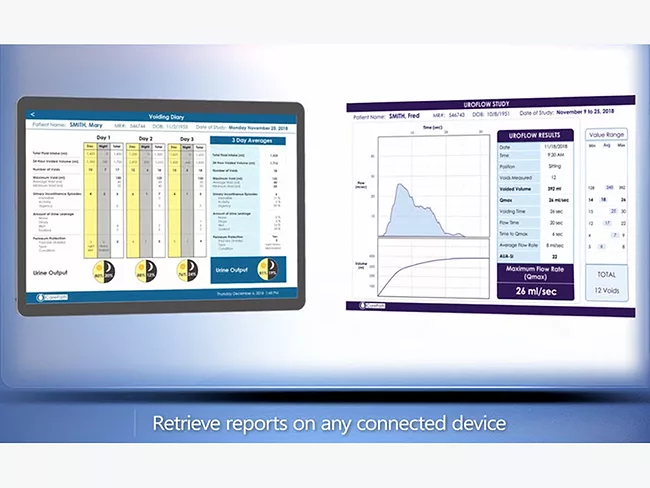
I-O Urology Corp. launched its Carepath platform to provide remote patient monitoring for urologic conditions. The platform uses a compact portable system to capture real-time urine voiding data and a mobile app to facilitate accurate reporting and timely communication between patients and their health care providers.
LONDON – New research shows it is possible to diagnose Parkinson’s disease by mass spectrometry analysis of sebum samples taken with a simple skin swab, and that the same technique has potential to be used for diagnosing COVID-19. In a paper published in Nature Communications on March 11, 2021, scientists and clinicians in the U.K. and the Netherlands describe using high resolution mass spectrometry to profile the chemical signature of lipids and other biomarkers in sebum from Parkinson’s patients and show how these exhibit subtle but fundamental changes as the disease progresses.
Keeping you up to date on recent developments in diagnostics, including: Quality of smartphone-transmitted skin images; A noninvasive test for kidney transplant rejection; Fungal culprit in Crohn’s disease.

 RSS
RSS