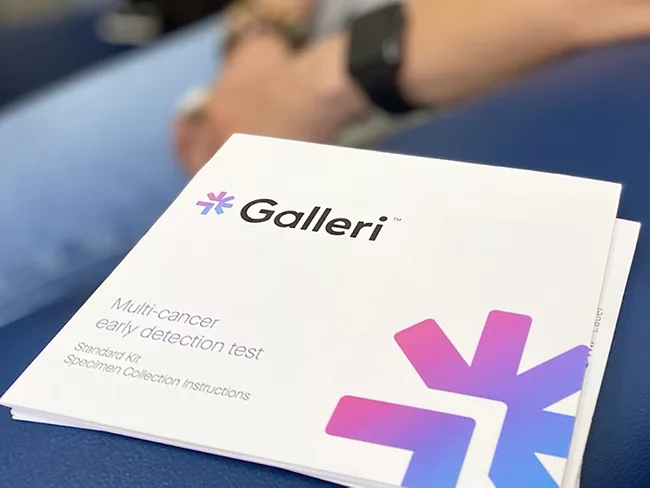
Grail LLC has presented data showing that when added to standard screening procedures for breast, cervical, colorectal and lung cancers, its Galleri circulating tumor DNA test led to a sevenfold increase in the number of cancers detected.
Genedx LLC partnered with Illumina Inc. to test whether Illumina's constellation map read technology could shed light on hard-to-detect variants that appear in rare diseases. Constellation met or exceeded the ability of other sequencing methods to detect variants implicated in multiple disorders and worked across a range of sample types, a study presented at the American Society for Human Genetics (ASHG) Annual Meeting in Boston on Oct. 15 found.
Ottobock SE & Co. KGaA got the Frankfurt Stock Exchange on its feet and dancing with Germany’s largest IPO in more than 18 months Oct. 9. The €808 million (US$934.23 million) gave the prosthetics company a market capitalization of €4.2 billion (US$4.88 billion), which rapidly rose as the share price shot up from €66 to €72 at the start of trading. The second med-tech to go public in October should have more company soon, with U.S. molecular diagnostics company Billiontoone Inc. filing Oct. 7 for an IPO with placeholder value of $100 million.
Simon Fraser University, TRIUMF and the University of British Columbia have disclosed radiolabeled compounds reported to be useful for the diagnosis of cancer.
Roche Holdings AG received CE-mark for the Kidney Klinrisk algorithm, an AI-based tool developed in collaboration with Klinrisk Inc. to stratify risk and assess the progressive decline in kidney function. The software will help clinicians to make more informed decisions when accessing adults with chronic kidney disease as well as individuals with diabetes or hypertension who are at elevated risk of kidney function decline.
Owlstone Medical Ltd. has been awarded up to $49.1 million in funding by the Advanced Research Projects Agency for Health (ARPA-H) to develop over-the-counter, at-home, cancer screening tests. These tests will be able to accurately detect more than 30 cancers as early as stage I, when tumors are still small and survival rates are highest, revolutionizing the field of cancer detection and improving patient outcomes.
A team of U.S. and South Korean researchers have developed an AI model called MSI-SEER that can not only predict microsatellite instability-high (MSI-H) tumors based on tissue slides, but also flag “what it does not know.” “Have you ever asked ChatGPT anything, and the response was, ‘I don’t know?’” Cheong Jae-ho asked during an interview with BioWorld. “Probably not, and that is the problem with AI now.”
Researchers at Heriot-Watt University received more than £475,000 ($637,000) in funding to advance clinical work on a vibroacoustic sensor which could change how eczema is diagnosed and treated.
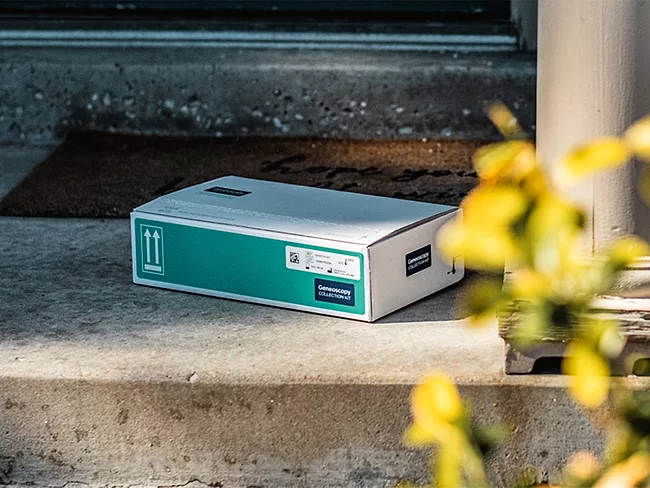
The market for colorectal cancer screening tests seems poised to heat up considerably with a recent request for Medicare coverage for Genoscopy’s Colosense test, but some who commented on the proposal have misgivings about the lower level of specificity seen in the Colosense relative to the Cologuard.
Roche Holdings AG reported results from its TSIX study which demonstrated that its sixth-generation Troponin T test is accurate at diagnosing heart attacks not only in men but also women. Recently granted CE mark, the Elecsys Troponin T hs Gen 6 test, demonstrated it was able to identify acute myocardial infarction (AMI) and identify those not having an AMI, with a high level of precision, ensuring that patients receive the care they need at the earliest opportunity.
 RSS
RSS