India is home to just one of several regulatory entities that have overhauled their med-tech regulatory apparatus in recent years, but the Central Drugs Standard Control Organization (CDSCO) has also joined the COVID-19 regulatory delay club as well.
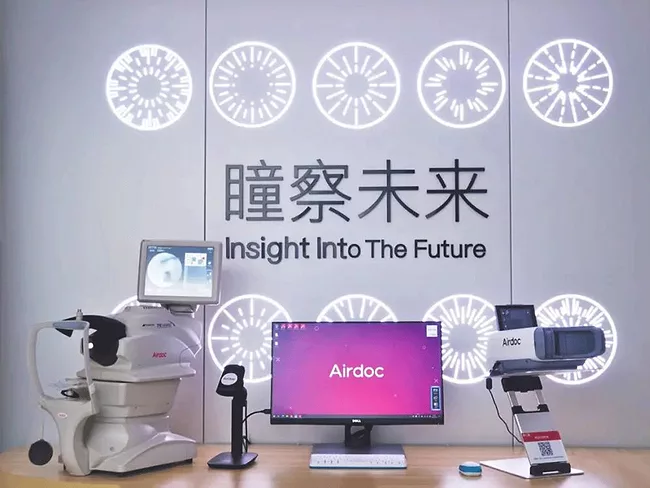
Beijing Airdoc Technology Co. Ltd. raised HK$1.67 billion (US$214.8 million) with its IPO on the Hong Kong Exchange (HKEX) on Nov. 5, falling below its expectations of a $500 million raise. Share prices for the artificial intelligence-based (AI) medical imaging firm were priced at HK$75.10 apiece and dropped 3.5% to HK$72.50.
Fapon Biotech Inc. expanded its presence in the global next-generation sequencing (NGS) market by acquiring all of the shares in U.S. firm Sequlite Genomics US Inc. With the acquisition, the Dongguan, China-based Fapon Biotech will manage Sequlite’s product development and business operation.
Jubliee Biotech Co. Ltd. is hoping to get FDA clearance with Jubiwatch, its smartwatch and medication management platform. “We aim to obtain FDA pre-submission between April and June 2022, and hopefully hit the U.S. market at the end of 2023,” Sung Kyoung Lee, CEO at Jubliee Biotech, told BioWorld.
Shanghai Microport Medbot (Group) Co. Ltd. started trading its shares on the Hong Kong Stock Exchange on Nov. 2, with shares increasing over 6% in the middle of the day. It raised HK$1.56 billion ($201 million) with shares going at HK$43.2 apiece in an initial public offering. The firm plans to use 35% of the proceeds for the development and commercialization of its core product, the laparoscopic surgical robot Toumai.
Asahi Intecc Co. Ltd. is tapping Hexagon Manufacturing Intelligence Inc.’s non-linear structural analysis software, Marc, to develop delivery devices that carry markers to the vicinity of cancers in preparation for endoscopic surgery.
PERTH, Australia – Australia’s Therapeutic Goods Administration (TGA) is seeking comments from industry on mandatory reporting of medical device averse events by health care facilities, and the agency also published comments on a consultation on patient information to be provided with devices. As part of the recent overhaul of Australia’s medical device regulations, the TGA released an action plan for medical devices in 2019 that explored whether it should be mandatory for health care facilities to report adverse events and safety problems with devices to the TGA.
PERTH, Australia – Singular Health Group Ltd. was awarded AU$50,000 (US$37,000) in funding from Australia’s Commonwealth Scientific and Industrial Research Organization’s (CSIRO) Kick-Start program to undertake a research project to develop artificial intelligence (AI)-based tools to automatically design patient-specific cranial implants. The AI will be integrated into Singular Health’s surgical planning software for editing before the cranial implants are 3D printed.
Medical device accelerator Medtech Innovator and the Asia Pacific Medical Technology Association (Apacmed) have selected Opharmic Technology (HK) Ltd. as the grand prize winner of its Asia Pacific Accelerator program. Opharmic has developed a noninvasive ultrasound platform technology for a variety of biomedical applications, with eye drug delivery being one of the key applications.
With the support of Singapore’s Economic Development Board (EDB), Medtronic plc has launched the Medtronic Open Innovation Platform (OIP) in Singapore to develop med-tech and digital health solutions for Asia Pacific. The company will invest up to $50 million for this venture.

 RSS
RSS