Galapagos NV is about to bury its recent turbulent past and sail off for the future with its $3 billion cash pile and the new name of Lakefront Biotherapeutics NV. The foundation for the transition was laid earlier this month in an arrangement with Gilead Sciences Inc., holder of 25% of Galapagos’ equity, to “co-parent” the assets of Ouro Medicines LLC, which Gilead is acquiring for up to $2.17 billion.
Eli Lilly and Co. plans to buy Centessa Pharmaceuticals plc for $6.3 billion in up-front cash and another potential $1.5 billion through contingent value rights, gaining access to a pipeline of orexin receptor 2 agonists for sleep disorders. The Indianapolis-based pharma is re-entering a field that has multibillion-dollar potential and one that could emulate the success seen with its obesity program. Centessa, of Boston and London, has a lead candidate, cleminorexton (formerly ORX-750), with positive phase IIa data in narcolepsy types 1 and 2 and idiopathic hypersomnia.
As expected, the EMA is recommending withdrawal of the mpox indication for Siga Technologies Inc.’s tecovirimat, whilst maintaining its approval as a treatment for smallpox, cowpox and adverse reactions to vaccinia vaccines.
Just five months after raising a $70 million series A round, newly launched Excellergy Inc. agreed to a $2 billion M&A transaction that would bring its trifunctional allergic effector cell response inhibitors (ECRIs) to Novartis AG.
Newco Idel Therapeutics GmbH has closed a €9 million (US$10.4 million) seed round to advance the development of a technology for delivery of cytotoxic drugs directly into the cytosol of tumor cells.
The U.K. Medicines and Healthcare products Regulatory Agency (MHRA) is to offer an early review of nonanimal data to give companies more confidence that evidence generated with new approach methodologies, such as organoids and microphysiological systems, will be accepted as part of marketing authorization applications.
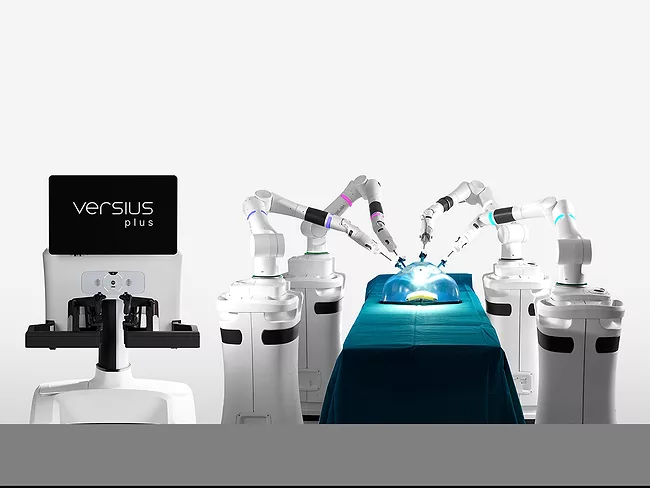
CMR Surgical Ltd.’s participation in Nvidia’s Physical AI health care robotics initiative is expected to accelerate the development of the next generation of intelligent surgical robotic systems powered by data, simulation and AI. As demand for minimally invasive procedures grows, more companies are entering the surgical robotics space.
At BioEurope Spring 2026, pharma representatives and investors shared their thoughts about current and future landscapes of different disease areas, and on how to move toward success – both at the level of individual companies and for indications as a whole.
Newco Immutrin Ltd. has raised £65 million (US$86.9 million) in a series A to take its lead antibody program through to clinical proof of concept in transthyretin amyloid cardiomyopathy.
The first day of Bio-Europe Spring, being held for the first time in Lisbon this year, featured panels on the partnering landscape in specific indications, as well as a more general panel on “Piecing Together the Therapeutic Landscape with Analyst Insights.” One theme of the panel was that by and large, large companies are looking for deals with companies that fit with their existing programs – but that such a fit can come in many forms.
 RSS
RSS