The industry is in support of the EU Biotech Act but says it needs to go further to restore Europe’s competitive position in biopharma. Instead of incremental adjustments, there should be wide-ranging change to create a system that supports the full lifecycle of drug development, from academic research and clinical development, to manufacturing and commercialization.
In a repeat move, the U.S. FDA issued yet again a complete response letter (CRL) to Camurus AB for its subcutaneous extended-release injection drug CAM-2029 (octreotide) to treat the rare chronic growth disorder acromegaly. The drug, which expects to be branded Oclaiz in the U.S. upon approval, is called Oczyesa in the EU and the U.K., where it received marketing authorization in 2025.
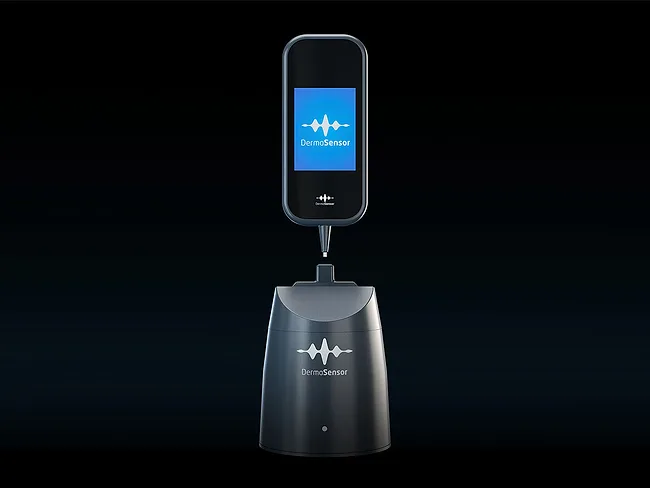
Dermasensor Inc. received CE mark approval for its handheld skin cancer detection device using spectroscopy and AI to test suspicious skin lesions for cancer in real time at the point of care. The device is designed to help qualified healthcare professionals decide whether suspicious skin lesions need further investigation. With skin cancer rates rising, the Dermasensor joins several other AI-based tools entering the European market to help with the analysis of suspicious lesions.
Two companies with European ties signed billion-dollar deals with large pharma firms in the last two days to discover and develop molecular glue drugs, as well as to advance a preclinical Alzheimer’s disease prospect. For both companies, the up-front payments are relatively small, only $10 million for Alzecure Pharma AB, and just $40 million for Orionis Biosciences Inc. But it’s the back-end milestone amounts that are headline-grabbing.
Investors in Dianthus Therapeutics Inc. apparently chose to ignore subtleties in the difference between efforts with that firm’s claseprubart vs. those by competitor Sanofi SA, which said that the phase III Mobilize study testing riliprubart in chronic inflammatory demyelinating polyneuropathy (CIDP) will be stopped for futility.
Extracellular matrix specialist Engitix Ltd. is teaming up with GSK plc to delve into the mechanisms underlying regression of fibrosis after treatment for chronic liver disease, and identify and validate new drug targets involved in this process.
Building on its partnerships with Gilead Sciences Inc., Sanofi SA and Pfizer Inc., Nurix Therapeutics Inc. brought on Roche Holding AG to help develop bexobrutideg, an oral degrader of Bruton’s tyrosine kinase (BTK). “I really can’t think of a better partner to maximize the opportunity for bexobrutideg to a wide range of patients,” Jason Kantor, Nurix’s chief business officer, told investors on a conference call, later pointing out that Roche has multiple drugs targeting B cells.
After a major breach of trust when its data were advertised for sale in China, the UK Biobank will now attempt to recall data previously downloaded by legitimate researchers and seek assurances information has been deleted from local servers.
Roche Holding AG has rapidly developed a research-use only molecular PCR test to detect the rare Ebola Bundibugyo virus, to support response efforts amid the ongoing outbreak in the Democratic Republic of Congo and Uganda. The test comes as commentary in The Lancet this week underscored the urgent need for a fit-for-purpose diagnostic test, as it warned that the absence of reliable testing is hampering efforts to ascertain the scale of the epidemic and understand the transmissibility of this strain of Bundibugyo virus.
Antibody-drug conjugate (ADC) specialist Ona Therapeutics SL has closed an oversubscribed series B at $86.6 million, as clinical development of the lead program ONA-255 in advanced treatment-resistant breast cancer gathers steam.
 RSS
RSS