PARIS – Researchers at the Institute for Surface Technologies and Photonics in Weiz, Austria, and the Institute of Scientific and Industrial Research Osaka University, Japan, have invented new ultra-flexible health monitoring patches that use harvested bio-mechanical energy. “These new devices represent a wireless e-health patch for accurate pulse and blood pressure monitoring,” Andreas Petritz, from the Institute for Surface Technologies and Photonics (the materials research unit of Joanneum Research FmbH), told BioWorld.
LONDON – Health data specialist Sensyne Health plc is opening up broader access to its U.S./U.K. patient information system with the launch of a subscription service giving accredited users the ability to interrogate more than 2 million longitudinal electronic health records. At an annual cost of £25,000 (US$34,602) per head, the company will provide “industrial scale” access to anonymized hospital records “to the smallest company or to a single researcher working in academe,” through the new Sensight service, said Paul Drayson, CEO.
LONDON – Oxford Biodynamics plc won a $910,000 grant to help validate real-world use of its epigenetics test for identifying patients who will respond to treatment with checkpoint inhibitor drugs. The award was made as part of the Beau Biden Cancer Moonshot.
Locate Bio Ltd. has closed a £10 million (US$13.8 million) funding round co-led by investors Mercia Asset Management and BGF to advance its orthobiologics product pipeline. The Nottingham, U.K.-based startup, which spun out from the University of Nottingham’s School of Pharmacy, is hoping to disrupt the orthobiologics market with its drug releasing, bone grafting products.
Ventura Capital has led a $60 million series A investment round into consumer genetic testing company Dnanudge Ltd. It is the first major fundraising round for the London-based company, which will be used to accelerate deployment of its DNA testing service worldwide. Dnanudge is aiming to tap into the lucrative consumer DNA testing market with Dnaband, a wearable device that stores digital DNA and helps users make healthier choices by personalizing shopping behaviors. The company is also planning a service for personalized skincare shopping.
PARIS – Researchers from the department of radiation oncology at the European Hospital Georges Pompidou (HEGP) and Stanford University School of Medicine have together developed a new artificial intelligence (AI) prediction tool for patients diagnosed with prostate cancer. These researchers have just published a validation of this interpretable AI model in Cancers. “It’s a question of distinguishing patients at risk of mortality from aggressive cancer that is spreading rapidly, from patients who might have far less aggressive cancer and who are not likely to die from it in under 10, 15 or even 20 years,” Jean-Emmanuel Bibault, radiotherapy oncologist at HEGP, told BioWorld.
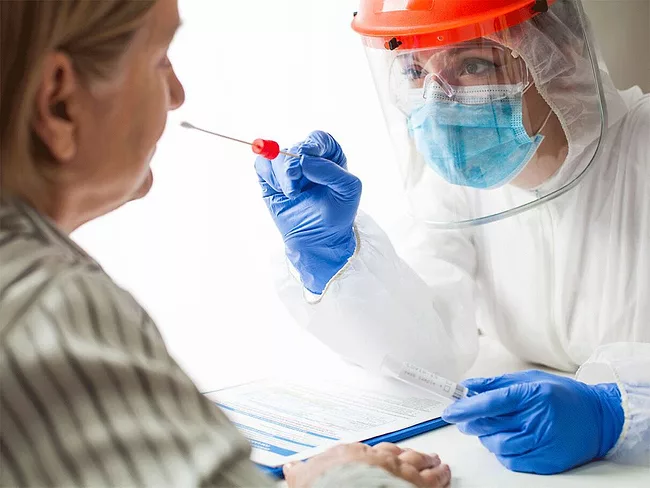
PARIS – A consortium led by French clinical and scientific experts has just published results in the Journal of Experimental Medicine of a study showing the contribution of a new simplified diagnostic test in better identifying the level of contagiousness of subjects infected with SARS-CoV-2.
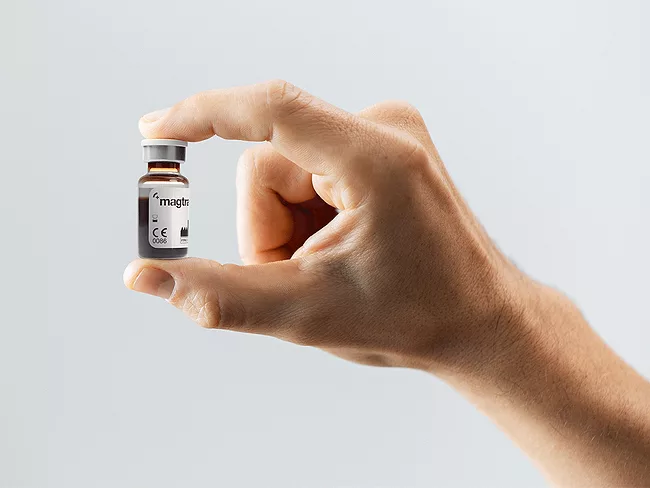
LONDON – Endomag Ltd. has received endorsement from the U.K. health technology assessment body NICE, opening the way to broader adoption of its Magtrace non-radioactive cancer staging technology in the National Health Service, and providing backing for commercialization of the system in other markets.
Johnson & Johnson has announced new data supporting use of its COVID-19 vaccine as a booster shot, after separate trial data from the U.K. showed effects of several vaccines waned after six months.
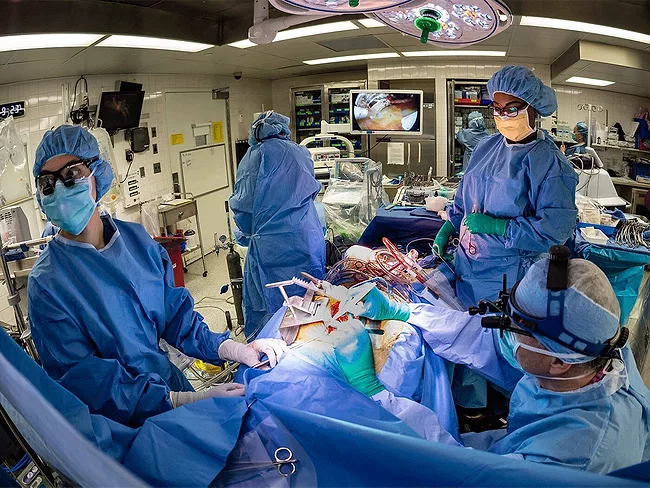
PARIS – The High Authority for Health (HAS) in France recently published a 165-page report on use over 10 years of long term mechanical circulatory assist devices (MCS). HAS conducted this wide-ranging study to review the conditions for the management of MCS devices, technology that has been constantly evolving over the past decade.
 RSS
RSS