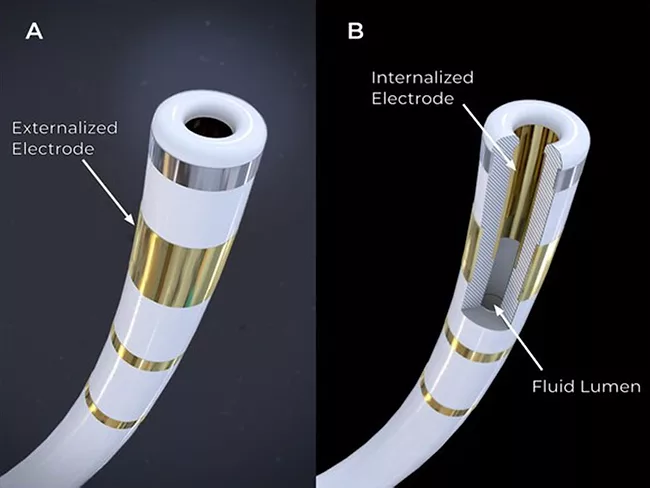
Field Medical Inc. continues to reap funding from investors for its pulsed field ablation (PFA) system with a $35 million oversubscribed series B financing round. With treatment of atrial fibrillation already upended by PFA technology, Field sees ventricular tachycardia as a fertile new territory for transformation.
Lunit Inc. reported a new collaboration with Microsoft Corp. July 2 to jointly develop medical AI programs accessible on Microsoft’s Azure cloud platform.
The final Medicare coverage memo for transcatheter edge-to-edge repair for tricuspid valve regurgitation largely replicates the April 2025 draft, but cardiology centers will not have to bring an electrophysiologist to the patient’s care team to be permitted to practice these devices.
In subpoenaing a former Pfizer Inc. official to appear before the U.S. House Judiciary Committee July 22, Judiciary Chair Jim Jordan, R-Ohio, signaled legislative steps Congress may take in response to allegations that Pfizer slow-walked its COVID-19 vaccine development in 2020 so the trial results wouldn’t have to be disclosed until after the presidential election.
The U.S. Health and Human Services and the Justice Departments are bringing more resources to their crack down on False Claims Act (FCA) violations involving drugs, medical devices and Medicare fraud.
Exelixis Inc.’s positive phase III top-line data June 22 with zanzalintinib (zanza) in colorectal cancer had Wall Street speculating anew about the odds with the tyrosine kinase inhibitor in an important indication.
Four days ahead of its July 7 PDUFA date, the U.S. FDA granted accelerated approval to Dizal (Jiangsu) Pharmaceutical Co. Ltd.’s sunvozertinib (DZD-9008), branded as Zegfrovy, for treating adults with locally advanced or metastatic non-small-cell lung cancer with epidermal growth factor receptor exon 20 insertion mutations following platinum-based chemotherapy.
The House of Representatives passed H.R. 1, also known as One Big Beautiful Bill, which will restore personal income tax cuts that expired in 2022. However, the bill also restores research and development tax credits, a provision that drew immediate praise from industry.
The U.S. Office of Inspector General issued a report stating the Medicare program often pays for physician services that are not performed post-surgery, but the Centers for Medicare & Medicaid Services responded it is in no position to immediately begin tracking all excess payments under these global codes.
It may be a year later than originally planned, but Regeneron Pharmaceuticals Inc. is set to commercialize Lynozyfic (linvoseltamab) in the U.S. following FDA approval for use in adults with relapsed and refractory multiple myeloma. A bispecific antibody targeting B-cell maturation antigen (BCMA) and CD3, Lynozyfic was cleared under the accelerated approval pathway, with continued approval contingent upon a confirmatory trial.
 RSS
RSS