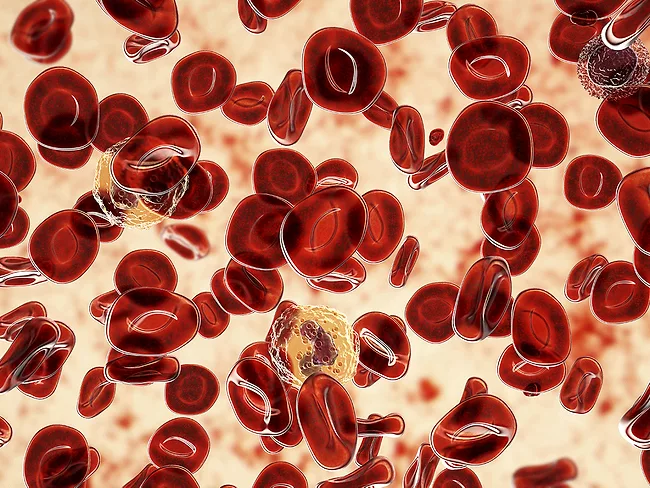
Rusfertide could become a blockbuster therapy for polycythemia vera, H.C. Wainwright analyst Douglas Tsao wrote March 4 after the injectable hepcidin mimetic peptide hit its primary endpoint and all four key secondary endpoints in the ongoing phase III Verify study.
Jay Bhattacharya will have his work cut out for him if he wins confirmation as the next director of the U.S. NIH. Besides getting NIH committees back on track to evaluate grant applications and calming the fears of researchers and other staff who have seen about 1,200 colleagues cut from their ranks in recent weeks, Bhattacharya will face the task of rebuilding public trust in the NIH itself.
Jazz Pharmaceuticals plc is buying Chimerix Inc. for $8.55 a share in cash, bringing the deal in at about $935 million. Jazz expands its cancer pipeline with the new acquisition’s lead candidate, dordaviprone, a small molecule for treating a rare, aggressive glioma that’s often found in children and young adults.
In an advance that could significantly lighten the load for caretakers in the “sandwich generation” and reduce loneliness in elderly patients, Aspargo Labs Inc. developed a metered delivery device that optimizes absorption of pharmaceuticals and reminds users to take their medications.
Ajax Health LLC, with backing from the $4 billion KKR Health Care Strategic Growth Fund II, and Boston Scientific Corp. launched a new business, Flowmod, to advance a system for treating heart failure developed by Boston Sci.
The widespread need for cartilage repair may have bred optimism on the part of Spinalcyte LLC when it filed a related patent in 2014, but the Patent Trial and Appeal Board has affirmed a rejection of the patent due to lack of enablement, an object lesson regarding the need for clarity in patent applications.
The U.S. FDA drafted a guidance for clinical trials for evaluation of optical imaging (OI) agents. The policy may allow clinical studies to evaluate an OI agent by means of an intrasubject study design, which would save time and money for the sponsor.
HBM Alpha Therapeutics Inc. signed a potential $395 million licensing deal Feb. 26 with an unnamed “business partner” for its endocrine asset, HAT-001, adding another contender to the congenital adrenal hyperplasia space.
Regenerative medicine company Mesoblast Ltd. is preparing to launch its allogeneic bone marrow-derived mesenchymal stromal cell (MSC) therapy, Ryoncil, (remestemcel-L), in March in the U.S. and has priced the treatment at roughly $1.55 million for a full course.
 RSS
RSS