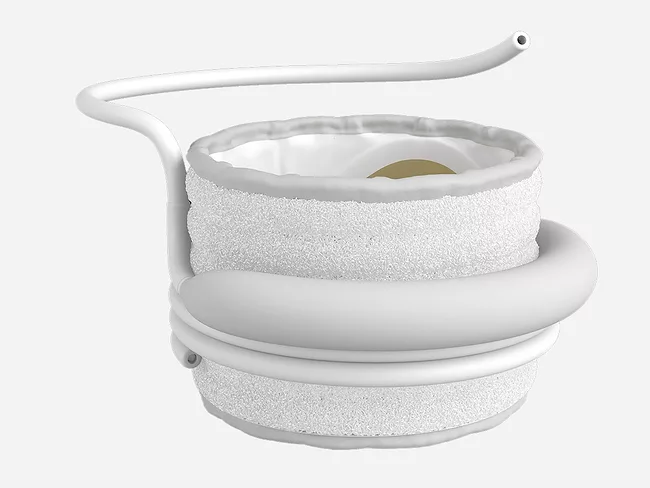
Edwards Lifesciences Corp. received U.S. FDA approval for its Sapien M3 mitral valve replacement system, making it the first transcatheter therapy utilizing a transseptal approach to be indicated for treatment of mitral regurgitation (MR). The Sapien M3 transcatheter mitral valve replacement system is indicated for the treatment of patients with symptomatic moderate-to-severe or severe MR or symptomatic mitral valve dysfunction who are deemed unsuitable for surgery or TEER by a multidisciplinary heart team.
The U.S. Securities and Exchange Commission announced Dec. 23 that Bryan Scott McMillen has agreed to pay a total of more than $140,000 due to allegations of insider trading in connection with Boston Scientific Corp.’s acquisition of Apollo Endosurgery Inc. The failure of federal authorities to prosecute McMillan under the criminal code may be a reflection of the relatively small sums he had illicitly obtained in the transaction. A Department of Justice investigation resulted in a conviction for $1 billion in health care fraud.
Driven by a deeply antiscientific political agenda, the current U.S. government is not just sabotaging some of the most groundbreaking technology that has been developed in the past decades. It is also destroying the country’s past successes, such as measles elimination and the reduction of hepatitis B infections in infants to near zero.
Harbour Biomed has added another collaboration to its end-of-year dealmaking, this time with Bristol Myers Squibb Co. (BMS) to develop multispecific antibodies. Harbour is getting about $90 million up front, but milestones could eventually top $1 billion.
Then there were three. With the administration’s Dec. 19 announcement of most-favored-nation (MFN) pricing deals with nine more biopharmas, only three of the 17 companies on the receiving end of U.S. President Donald Trump’s July 31 MFN ultimatum have yet to finalize terms with the White House – Abbvie Inc., Johnson & Johnson (J&J) and Regeneron Pharmaceuticals Inc.
Cytokinetics Inc. scored U.S. FDA marketing clearance Dec. 19 for Myqorzo (aficamten) 5-mg, 10-mg, 15-mg, and 20-mg tablets to improve functional capacity and symptoms in adults with symptomatic obstructive hypertrophic cardiomyopathy (oHCM). Shares of the South San Francisco-based firm rose 4.6%, or $2.88, on Dec. 22 to close at $65.60.
Two years after the U.S. FDA approved the first pulsed field ablation system, Abbott Laboratories finally got the regulatory nod for its Volt PFA system. Abbott follows Medtronic plc, Boston Scientific Corp., Johnson & Johnson and Kardium Inc. in receiving approval for its approval for use of its PFA device to treat atrial fibrillation.
Two U.S. Medicare administrative contractors (MACs) have removed CPT code 6468 from their group 1 CPT codes, a move that may cut rates for implant of Inspire Medical Inc.'s flagship product, the Inspire hypoglossal nerve stimulator for treatment of obstructive sleep apnea.
In 2025, science saw its breakthroughs, which BioWorld will be covering as part of our end-of-the-year wrap-up. But the biggest science story of 2025 is not about any scientific advance. It is the politicized destruction of U.S. science, and the dismantling of a scientific ecosystem that has been the envy of the world since it emerged after Germany destroyed its own pre-eminence in the 1930s.
The U.S. FDA approved 18 drugs in November, down from 20 in October, bringing the total number of clearances to 199 through the first 11 months of the year. The number is about 5% lower than the 209 approvals recorded over the same period in 2024 but more than every prior year.
 RSS
RSS