GE Healthcare Technologies Inc. reported a recall of several systems in its nuclear medicine line of high-end imaging systems for two potential issues that could lead to the collapse of a detector weighing more than half a ton onto the patient. According to the U.S. FDA listing for the recall, no injuries or fatalities have been reported in connection with these issues, but the announcement resurrects an episode from 2013 in which a patient in New York lost his life when a nuclear imaging camera collapsed during an imaging procedure.
Esophageal cancer is often referred to as the “silent killer” because few people show any symptoms until after the cancer has spread. If localized, five-year survival rate is 46%, but that drops to just 5% when malignancy has reached distant parts of the body.
Now that the U.S. FDA has granted accelerated approval for Biogen Inc./Eisai Co. Ltd.’s early Alzheimer’s drug, Leqembi (lecanemab), the Centers for Medicare & Medicaid Services (CMS) is being pressured to rethink its coverage of amyloid-targeting monoclonal antibodies.
Merit Medical Systems Inc. received a U.S. FDA breakthrough device designation for its Scout MD surgical guidance system, which enables physicians to pinpoint tumor location in soft tissue. The system uses up tiny reflectors to provide multidimensional location data that can improve the ability to remove the entire tumor with minimal trauma to the surrounding tissue, which can be a challenge in surgeries such as lumpectomies.
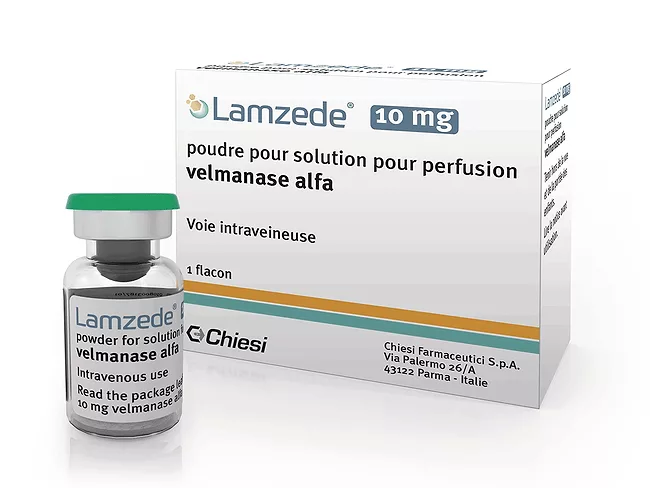
Chiesi Farmaceutici SpA scored U.S. FDA clearance of the enzyme replacement therapy (ERT) Lamzede (velmanase alfa-tycv) for non-central nervous system manifestations of alpha-mannosidosis (AM) in adult and pediatric patients. An ultra-rare, progressive lysosomal storage disorder, AM is caused by deficiency in the enzyme alpha-mannosidase. Lamzede is the first ERT to win approval in the indication, characterized by an inability to properly break down certain groups of complex sugars in the body’s cells.
Neurodiagnostics LLC (dba Synaps Dx) and Linus Health Inc. reported significant advances for their dementia diagnostics Feb. 16, adding to the liquid biopsies and radiologic studies currently used and potentially expanding access to beneficial treatments for Alzheimer’s disease (AD) and other dementias.
If the Feb. 16 hearing before the U.S. Senate Commerce Committee is anything to go by, it’s almost a given that the bipartisan Pharmacy Benefit Manager (PBM) Transparency Act will eventually be passed by the Senate. But its journey through the Republican-controlled House could be more uncertain in light of growing concerns about an “activist agenda” at the FTC.
The False Claims Act is perhaps the primary vehicle for U.S. federal authorities to extract penalties and fines from life science companies for violations of the law, but a new report by Gibson Dunn & Crutcher LLP suggests a mixed signal. The report notes that the U.S. Department of Justice (DOJ) recovered $2.2 billion via the FCA last year, but while that is not a conspicuous number for the past decade plus, what was conspicuous was that those sums were recovered by the second highest level of FCA actions settlement in the history of the FCA, suggesting that DOJ is keen on enforcement with no regard to the size of the target.
The U.S. FDA granted 510(k) clearance to Hyperfine Inc. for improved artificial intelligence (AI)-powered software for its Swoop portable magnetic resonance imaging (MRI) device. The company launched the new software this week.
A trio of proposed Medicare drug payment models that made a Feb. 14 debut in the U.S. is playing to mixed reviews. Two of the models to be tested by the U.S. Centers for Medicare & Medicaid Services (CMS) Innovation Center seem to “address the real problems underlying prescription drug pricing – patient out-of-pocket expenses and better payment systems that reward the value a medicine brings to the patient and the overall health care system,” said John Murphy, chief policy officer for the Biotechnology Innovation Organization. But he called the third model, which is expected to restrict Medicare payment for some Part B drugs that have indications with accelerated approval, “an attack on the accelerated approval pathway,” which Congress mandated to spur investment and innovation in areas of unmet medical need.
 RSS
RSS