Several U.S. government agencies have been involved in the enforcement action directed toward Medifirst Solutions Inc., of Freehold, N.J., including the Department of Justice, but the Securities and Exchange Commission (SEC) has had its say as well. The SEC recently announced that a final consent judgment has been entered against a former Medifirst stock promoter, although there is still no word as to the fate of the company’s former CEO.
Smiths Medical Inc., of Minneapolis, has undertaken a recall of its Medfusion 3500 and 4000 series of syringe infusion pumps because of software issues that could lead to over- or under-infusion of the drug. The U.S. FDA said the devices swept up in this class I recall are associated with seven serious injuries and one fatality, although the manufacturer indicated that a software update is in the works.
Two study coordinators at the Miami-based Tellus Clinical Research Inc. pleaded guilty July 20 in connection with a conspiracy to falsify data in trials evaluating treatments for medical conditions including opioid dependency, irritable bowel syndrome and diabetic nephropathy.
Continuing its evaluation of cancer drugs already on the U.S. market, the FDA will convene its Oncologic Drugs Advisory Committee (ODAC) Sept. 22 and 23 to consider two more approved drugs – Oncopeptides AB’s Pepaxto (melphalan flufenamide) and Secura Bio Inc.’s Copiktra (duvelisib).
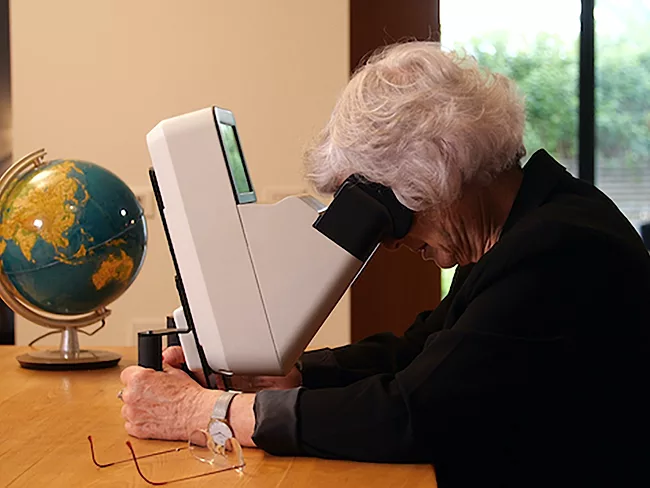
Notal Vision Inc. released two clinical reports it said prove the feasibility and efficacy of its patient-operated, home-based optical coherence tomography (OCT) device for monitoring wet age-related macular degeneration (AMD). This comes in the wake of a 2021 report that concluded patient operation of the Notal Vision Home OCT (NVHO) and its machine learning algorithm were generally on par with human experts evaluating retinal fluid and fluid volume in patients with AMD.
Pillar Biosciences LLC hopes to build a stronger foundation for its multi-cancer in vitro diagnostic, Oncoreveal Dx. The company filed a supplemental application for U.S. FDA premarket approval of eight additional types of cancer, which the agency accepted for review. The assay received FDA premarket approval for use in non-small cell lung cancer (NSCLC) and colon cancer in August 2021.
The U.S. CMS released the draft Medicare hospital outpatient rule for calendar year 2023, a document that is replete with information on pass-through payment data for drugs and devices. However, the agency said that the Supreme Court’s ruling regarding rates for drugs covered under the 340B drug pricing program came too late in the annual cycle to be fully accounted for in the outpatient rule for 2023, and thus any such permanent adjustments will have to wait until the outpatient rule for 2024.
Although it’s a latecomer to the COVID-19 pandemic in the U.S., there is a wedge of opportunity for Novavax Inc.’s adjuvanted protein-based vaccine among the 10% of the U.S. adult population that has yet to get a first jab.
The U.S. federal government’s crackdown on companies in the health care space shows no signs of slowing down as indicated by an announcement by the Department of Justice (DOJ) that it has achieved a settlement with Opko Health Inc. and Bioreference Health LLC regarding allegations of induced referrals.

 RSS
RSS