Epigenetic test company Volitionrx Ltd. appointed contract research organization (CRO) Diagnostic Oncology CRO LLC (DXOCRO) to conduct development and clinical validation studies for its Nu.Q product portfolio in the U.S. DXOCRO will carry out large-scale finding studies across the U.S. using Henderson, Nev.-based Volition's cancer tests to determine clinical utility in sepsis and cancer. The trials are aimed at U.S. FDA approval of the products.
Within a few weeks, government price negotiations for some prescription drugs, as well as limits on annual price increases, could be the law of the land in the U.S. With the Senate passing a slimmed-down version of H.R. 5376 through reconciliation Aug. 7, the House is expected to make a brief return Friday from its August recess to vote on the changes and conference the differences between its bill and the Senate version. Then it’s on to the president’s desk for the signature that will enact the package of health care, tax and climate provisions.
The U.S. Senate and House of Representatives have not yet come to terms on FDA user fee legislation, a quinquennial source of melodrama that leaves the agency in an awkward position with current employees. However, FDA principal deputy commissioner Janet Woodcock said recently that prospective employees are also watching how Congress handles its business, adding that some of these pending hires may take jobs elsewhere rather than wait on Congress to send a user fee bill to the White House.
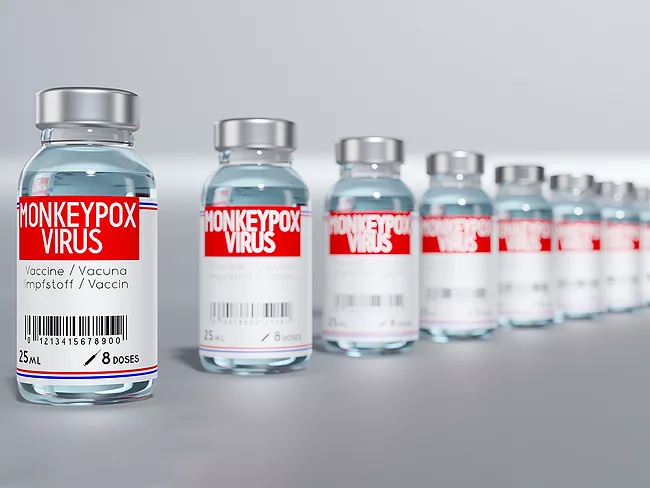
Now that the U.S. Department of Health and Human Services (HHS) has declared monkeypox a public health emergency, nearly two weeks after a similar declaration from the World Health Organization, the way is cleared for a coordinated response and emergency use authorizations to address supply challenges that could limit the availability of currently approved vaccines. It also has several companies ready to leap into the fray if their preclinical studies show a path to approval. HHS said it just shipped more than 602,000 doses of the Jynneos vaccine to states and jurisdictions, an increase of 266,000 in the past week.
Amylyx Pharmaceuticals Inc. got good news when the Institute for Clinical and Economic Review posted a revised evidence report Aug. 4 that assessed the comparative clinical effectiveness and value of the company’s AMX-0035 and Mitsubishi Tanabe Pharma America Inc.’s Radicava (edaravone) in treating amyotrophic lateral sclerosis.
No one denies that fewer new drugs will be a consequence of the Medicare drug pricing provisions the Democrats are trying to push through the U.S. Congress ahead of the midterm election campaign season. Less attention has been paid to the negative impact on drug-device combinations and new diagnostics that accompany innovative treatments.
The controversies over the use of ethylene oxide (EtO) as a medical device sterilant were quelled by the COVID-19 pandemic, but the U.S. Environmental Protection Agency (EPA) has resurrected the issue.
No one denies that fewer new drugs will be a consequence of the Medicare drug pricing provisions the Democrats are trying to push through the U.S. Congress ahead of the midterm election campaign season.
The difficulty in resolving multiple rounds of patent litigation can foster a willingness on the part of both parties to settle their differences and go on their respective ways, which seems to be the end result of litigation between San Diego-based Illumina Inc., and subsidiaries of BGI Group of Shenzen, China. While Illumina is on the hook for a $325 million payout in this agreement, the company will receive a license to practice some of BGI’s affiliate’s patents, but the handshake also forecloses any further litigation over the disputed patents for three years.
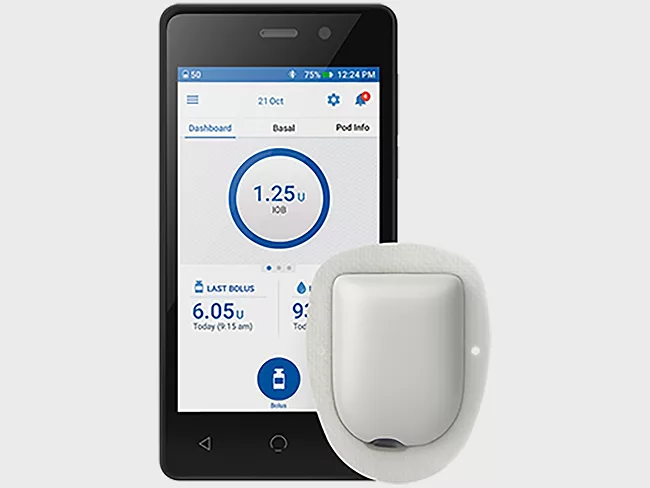
A rash of recent announcements in the diabetes market speak to the brisk pace of developments and keen competition in the field. Dexcom Inc. reported good news in the U.K. and Europe, offset by delays in the U.S., while Insulet Corp. gave investors assurance that it was moving full speed ahead in the release of its Omnipod artificial pancreas system. On the pharma side, Arecor Therapeutics plc signed a contingent agreement to acquire Tetris Pharma Ltd. and commercialize Ogluo in the U.K., E.U. and other countries.

 RSS
RSS