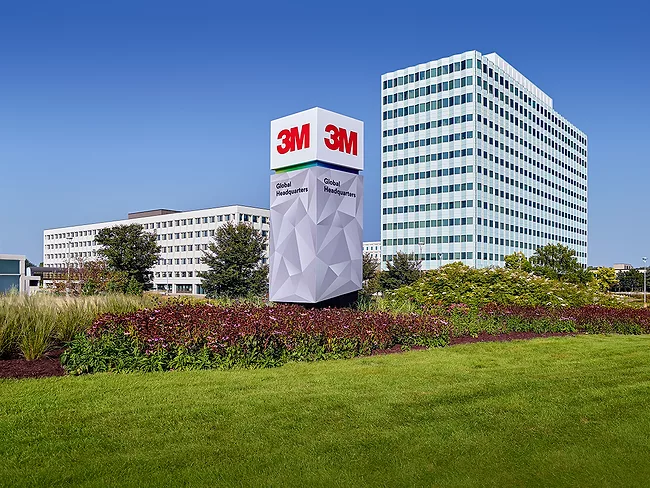
3M Co. reported a planned spinoff of its health care business by 2023, during the company’s second quarter earnings. The health care company will operate as a separate public company focused on wound care, health care IT, oral care and biopharma filtration. 3M said the health care business is expected to be spun off with net leverage of approximately 3.0x to 3.5x EBITDA and the ‘New 3M’ company will retain a stake of 19.9% in health care, which will be monetized over time.
Although Pfizer Inc. has the only drugs approved in the U.S. to treat a rare, progressive heart disease, the U.S. Court of Appeals for the Second Circuit agreed this week with the Department of Health and Human Services, and a lower court, that Pfizer’s proposed copay assistance program for middle-income Americans covered by Medicare would violate the federal Anti-Kickback Statute – even if the company has no “corrupt” intent.
The U.S. Department of Justice (DOJ) reported that Biotronik Inc., of Lake Oswego, Ore., agreed to pay $12.95 million to settle allegations that the company induced cardiologists to use the company’s devices to treat their patients. Among the allegations is that the company paid for physicians’ holiday parties and winery tours that could not be tied to a legitimate business expense.
Insider trading appears to be the U.S. SEC violation du jour. The agency filed insider trading charges against 10 individuals July 25, including a former FBI trainee and his friend who made about $82,000 and $1.3 million, respectively, from illegally trading ahead of the February 2021 announcement of Merck & Co. Inc.’s $1.85 billion tender offer to acquire Pandion Therapeutics Inc.
It was bound to happen someday. With more and more prescription drugs coming to the U.S. market, the FDA is running out of unique combinations for the 10-digit national drug code given to each product.
Several U.S. government agencies have been involved in the enforcement action directed toward Medifirst Solutions Inc., of Freehold, N.J., including the Department of Justice, but the Securities and Exchange Commission (SEC) has had its say as well. The SEC recently announced that a final consent judgment has been entered against a former Medifirst stock promoter, although there is still no word as to the fate of the company’s former CEO.
Smiths Medical Inc., of Minneapolis, has undertaken a recall of its Medfusion 3500 and 4000 series of syringe infusion pumps because of software issues that could lead to over- or under-infusion of the drug. The U.S. FDA said the devices swept up in this class I recall are associated with seven serious injuries and one fatality, although the manufacturer indicated that a software update is in the works.
Two study coordinators at the Miami-based Tellus Clinical Research Inc. pleaded guilty July 20 in connection with a conspiracy to falsify data in trials evaluating treatments for medical conditions including opioid dependency, irritable bowel syndrome and diabetic nephropathy.
Continuing its evaluation of cancer drugs already on the U.S. market, the FDA will convene its Oncologic Drugs Advisory Committee (ODAC) Sept. 22 and 23 to consider two more approved drugs – Oncopeptides AB’s Pepaxto (melphalan flufenamide) and Secura Bio Inc.’s Copiktra (duvelisib).
 RSS
RSS