Hot off the heels of a $45 million series B financing raise, Activ Surgical Inc. has completed the first clinical trial evaluating its Activinsights augment reality (AR)-based software suite and Activsight imaging module. The safety and feasibility study, carried out with The University of Texas Health Science Center at Houston (UTHealth Houston) is the first of several trials the Boston-based company is planning in 2021.
The U.S. CMS waded into controversy with two final rules calendar year 2022, drawing fire from device makers and doctors who allege that cuts in rates for physicians will hamper beneficiary access. Software developers working in the telehealth space will find much to cheer, however, given that some telehealth services that were covered during the COVID-19 pandemic will be covered after the pandemic has passed.
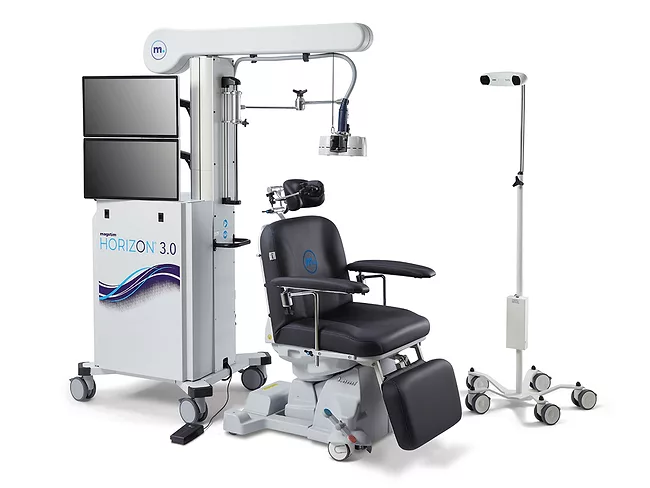
The FDA has granted Magstim Co. Ltd. 510(k) clearance for its transcranial magnetic stimulation (TMS) platform Horizon 3.0. TMS is a series of repetitive, focused magnetic pulses, used to stimulate brain cells. The noninvasive therapy has been touted as a cost-effective treatment for depression and is typically prescribed when antidepressants have failed, or the side effects are too disruptive to a patient’s lifestyle.
A few hours after the U.S. CDC Advisory Committee on Immunization Practices’ Nov. 2 recommendation to allow children ages 5 through 11 to be administered Pfizer Inc. and Biontech SE’s COVID-19 vaccine, Comirnaty (tozinameran), the agency’s director, Rochelle Walensky, endorsed the recommendation. The recommendation came as the World Health Organization (WHO) expanded the COVID-19 vaccines it recommends in the fight against the pandemic by endorsing Bharat Biotech International Ltd.’s Covaxin.
It looks like direct Medicare drug price negotiations are back in the U.S. fiscal 2022 budget bill.
Nearly a week after President Joe Biden dropped drug pricing reforms from his Build Back Better budget framework, congressional Democrats came together on a scaled-back version of the pricing provisions originally included in H.R. 3.
The FDA convened a Nov. 2 advisory panel to review the data for the AFX2 by Endologix LLC, of Irvine, Calif., with some indication that the agency believes the data suggest a poor benefit-risk ratio when used in treatment of abdominal aortic aneurysms (AAAs). The panel concluded that the benefits of the device do outweigh the risks for some patients, although the applicable patient population is likely to be smaller than is currently seen in clinical practice.
With the U.S. biosimilar pathway clearly developed, industry and the FDA are turning their attention to interchangeables in the third iteration of the biosimilar user fee agreement (BsUFA).
In a move that had been expected, the CDC’s Advisory Committee on Immunization Practices unanimously recommended the Pfizer Inc.-Biontech SE COVID-19 vaccine as safe and beneficial for children ages 5 through 11. The recommendation, coming from a 14-0 vote, is the committee’s way of reassuring the American public that the vaccine is safe, according to committee member Beth Bell, clinical professor in the School of Public Health at the University of Washington in Seattle.
The U.S. Center for Medicare & Medicaid Services (CMS) has made the first award to a product under an add-on payment for treatment of end-stage renal disease (ESRD) as part of the prospective payment schedule for calendar year 2022. Outset Medical Inc., of San Jose, Calif., snared the first of these novel add-on payments for medical technologies under the ESRD prospective payment system, but device makers working the ESRD space can expect to see many similar such awards in the years ahead.
The U.S. Department of Justice (DoJ) reported a new set of policies dealing with federal prosecutions of corporate misconduct that includes a far-reaching policy on disclosure. Deputy attorney general Lisa Monaco announced Oct. 28 that companies will have to disclose all non-privileged information in connection with alleged misconduct rather than just information regarding those who were “substantially involved.”
 RSS
RSS