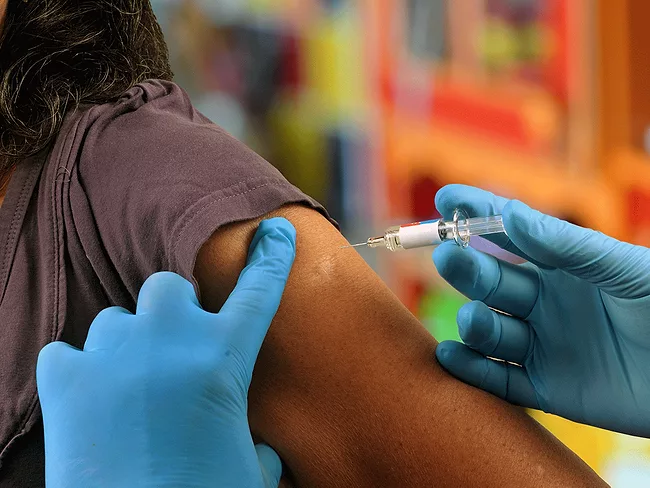
Pfizer Inc. said that, in children aged 5 through 11, the COVID-19 vaccine it co-developed with Biontech SE showed 90.7% efficacy against all variants of concern following two doses. The data were included in briefing documents filed ahead of a full discussion at the FDA’s Vaccines and Related Biological Products advisory committee meeting set for Oct. 26.
Enforcement against false claims filed with federal health care programs continues to snare a number of testing clinics as demonstrated by the recent news that a clinical lab has come to terms with federal prosecutors over urine drug testing. MD Spine Solutions LLC, of Reno, Nevada, has agreed to pay up to $16 million to settle allegations that it performed unnecessary urine drug tests, a case brought to the attention of the courts not by a former employee, but by Omni Healthcare Inc., which has been active in the False Claims Act space, thus highlighting the hazards of third-party litigation to clinical lab operators.
The push for legislation that would lower prescription drug prices in the U.S. has mounted in recent months, but support for Medicare pricing negotiations has faltered in the past few weeks. Sen. Bob Menendez (D-N.J.) is the latest Senate Democrat to signal his aversion to giving the government the authority to negotiate prices with drugmakers, breathing new life into hopes that the pharmaceutical industry will yet again escape a mechanism that critics say would suppress innovation at the expense of patients in desperate need of state-of-the-art therapies.
Despite some concerns from a few members, the Advisory Committee on Immunization Practices unanimously approved recommendations to the CDC that boosters be made available to those wanting them. The advisory committee recommended that a single COVID-19 vaccine booster dose be given six months or more after completing an mRNA primary series in the same risk group for whom the CDC recommended a booster dose of Pfizer Inc-Biontech SA’s vaccine. The CDC presented data to the committee that the single mRNA COVID-19 vaccine dose be given to those age 65 and older, for those at least 18 years old and reside in long-term-care settings, and also for those ages 50 to 60 with certain underlying medical conditions.
The COVID-19 testing rebound driven by the Delta variant’s extended surge pushed Abbott Laboratories’ earnings per share for the third quarter nearly 50% higher than consensus estimates. Sales climbed to $10.928 billion, up 15% from expected estimates of $9.564 billion. COVID-19 testing accounted for $1.9 billion in sales, but even without that boost, the company posted year-over-year growth of 11.7% compared to the third quarter of 2019. With COVID testing included, Abbott had organic sales growth of 22.4% compared to the same quarter of 2020 and up 35% compared to the third quarter of 2019. With the third-quarter results, the company announced an increase in the full-year guidance to $5 to $5.10, nearly 40% higher than last year.
Patent subject matter eligibility has emerged as arguably the most controversial patent policy theme of the past two decades, one which has been most keenly felt in the world of in vitro diagnostics (IVDs). A new study pending publication suggests that venture capital (VC) investment in IVDs would have been $9.3 billion higher in the four years following the Supreme Court’s decision in Mayo v. Prometheus, a finding which the author said leads inevitably to the conclusion that the subject matter eligibility crisis “should receive Congress’ immediate attention.”
The FDA issued an Oct. 18 reminder to the diagnostics industry that the agency still requires test developers to register with an institutional review board (IRB) for all studies of human subjects. This still pertains to studies that make use of leftover, de-identified specimens in FDA-regulated studies, an alert to industry which suggests that enforcement actions may be in the near offing.
As largely expected, the FDA on Oct. 20 authorized the use of booster doses for COVID-19 vaccines from Moderna Inc. and Johnson & Johnson, in line with last week’s Vaccines and Related Biological Products Advisory Committee (VRBPAC) meetings. It also cleared the way for “mix-and-match” boosters, allowing eligible people to receive boosters from any of the FDA-approved vaccines, regardless of which vaccine they received originally.
The FDA published a draft rule on Oct. 19 for over-the-counter hearing aids, four years after the Food and Drug Administration Reauthorization Act (FDARA) had directed the agency to do so by 2020. One of the potentially more problematic aspects of the draft is that the rule would be preemptive of state law on several points, including consumer protections, a consideration that could serve as a flashpoint in future litigation.
The U.S. Centers for Medicare & Medicaid Services’ (CMS) withdrawal of a proposal to provide automatic coverage of FDA-designated breakthrough devices has drawn criticism from device makers, but the industrial reaction runs the gamut.
 RSS
RSS