The run on at-home COVID-19 tests may be for naught. The FDA warned that the popular rapid antigen tests recommended to keep New Year’s Eve revelers, relatives visiting elderly grandparents and workers exposed to the coronavirus from spreading COVID-19 are less likely to detect the Omicron variant than earlier strains of the virus. “Early data suggest that antigen tests do detect the Omicron variant but may have reduced sensitivity,” the agency said in an update on Dec. 29. Despite the higher rate of false negatives, the FDA said individuals should continue to use the tests. Those experiencing symptoms or with a high likelihood of infection based on exposure should follow-up with a molecular test if their antigen test returns a negative result.
The Verifying Accurate Leading-edge IVCT Development (VALID) Act seems poised for passage in 2022, a bit of welcome relief for those stuck in the regulatory twilight world of the lab-developed test (LDT). However, Carly McWilliams, director of regulatory policy for North America for Roche Inc., said recently at the recent Food and Drug Law Institute enforcement meeting that the VALID Act is likely to leave the question of a user fee schedule for a future Congress, given that the associated rulemaking, guidance development and compliance activities are likely to consume the better part of, if not the entirety of, the next five years.
Some U.S. FDA warning letters are mostly about documentation, but the key consideration in the widely publicized Dec. 9 FDA warning letter to Dublin-based Medtronic plc seems to be whether Medtronic had a proper understanding of the risk created by malfunctioning infusion pump retainer rings. That difference of opinion regarding risk took a significant bite out of the company’s shares and boosted the fortunes of its rivals in the diabetes space, a cautionary tale regarding the hazards associated with a failure to understand how the FDA sees the risk of device malfunction. The FDA had reported in October 2021 a pair of recalls of Medtronic’s Minimed insulin pumps, although one of the issues cited was related to cybersecurity concerns. The two recalls affected nearly half a million units combined, and could have significantly affect access for some patients.
With a new CEO at the helm, remote patient monitoring (RPM) company Qardio Inc. believes 2022 can be a pivotal year to drive adoption of its 4G and Bluetooth-enabled cardiac solutions. The San Francisco-based company recently launched Qardiocore, an ambulatory ECG, and Qardiodirect, an end-to-end remote patient monitoring and telehealth service.
The FDA has delivered on a final guidance for non-clinical and clinical investigations of devices used for treatment of benign prostatic hyperplasia (BPH), needing only a year and a half to convert the draft guidance into a final version. The final guidance retains the draft’s recommendation that pivotal studies follow patients for at least a year, a provision some in the med-tech industry saw as unnecessary in some instances. The scope of the July 2020 draft included non-clinical testing, a novelty compared to previous guidance on the topic. The scope of this latest guidance includes four product codes, including KNS for endoscopic electrosurgical instruments, and the FDA included several specific suggestions for the use of thermotherapy and permanent prostatic stents as treatments for BPH.
The U.S. CMS has crafted a payment policy that covers both adjunctive and non-adjunctive continuous glucose monitors (CGMs) in the final rule for durable medical equipment (DME). Medtronic plc, of Dublin, heralded the move as “a very important benefit expansion” for the company’s customers, but the expanded coverage also pays for additional CGMs that work with Medtronic insulin pumps.
Privately held Leo Pharma Inc. has worked its way through a complete response letter issued in April to see the FDA approve Adbry (tralokinumab-ldrm) for treating moderate to severe atopic dermatitis in adults. The CRL noted FDA requests for additional data related to the device component, a prefilled syringe of tralokinumab, but it did not request new efficacy or safety data related to the drug product formulation. In April and on Dec. 28, the company did not provide details on the device-related data that were requested.
A U.S. price-slashing Trump-era rule establishing a most-favored nation (MFN) model for part B drugs is officially dead. The death of the interim final rule that originally was scheduled to go into effect Jan. 1, 2021, comes as no surprise. Following court challenges that resulted in a preliminary injunction against the launch of the seven-year mandatory pricing model, the Biden administration proposed a rule rescinding the model in August.
A U.S. federal jury convicted Charles Lieber, the former chair of Harvard University’s chemistry and chemical biology department, on charges related to lying to federal authorities about his affiliation with China’s Thousand Talents Plan and the Wuhan University of Technology, as well as failing to report the income he received from the institute.
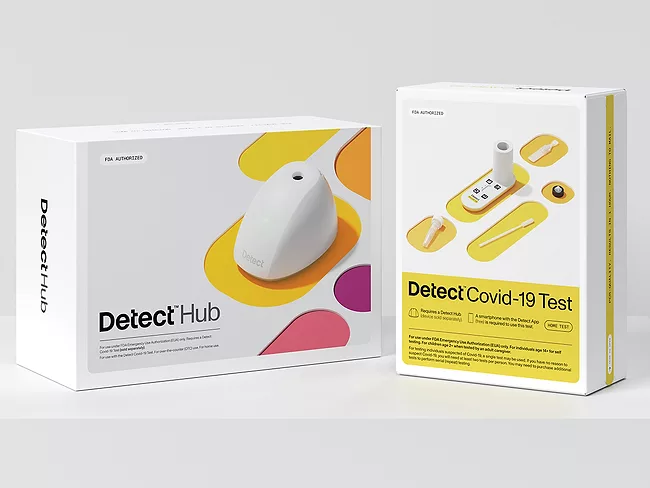
As global demand for rapid testing soars due to a new variant of COVID-19, one company is shaking up the diagnostics market with an at-home rapid PCR solution. Founded in 2017 by scientist and entrepreneur Jonathan Rothberg, Detect Inc. is the developer of Detect COVID-19, a direct-to-consumer PCR test that provides results within one hour.
 RSS
RSS