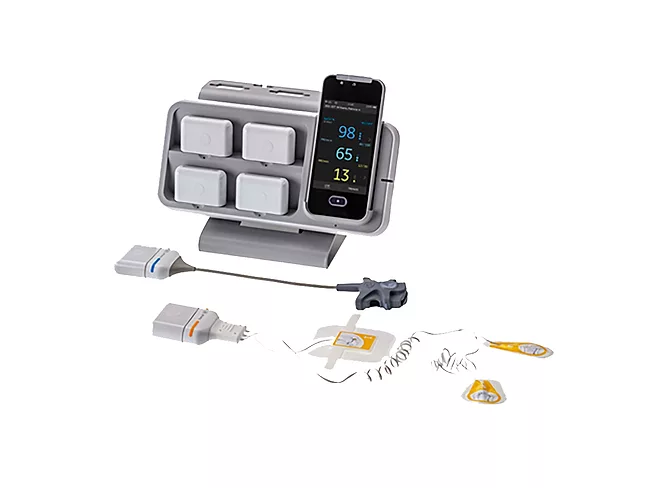
A timely discharge from the hospital requires that a lot of things go just right, and GE Healthcare just scored a win from FDA for its Portrait vital signs monitoring system that offers wireless, wearable tracking of oxygenation, pulse and respiration rate. GE said this system allows patients to be mobile during those first few critical hours post-surgery while providing non-stop vital sign tracking, a development that may allow clinicians to intervene more quickly when problems arise and thus help the patient recover and head home without setbacks.
The $1.83 million grant Fesarius Therapeutics Inc. was recently awarded will allow the company to work on the next generation of dermal repair products to treat complex wounds. The funds from the National Institutes of Health (NIH) will go towards further development of the company’s advanced dermal regeneration scaffold for reconstructive surgery and takes the total amount of non-dilutive grant funding Fesarius has received to develop its hydrogel technology, Dermisphere, to $4 million.
Pacific Biosciences Inc. and Genedx Inc. reported a research collaboration with the University of Washington to study HiFi long-read whole genome sequencing’s (WGS) capacity to boost diagnostic rates in pediatric patients with genetic disorders.
The composition of the skull bone is unique and plays a direct role in influencing brain health through small channels in the bone and immune cell expression pathways, reported researchers based at the Helmholtz Center and Ludwig-Maximilians University Munich.
“Show us your work” is basically the message the U.S. Court of Appeals for the Federal Circuit sent to the Patent Trial and Appeal Board (PTAB) when it vacated a decision by the board in an ex parte review of rejected patent claims submitted by Theripion Inc. While the Aug. 10 Federal Circuit opinion that remanded the case is nonprecedential, the appellate court made it clear that the PTAB must explain its reasoning for whatever conclusions it reaches.
Dermasensor Inc.’s elastic scattering spectroscopy device appears to have solved one of the more challenging issues in dermatology—early detection of skin cancers in individuals with darker skin tones. The device demonstrated very high sensitivity across all skin cancer types compared to histopathological exams with minimal variation between Fitzpatrick skin type groups in an analysis of the DERM-SUCCESS trial.
Developers of medical technology have many concerns about the U.S. Centers for Medicare & Medicaid Services’ (CMS) handling of coverage and reimbursement, but those controversies have typically revolved around process. A new report sponsored by industry steers a somewhat different tack, however, arguing that while there are issues of process, one key issue is that of funding, a problem that only Congress can remedy.
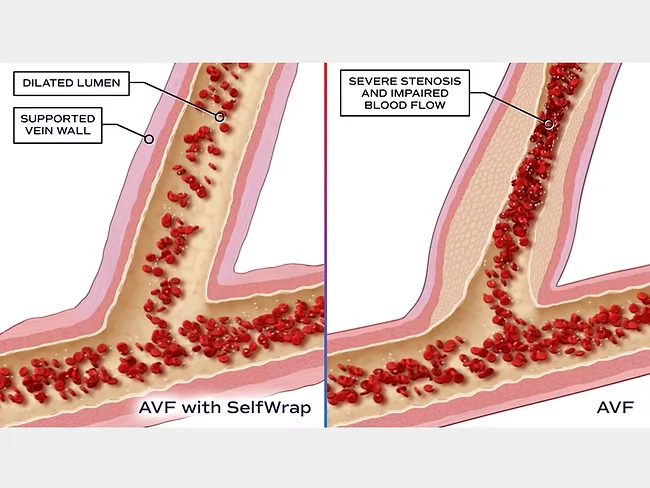
Venostent Inc. has completed $16 million in series A financing to support a U.S. pivotal trial for bioabsorbable wraps designed to improve outcomes for hemodialysis patients suffering from end-stage renal disease (ESRD). This comes after Venostent was granted an FDA investigational device exemption (IDE) to begin its U.S. Selfwrap-assisted arteriovenous fistula study and breakthrough device designation of its technology awarded last year.
Histoindex Pte Ltd.'s’s artificial intelligence (AI)-enabled tissue imaging technology more accurately measures the change in fibrosis than current pathology tests, the company said.
A complete response letter (CRL) from the U.S. FDA for GC-4419 (avasopasem) is causing Galera Therapeutics Inc. to dramatically change course to survive, with the company laying off about 70% of its workforce. That layoff, which will reach across several company departments, is designed to extend the cash runway into the second quarter of 2024. The adjustment comes after Galera expanded its commercial leadership in May to prep for a potential launch of avasopasem before the end of 2023.
 RSS
RSS

.webp?height=488&t=1677877909&width=650 "Epidermal growth factor receptor (EGFR)")