A complete response letter (CRL) from the U.S. FDA for GC-4419 (avasopasem) is causing Galera Therapeutics Inc. to dramatically change course to survive, with the company laying off about 70% of its workforce. That layoff, which will reach across several company departments, is designed to extend the cash runway into the second quarter of 2024. The adjustment comes after Galera expanded its commercial leadership in May to prep for a potential launch of avasopasem before the end of 2023.
A team from Siemens Medical Solutions Inc. presented a new artificial intelligence (AI) model that can predict people’s risk of multiple sclerosis (MS), at the 2023 American Association for Clinical Chemistry (AACC) annual scientific meeting in Anaheim, Calif.
It's one thing to ablate a lesion to treat a cardiac arrhythmia “but you can’t ablate the right place if you don’t know where it is,” said Nikki Sidi, U.S. President ofBiosense Webster Inc. Sidi was commenting on the July 24 U.S. launch of the high-density diagnostic Optrell mapping catheter with Trueref technology powered by its Carto 3 software.
The inter partes review (IPR) process used to adjudicate patent disputes in the U.S. has had its share of critics, but ongoing patent litigation revolving around nerve stimulation technology between Axonics Inc., and Medtronic plc has disclosed another bone of contention in how IPRs are handled. The Court of Appeals for the Federal Circuit has ruled that a patent holder, Dublin-based Medtronic in this instance, can offer a new claim construction for its disputed patent once an IPR has been instituted, but said also that the Patent Trial and Appeal Board (PTAB) had erred in not allowing Axonics to respond to the new claim construction, sending the related IPRs back to the PTAB for another look.
The accelerated clearance won by Johnson & Johnson (J&J) from the U.S. FDA for Talvey (talquetamab-tgvs) for relapsed or refractory multiple myeloma (r/r MM) in adults brings to the market the bispecific antibody that takes aim at G protein-coupled receptor class C group 5 member D, a target of interest to other developers as well.
Rewalk Robotics Ltd. took strides to expand its portfolio—and achieve profitability—with an agreement to acquire Alterg Inc., a provider of anti-gravity systems for use in physical and neurological rehabilitation. Alterg uses NASA-derived differential air pressure (DAP) technology to reduce gravity’s effects on individuals with mobility challenges and pain. The $19 million deal is expected to close August 11, with additional cash earnouts tied to future revenue growth over the next two years.
The U.S. FDA’s final guidance for premarket submissions for device software functions serves as a much needed overwrite of a badly outdated policy but includes some significant changes over the legacy guidance. There are also a few changes between the 2021 draft and the 2023 final guidance, however, such as a call for more details about how software anomalies were discovered and what a root cause analysis would suggest about the origin of the anomaly.
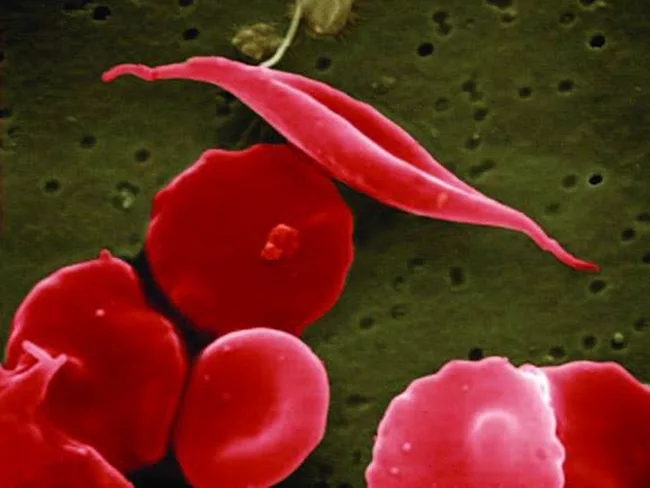
Trinity Biotech plc. received U.S. FDA 510(k) clearance for its lab-based hemoglobin diagnostic system, the Premier Resolution system, which the company hopes will allow it to regain its market leading position in hemoglobin variant detection. The Premier Resolution system is an automated analyzer which quantifies fetal hemoglobin and hemoglobin A2 and detects more than 200 hemoglobin variants. The device is a modern successor to the company’s Ultra system which once held a leading position in the U.S. hemoglobin variant diagnostic market.
In a balancing act between supply and drug quality, the U.S. FDA tipped the scales on behalf of quality, slapping an import alert on Intas Pharmaceuticals Ltd. in June, followed by a July 28 warning letter requiring the India-based company to develop and implement a global corrective action and preventive action plan.

 RSS
RSS