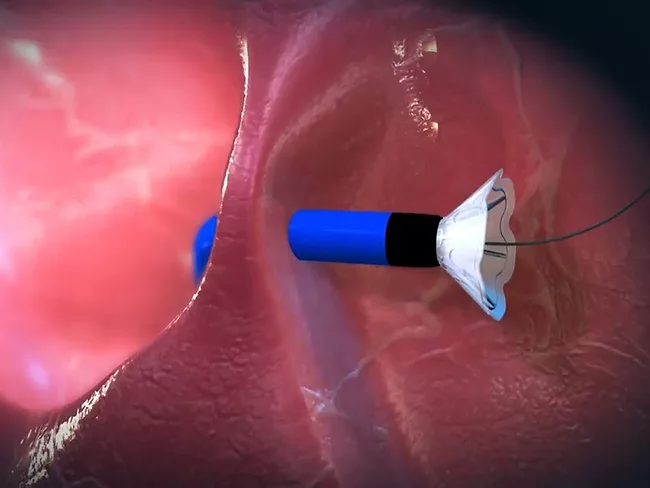
The U.S. FDA’s clearance of Medtronic plc’s Hugo robotic-assisted surgery (RAS) system is certainly a boon for the company which is betting on the unit to be a key growth driver. While the soft tissue robotics market is dominated by Intuitive Surgical Inc.’s da Vinci system, the space is growing, and Medtronic has the scale, resources and market presence to make headway but there are also a plethora of smaller, versatile and cost-effective systems looking for a piece of the pie.
A U.S. FDA advisory panel voted unanimously against approving Johnson & Johnson’s V-Wave Ventura shunt for heart failure patients not helped by medications. The circulatory panel voted emphatically 15-0 against use of the shunt for heart failure patients not helped by medications based on effectiveness and its benefit-risk profile. On the question of safety, the panelists did vote 9-6 in favor of the device.
The U.S. FDA’s remote regulatory assessment (RRA) program, the subject of a guidance the agency finalized in June 2025, is proving to be one of the trickier bits of navigation for makers of devices, drugs and biologics. RRAs were on tap at the 2025 enforcement conference held by the Food and Drug Law Institute, but the session seemed to suggest that industry may not be fully prepared for how the agency will conduct these reviews, but also what it will do with the results.
Kazia Therapeutics Ltd. raised AU$50 million (US$33.15 million) in a private placement of equity securities to advance lead candidate paxalisib, a brain-penetrant dual PI3K/mTOR inhibitor in clinical trials for brain cancer and advanced breast cancer.
Crescent Biopharma Inc. teamed with Sichuan Kelun-Biotech Biopharmaceutical Co. Ltd. to generate “parallel” data of its PD-1/VEGF bispecific antibody, CR-001. The goal is to get 2027 readouts of the bispecific as a monotherapy and as a combination therapy with antibody-drug conjugates in both the U.S. and China.
Positive efficacy results led to Praxis Precision Medicines Inc.’s phase II Embold study in developmental and epileptic encephalopathies (DEEs) being halted early, propelling the company’s shares dramatically upward.
After a more than 13-year period of stability with Janet Woodcock as the head of CDER, with Patrizia Cavazzoni taking charge during the next four years of former U.S. President Joe Biden’s tenure, the FDA division has had no fewer than five different people in charge throughout 2025. Up to bat now as acting director is Tracy Beth Høeg, a physician and epidemiologist who co-authored a paper in 2022 with CBER Director Vinay Prasad, FDA Commissioner Marty Makary and others demonstrating that COVID-19 boosters and college vaccine mandates were harmful to young men due to myocarditis risks.
Individual liberty and choice vs. wider public health became one predictable hinge upon which swung the often-acerbic debates at the CDC’s Advisory Committee for Immunization Practices (ACIP) meeting, which took up – again – the matter of hepatitis B virus (HBV) vaccine scheduling, a day after the panel voted not to vote on such guidance.
Natera Inc. completed the acquisition of Foresight Diagnostics Inc. in a deal structured as $275 million up front plus contingent payments of up to $175 million based on achieving certain milestones for revenue and reimbursement coverage. The companies expect to close the transaction in the second quarter of 2026.
Freenome Holdings Inc. reported it is going public via a special purpose acquisition company. The company said it expects to raise $330 million, which it plans to use for the 2026 launch of its blood-based screening tests for multiple cancers. Backed by an affiliate of Perceptive Advisors - Perceptive Capital Solutions Corp. (PCSP) – and joined by RA Capital, the arrangement includes a commitment of $240 million in equity investments plus about $90 million more held by the SPAC’s trust fund. Other notable investors, including ADAR1 Capital, Bain Capital Life Sciences, and Farallon Capital Management have signed on to participate in the deal.
 RSS
RSS