The U.S. FDA granted accelerated approval for the Biologics License Application for Axogen Inc.'s Avance, an acellular nerve allograft that serves as a scaffold for nerve regrowth, for treatment of patients with sensory, mixed and motor peripheral nerve discontinuities. The company expects Avance to be commercially available in the second quarter of 2026.
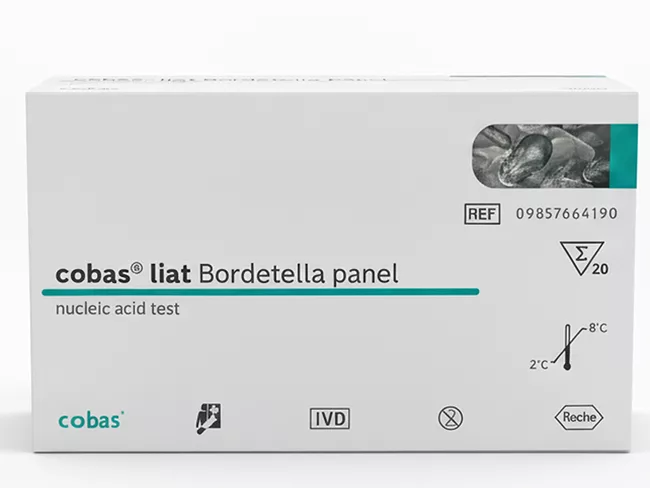
Roche AG received regulatory clearance from the U.S. and European authorities for a new diagnostic test that detects Bordetella infections, including whooping cough, as cases surge globally. The point-of-care test, which delivers PCR-accurate results in just 15 minutes, will help health care providers to quickly identify infections and act to prevent severe complications, onward transmission and deaths.
The FDA’s Center for Devices and Radiological Health (CDRH) will have its hands full with the roll-out of the overhauled quality management regulation, but this will have ripple effects on industry as well. Keisha Thomas, associate director for compliance and quality at CDRH, told an audience in Washington DC that risk management will be a big focus in FDA oversight and inspections in 2026, a point of emphasis that could lead to more routine compliance and enforcement action.
On Dec. 2, 2025, the FDA released draft guidance that could reduce the use of nonhuman primates (NHPs) in preclinical testing of monoclonal antibodies. According to the guidance, which the FDA released for the purpose of soliciting comments, “In general, studies longer than 3 months in nonrodent species (e.g., NHPs, dogs, and mini-pigs) are not warranted to evaluate toxicities … when data from 3-month studies are supplemented with a weight-of-evidence (WoE) risk assessment.”
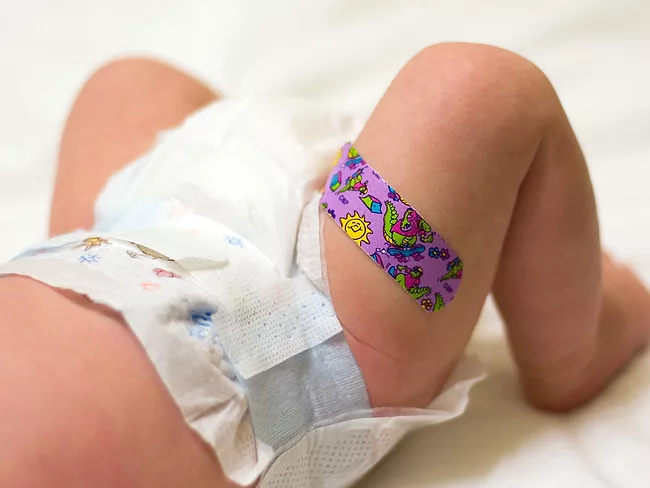
“Do not take us backwards,” many doctors and other stakeholders implored the CDC’s Advisory Committee for Immunization Practices ahead of its meeting that starts Dec. 4 with a day-long discussion and votes on whether the current recommended birth dose of the hepatitis B virus vaccine should be delayed.
After raising more than twice as much as expected in its March IPO, Kestra Medical Technologies Inc. appears poised to repeat its success with an upsized secondary offering as well. The Kirkland, Wash.-based company initially planned to offer 5.5 million shares in its second pass at the market but increased the number of shares to 6 million two days later when it set the price at $23 per share. The projected gross proceeds of $138 million provide a nice addition to the $232 million raised nine months ago.
Sen. Bill Cassidy, R-La., who chairs the Senate Health, Education, Labor and Pensions Committee, released another letter to the American Medical Association regarding the activities of the AMA committee for CPT coding activities.
So much for stability at the U.S. FDA. Three weeks after accepting the position as director of the FDA’s CDER, Richard Pazdur has informed the agency of his intention to retire at the end of the year.
The next stop on the comeback tour for the U.S. FDA’s Rare Pediatric Disease Priority Review Voucher program is the Senate, after the House unanimously passed the Mikaela Naylon Give Kids a Chance Act, H.R. 1262, Dec. 1.
The U.K. government has secured a deal guaranteeing there will be no tariffs on the £6.6 billion (US$8.7 billion) of pharmaceutical products exported annually to the U.S., as part of a package of measures under which the U.K. will pay more for patented drugs.
 RSS
RSS