Fifteen years since the first patient was treated, and after being ditched by two companies, the EMA is recommending approval of Waskyra (etuvetidigene autotemcel), the first gene therapy for treating Wiskott-Aldrich syndrome.
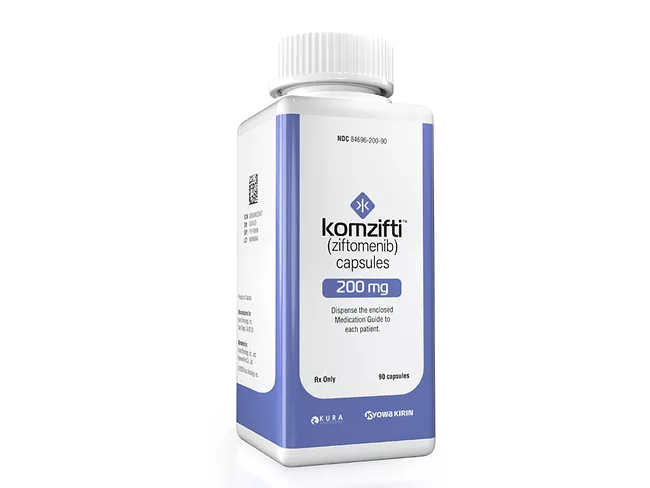
The U.S. FDA gave the thumbs up to Kura Oncology Inc./Kyowa Kirin Co. Ltd.’s selective oral menin inhibitor, ziftomenib, to treat relapsed, refractory (r/r) nucleophosmin1 (NMP1)-mutant acute myeloid leukemia (AML). The approval of the drug, branded Komzifti, came more than two weeks ahead of the Nov. 30 PDUFA date.
In an article that reads like informal guidance, U.S. FDA Commissioner Marty Makary and CBER Director Vinay Prasad discussed the criteria for using the agency’s novel plausible mechanism pathway for personalized treatments when a randomized trial isn’t feasible, as well as future uses of the approval path that could expand beyond gene and cell therapies to other biologics and even small molecules.
In reaching within to name 26-year FDA veteran Richard Pazdur as the next CDER director, FDA Commissioner Marty Makary likely chose the best possible person to helm the drug evaluation center at a time marked by uncertainty, morale issues and upheaval, according to several agency watchers.
The U.S. House is expected to vote late Nov. 12 on an amended continuing resolution (CR) to end the historic 43-day partial government shutdown. Already passed by the Senate, the CR would fully reopen the government and fund it through Jan. 30. President Donald Trump has said he will sign the CR, which ensures federal employees furloughed during the shutdown will receive back pay and will not be terminated.
Recent progress in redressing the historical underfunding and neglect of women’s health could be undermined by the backlash against diversity, equity and inclusion (DEI) initiatives, according to executives participating in the FT Global Pharma and Biotech Summit 2025 in London Nov. 11-12.
The U.S. FDA is turning the clock back more than 20 years to advance women’s health by narrowing the boxed warning on hormone replacement therapies (HRTs) for menopause. The agency announced at a Nov. 10 news conference that it’s working with companies to update their HRT labeling to remove references to risks of cardiovascular disease, breast cancer and probable dementia.
Industry watchers were surprised when Eli Lilly and Co.’s oral GLP-1 candidate, orforglipron, did not appear among the first nine recipients of the U.S. FDA’s commissioner’s national priority voucher (CNPV) program aimed at shortening regulatory review times, boosting domestic manufacturing and improving affordability. But orforglipron, which recently nailed endpoints in a second phase III trial and has been hailed a potentially best-in-class compound, was among the second batch of six drugs added to the CNPV list.
Hailing it as a win-win and a historic step forward in fighting chronic disease, the Trump administration announced pricing agreements Nov. 6 with Eli Lilly and Co. and Novo Nordisk A/S that will expand the availability of the companies’ weight loss drugs by cutting prices and, for the first time, providing coverage for the drugs in obesity through Medicare and Medicaid.
The U.S. FDA’s complete response letter (CRL) for Biohaven Ltd.’s lead asset, troriluzole, to treat spinocerebellar ataxia has prompted a wave of downstream changes at the company. There will be a roughly 60% cutback in annual R&D spending, not including personnel, as Biohaven focuses on three other late-stage clinical programs.
 RSS
RSS